Encontrar un proveedor de productos de fitness fiable es uno de los mayores desafíos para los vendedores de comercio electrónico que entran en el nicho del equipamiento de gimnasio en casa y material de recuperación. La calidad del producto, la velocidad de procesamiento de pedidos, las opciones de private label y la verificación de proveedores afectan directamente a la satisfacción del cliente y a la escalabilidad de la tienda.
En esta guía, comparamos 9 proveedores de fitness para dropshipping en función de factores operativos prácticos, como la amplitud del catálogo, la capacidad de fulfillment, las opciones de embalaje personalizado, la disponibilidad de almacenes y la calidad del soporte al vendedor.
A medida que el comercio electrónico de fitness sigue evolucionando en 2026, los vendedores necesitan proveedores capaces de cumplir con plazos de entrega más rápidos, ofrecer productos diferenciados y crear experiencias de marca más sólidas para construir negocios sostenibles.
Puntos Clave
- Prioriza los Almacenes Locales: Elegir proveedores verificados de productos de fitness con redes de fulfillment locales protege los márgenes de beneficio frente a los recargos por peso volumétrico de las empresas de transporte y los retrasos en los envíos internacionales.
- Céntrate en la Especialización en un Subnicho: El éxito en el dropshipping de equipamiento de fitness depende de un posicionamiento claro en un subnicho, un rendimiento rápido de la tienda online, descripciones de producto conformes con la normativa y una auditoría temprana de los tramos de envío.
- Estrategia Equilibrada de la Cadena de Suministro: Los principiantes deben priorizar proveedores que permitan probar productos con un MOQ bajo y SLAs de fulfillment fiables, mientras que las marcas consolidadas deben evaluar opciones de private label, embalaje personalizado y sincronización automatizada de inventario.
En Este Artículo
¿Es Rentable el Dropshipping de Productos de Fitness en 2026?
El fitness se ha mantenido como uno de los nichos más resistentes en el dropshipping global porque el público comprador es sumamente amplio. Principiantes, deportistas de nivel intermedio, personas en rehabilitación y trabajadores en remoto necesitan material, y suelen recomprar accesorios como bandas elásticas, muñequeras y herramientas de masaje cada 12 a 24 semanas. Un catálogo bien seleccionado de un proveedor de productos de fitness con entre 20 y 30 SKUs de alto margen puede generar de dos a tres veces el rendimiento medio de tiendas genéricas de gadgets, incluso antes de escalar el tráfico de pago.
La rentabilidad depende en gran medida de los costes de sourcing, los métodos de envío, la gestión del peso volumétrico y la eficiencia en la adquisición de clientes. Conseguir artículos compactos a través de socios de fulfillment con almacenes locales mantiene los gastos de envío bajo control, mientras que enviar artículos voluminosos y de gran tamaño a nivel internacional puede generar importantes recargos en el transporte que reducen los márgenes brutos.
Tres factores respaldan la categoría de dropshipping de fitness en 2026:
- Rutinas Continuadas de Entrenamiento en Casa e Híbrido: La preferencia de los consumidores por material de entrenamiento en casa versátil genera una demanda constante durante todo el año.
- Expansión de SKUs de Recuperación y Movilidad: Las pistolas de masaje por percusión, las vendas de terapia de frío y los accesorios de movilidad continúan expandiéndose más allá del deporte profesional hacia el bienestar del consumidor general.
- Mejora en los Almacenes Regionales: Los proveedores que ofrecen centros de fulfillment locales en Norteamérica y Europa ayudan a reducir los tiempos de tránsito, lo que mejora directamente la satisfacción del cliente y la tasa de compras recurrentes.
Cómo Empezar en el Nicho de Dropshipping de Fitness con Éxito
La viabilidad a largo plazo de una nueva tienda de fitness depende de tres decisiones iniciales: el enfoque en un subnicho, el rendimiento de la tienda online y unas afirmaciones de marketing conformes con la normativa.
- Elige un Subnicho Concreto: El entrenamiento de fuerza, la recuperación post-entrenamiento, la corrección postural y el pilates en casa atraen intenciones de compra muy distintas. Centrarse en un subnicho específico crea autoridad temática mucho más rápido que lanzar una tienda genérica.
- Crea una Tienda Online Rápida y Optimizada para la Conversión: Una tienda independiente en Shopify o WooCommerce ofrece control total sobre la personalización del proceso de compra (checkout), la sincronización de inventario y la optimización de la tasa de conversión.
- Selecciona Proveedores Complementarios: Combinar un proveedor principal con stock local y una plataforma de sourcing de respaldo aporta variedad al catálogo al tiempo que previene roturas de stock.
- Audita los Tramos de Envío con Antelación: Comprueba las dimensiones del paquete (L × An × Al) y los límites de peso de las agencias de transporte antes de poner a la venta productos más pesados como bancos de musculación o mancuernas de hierro fundido para evitar costes de envío imprevistos.
- Asegura el Cumplimiento en las Afirmaciones de Marketing: Alinea los textos de los productos con la normativa publicitaria, como la guía de cumplimiento para productos de salud de la FTC. Nunca afirmes que un producto de fitness no médico "cura", "trata" o "previene" problemas de salud. Utiliza un lenguaje claro y descriptivo como "favorece la movilidad" o "diseñado para el confort diario" para evitar suspensiones obligatorias de cuentas publicitarias y retenciones en pasarelas de pago.
Evita la tentación de lanzar 80 SKUs la primera semana. Las tiendas que comienzan con 15 a 25 SKUs bien seleccionados, validan el rendimiento publicitario y luego amplían su catálogo, escalan más rápido que las que intentan ser un hipermercado desde el primer día.
Tendencias de Dropshipping de Fitness en 2026
- Auge de Accesorios Inteligentes y Personalizados: Los consumidores prefieren cada vez más accesorios de entrenamiento con seguimiento digital, conectividad con apps y métricas de rendimiento.
- Mayores Exigencias en la Rapidez de Entrega: Las expectativas de entregas más rápidas se han convertido en un factor competitivo clave, especialmente para quienes compiten con marketplaces que ofrecen plazos de envío muy reducidos.
- Demanda de Diferenciación de Marca: El private label, los folletos personalizados en el paquete y el material de resistencia con logotipo son fundamentales para construir una base de clientes sólida y duradera.
- Mayor Control en el Cumplimiento Publicitario: Las plataformas de anuncios revisan de forma estricta las promesas de salud y transformaciones físicas. Las tiendas de éxito se centran en beneficios para el estilo de vida, ergonomía y uso diario.
Cómo Seleccionamos Estos Proveedores de Dropshipping de Fitness
Para ayudar a los vendedores a tomar decisiones informadas sobre su cadena de suministro, nuestro marco de evaluación se centra en cinco métricas operativas B2B esenciales. (Nota: Estos criterios reflejan factores habituales de evaluación por parte de vendedores y no una puntuación o clasificación independiente).
- Sourcing y Calidad Constante del Producto: Amplitud del catálogo, calidad de las muestras físicas del material de entrenamiento y estabilidad del inventario.
- Fiabilidad en el Fulfillment y SLAs de Envío: Rapidez en el procesamiento de pedidos, precisión en el seguimiento del transporte y cobertura de almacenes regionales (EE. UU./UE).
- Opciones de Branding y Private Label: Posibilidad de personalización white-label, folletos promocionales personalizados en el paquete e impresión de logotipos desde MOQs accesibles.
- Transparencia Logística y en Gastos de Envío: Políticas claras sobre peso volumétrico, condiciones aduaneras y protección frente a recargos de transporte inesperados.
- Integración con Plataformas y Soporte al Vendedor: Integración fluida con plataformas como Shopify y WooCommerce, enrutamiento automatizado de pedidos y un SLA de atención al cliente resolutivo.
Comparativa de los Mejores Proveedores de Dropshipping de Fitness
| Proveedor | Ideal Para | Opciones de Branding | Capacidad de Fulfillment | Integración con Tiendas |
|---|---|---|---|---|
| EPROLO | Tiendas enfocadas en marca y sourcing automatizado | Alta (POD y Embalaje Personalizado) | Alta (Soporte con almacenes regionales) | Shopify, WooCommerce, eBay |
| CJDropshipping | Test de productos y sourcing de catálogo amplio | Media (Embalaje Personalizado) | Media (Almacenes Globales) | Shopify, WooCommerce, TikTok |
| Spocket | Sourcing nacional en EE. UU./UE | Media (Facturas Personalizadas) | Alta (Proveedores Locales EE. UU./UE) | Shopify, WooCommerce, Wix |
| Syncee | Sourcing en marketplace multiproveedor | Estándar (Depende del Proveedor) | Estándar (Depende del Proveedor) | Shopify, WooCommerce, BigCommerce |
| AppScenic | Enrutamiento automatizado de pedidos | Estándar (Depende del Proveedor) | Alta (Automatizado UE/EE. UU.) | Shopify, WooCommerce, Wix |
| HyperSKU | Escalabilidad con private label y SKUs validados | Alta (Private Label Personalizado) | Alta (Logística Express Global) | Shopify, WooCommerce |
| Zendrop | Pruebas de catálogo con envío rápido en EE. UU. | Media (Folletos Personalizados) | Alta (Opciones con Stock en EE. UU.) | Shopify, CommerceHQ |
| Doba | Gestión agregada de proveedores en EE. UU. | Estándar (Branding Básico) | Estándar (Proveedores Mayoristas EE. UU.) | Shopify, Amazon, eBay |
| AutoDS Marketplace | Monitorización automática de precios multiproveedor | Estándar (Por Defecto del Sistema) | Estándar (Enrutamiento Multisourcing) | Shopify, eBay, Amazon |
Los 9 Mejores Proveedores y Plataformas de Dropshipping de Fitness en 2026
Estos nueve proveedores y plataformas de productos de fitness cubren todo el abanico de necesidades para una nueva tienda: stock en EE. UU., sourcing internacional, enfoque en automatización y distribución a través de marketplace. La lista es intencionadamente variada porque ninguna plataforma cubre todos los nichos de fitness por igual. Elige tu proveedor principal en función de la rapidez, el de respaldo por la variedad de catálogo y tu capa de automatización en último lugar.
1. EPROLO
Para vendedores que quieren crear tiendas de fitness de marca:
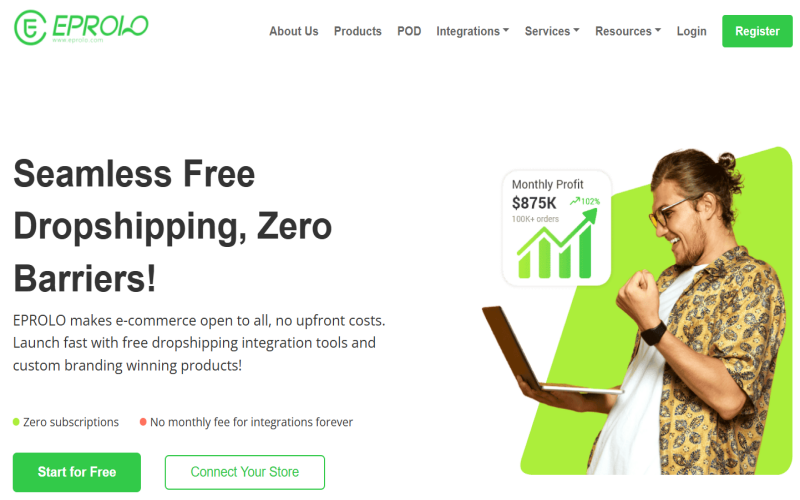
Muchos vendedores de fitness tienen problemas con la calidad inconsistente de los productos, opciones limitadas de personalización y una compleja coordinación entre múltiples proveedores. EPROLO es una excelente alternativa para comerciantes que buscan una solución integral de sourcing y fulfillment. Al combinar el aprovisionamiento de productos, el procesamiento automatizado de pedidos y servicios de branding personalizado, EPROLO ayuda a resolver estos desafíos operativos. Gracias a sus redes consolidadas de fulfillment en Norteamérica, Europa y Asia, EPROLO ofrece a los vendedores folletos personalizados en los paquetes, tarjetas de agradecimiento y soluciones de marca blanca (white label) a partir de cantidades mínimas de pedido muy accesibles.
2. CJDropshipping
CJDropshipping funciona con un modelo híbrido de fulfillment que ofrece sourcing de productos bajo demanda junto con almacenes con stock en China, EE. UU., Alemania y Tailandia. Su principal punto fuerte para los vendedores de fitness reside en el aprovisionamiento personalizado de bandas elásticas de resistencia, rodillos de espuma (foam rollers) y accesorios para entrenamiento de movilidad con bajos MOQs iniciales. Pueden darse tiempos de entrega más lentos en artículos enviados desde el extranjero, lo que convierte a CJDropshipping en un socio práctico de respaldo o para ampliar catálogo, más que en un proveedor principal exclusivo para pedidos nacionales urgentes.
3. Spocket
Spocket cuenta con un marketplace seleccionado de proveedores verificados ubicados en EE. UU. y la UE, lo que acorta notablemente los tiempos de entrega para ropa deportiva y accesorios de entrenamiento diario. La plataforma se integra de manera fluida con Shopify y WooCommerce. Spocket resulta especialmente interesante para tiendas de ropa deportiva para gimnasio (como mallas de yoga, mangas de compresión y camisetas técnicas), donde la gestión local de devoluciones y las tallas estándar de EE. UU./UE ayudan a reducir disputas innecesarias por temas de tallaje.
4. Syncee
Syncee es un marketplace B2B global que conecta tiendas de comercio electrónico con miles de proveedores de dropshipping verificados. Para marcas de fitness, ofrece acceso a material especializado de recuperación y entrenamiento que rara vez se encuentra en plataformas de fulfillment de un solo proveedor. Dado que los tiempos de procesamiento de pedidos, la uniformidad del embalaje y las políticas de devolución varían entre los distintos proveedores de Syncee, es aconsejable pedir muestras físicas de los productos antes de invertir en campañas de publicidad de pago.
5. AppScenic
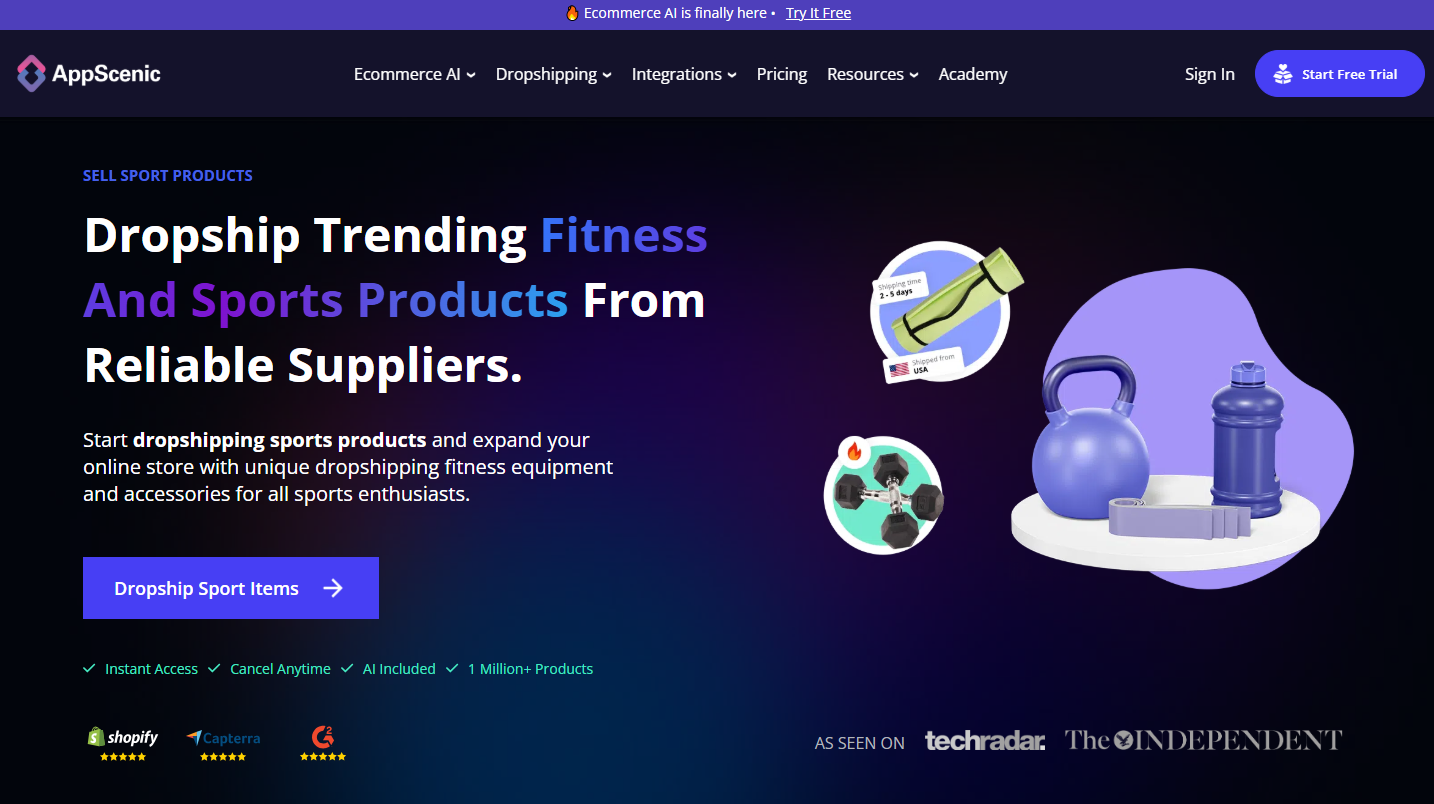
AppScenic se enfoca en integraciones de fulfillment automatizado para tiendas Shopify y WooCommerce, ofreciendo sincronización de inventario en tiempo real, actualización automática de precios y enrutamiento inteligente de pedidos. Su catálogo de fitness incluye productos con un AOV más elevado, como mantas térmicas por infrarrojos y correctores posturales inteligentes. Las herramientas de automatización de AppScenic ayudan a las tiendas en crecimiento a optimizar el procesamiento manual de pedidos a medida que aumenta el volumen de ventas.
6. HyperSKU
HyperSKU ofrece una solución integral para la cadena de suministro que combina aprovisionamiento de productos, personalización de private label y envíos urgentes a nivel internacional. Su equipo de sourcing está especializado en convertir productos de fitness validados —como sets de bandas elásticas, esterillas de yoga y herramientas de masaje— en líneas de marca propia con embalaje personalizado y cantidades mínimas accesibles. HyperSKU es ideal para vendedores que ya han validado la demanda de sus productos y desean dar el salto del dropshipping genérico a una marca propia diferenciada.
7. Zendrop
Zendrop combina fulfillment automatizado con un catálogo de productos con stock en EE. UU. y un panel intuitivo para la gestión de pedidos. Su catálogo de fitness se centra sobre todo en artículos en tendencia y accesorios tecnológicos wearables para deporte, como cuerdas de saltar inteligentes, entrenadores posturales y parches de electroestimulación (EMS). Aunque Zendrop ofrece envíos rápidos para su inventario en EE. UU., los descuentos por volumen y las opciones de personalización de marca requieren planes de suscripción de pago.
8. Doba
Doba es un veterano marketplace de dropshipping que reúne productos de múltiples proveedores mayoristas en un único panel centralizado. Ofrece precios estables y una gestión sencilla del inventario sin exigencias de compras mínimas mensuales. Doba funciona como una opción práctica para tiendas que buscan incluir accesorios básicos para principiantes, como lastres para tobillos, cuerdas de saltar y botellas mezcladoras (shakers).
9. AutoDS Marketplace
AutoDS Marketplace apuesta por un enfoque centrado en la automatización: monitoriza los niveles de stock en distintas plataformas, actualiza precios automáticamente y redirige los pedidos a los proveedores disponibles para cada SKU. Para tiendas de fitness con catálogos amplios, AutoDS automatiza las tareas rutinarias. Los vendedores deben controlar con atención los márgenes mínimos y las reglas de seguimiento de precios para proteger sus beneficios ante posibles cambios de tarifas por parte de los proveedores.
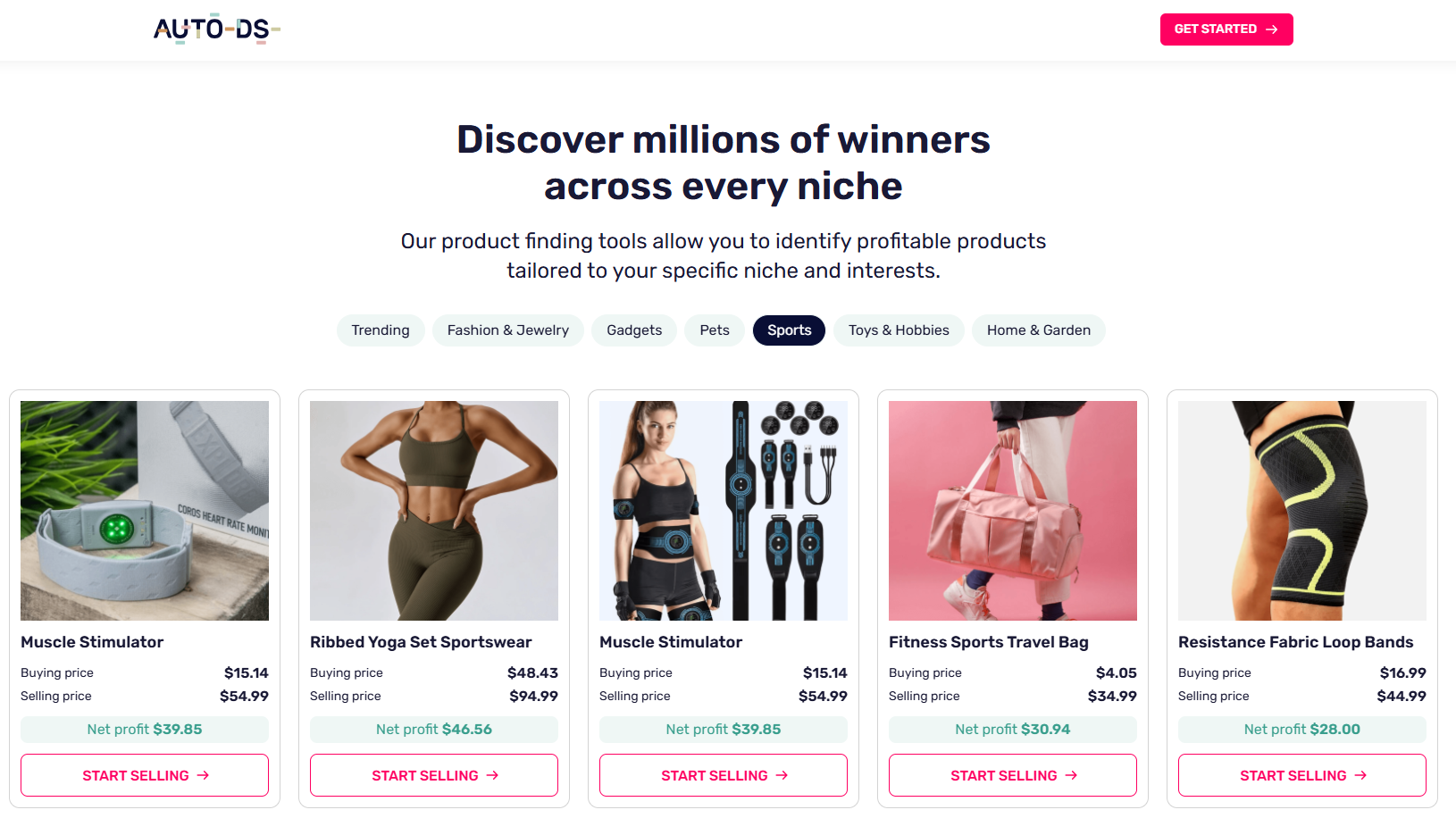
Productos de Fitness Más Vendidos en 2026 con Altos Márgenes
Los nueve SKUs que mostramos a continuación no son simplemente superventas genéricos; son productos de fitness con un alto índice de recompra, cuya disponibilidad de proveedores en 2026 asegura stock continuo y cuyo peso de envío no supera la mayoría de los límites de tarifas para bultos voluminosos. Combínalos con la lista de proveedores anterior y tendrás un catálogo listo para lanzar con 9 SKUs sin necesidad de almacenar inventario.
Set de Lastres Ajustables para Tobillos y Muñecas
Los sets de pesas para tobillos y muñecas de 0,5 a 2,5 kg (1 a 5 lb) por par se venden de forma estable todo el año, ya que los utilizan principiantes, personas en rehabilitación y practicantes de pilates. El coste final de entrega (landed cost) oscila entre 7 y 12 USD por set, con un precio de venta al público (PVP) de 22 a 35 USD, y el peso de envío no supera los 2 kg (4,4 lb) incluso con embalaje. Gestiona este SKU en EPROLO o Spocket para conseguir entregas de 4 a 8 días en EE. UU.
Kit de Barra de Pilates con Bandas de Resistencia
Un kit de barra de pilates con bandas elásticas desmontables atrae a clientes que entrenan en casa y buscan la versatilidad del gimnasio sin necesidad de barras de pesas tradicionales. El landed cost se sitúa entre 10 y 16 USD, con un precio de venta de 38 a 55 USD, y el kit suele enviarse en un único paquete de 1,5 a 2 kg. Es un SKU excelente para venta cruzada en tiendas enfocadas en entrenamiento de fuerza y variantes de pilates.
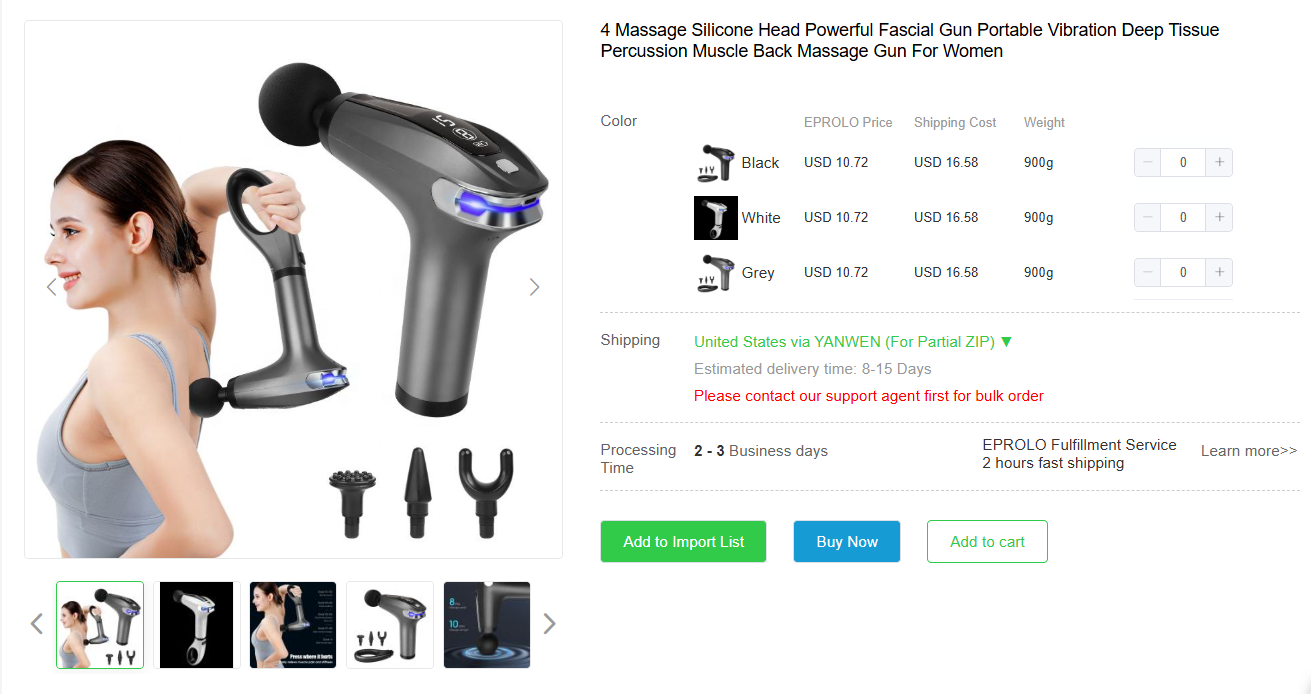
Pistola de Masaje Muscular por Percusión Profunda
Las pistolas de masaje por percusión se consolidaron como un regalo muy demandado en 2025 y se mantienen en el tramo de mayores márgenes en 2026, ya que los proveedores ofrecen ahora múltiples niveles de velocidad y motores más silenciosos. Landed cost de 18 a 28 USD, PVP de 55 a 90 USD, y con embalajes que encajan en las tarifas estándar de paquetería. Enfatiza su valor para la recuperación muscular; evita cualquier afirmación médica.
Aro de Fitness Inteligente con Peso (Smart Hoop)
Los aros inteligentes de fitness con pantalla contadora registran las vueltas y las calorías, lo que aporta una sensación de producto tecnológico sin el coste de un dispositivo wearable. Landed cost de 12 a 20 USD, PVP de 38 a 65 USD. Ten en cuenta que los aros pueden entrar en tramos de envío voluminoso a partir de los 70 cm (28 pulgadas) de diámetro; procura que no superen los 60 cm (24 pulgadas) para evitar recargos en el transporte.
Comba Inteligente con Pantalla Contadora
Las combas inteligentes son un producto ideal para compras por impulso gracias a que se envían en cajas reducidas y la pantalla contadora aporta un valor tecnológico percibido. Landed cost de 4 a 7 USD, PVP de 15 a 25 USD, y un peso de envío mínimo. Combínala con lastres de tobillo y botellas mezcladoras para crear un pack de inicio al fitness con buena conversión y un AOV de 25 a 35 USD.
Faja de Compresión con Terapia de Frío
Las fajas de compresión fría están enfocadas a la recuperación post-entrenamiento, esguinces de tobillo y personas en rehabilitación tras una lesión. Landed cost de 9 a 16 USD, PVP de 28 a 48 USD, con un peso unitario habitualmente inferior a 1 kg (2 lb). Evita términos que sugieran tratamientos médicos; utiliza expresiones como "soporte con terapia de frío" o "diseñado para aliviar durante la recuperación".
Manta de Sauna por Infrarrojos Lejanos
Las mantas de sauna por infrarrojos son el SKU de fitness con mayor AOV del catálogo en 2026, con precios de venta que suelen situarse entre 220 y 450 USD. Landed cost de 60 a 110 USD, pero vigila el peso de envío: la mayoría supera los 5,5 kg (12 lb), lo que puede situarlas en tramos de paquetería voluminosa. Trabaja este SKU en EPROLO o HyperSKU con almacén en EE. UU. para mantener los gastos de envío por debajo del 15% del PVP recomendado.
Mini Electroestimulador Muscular (EMS)
Los parches musculares EMS pasaron del deporte profesional al gran público en 2024 y siguen siendo un éxito de ventas. Landed cost de 7 a 13 USD, PVP de 22 a 45 USD. Mantén el paquete por debajo de 1 kg para aprovechar las tarifas de envío estándar y evita cualquier reclamo que prometa ganancia muscular garantizada o pérdida de grasa.
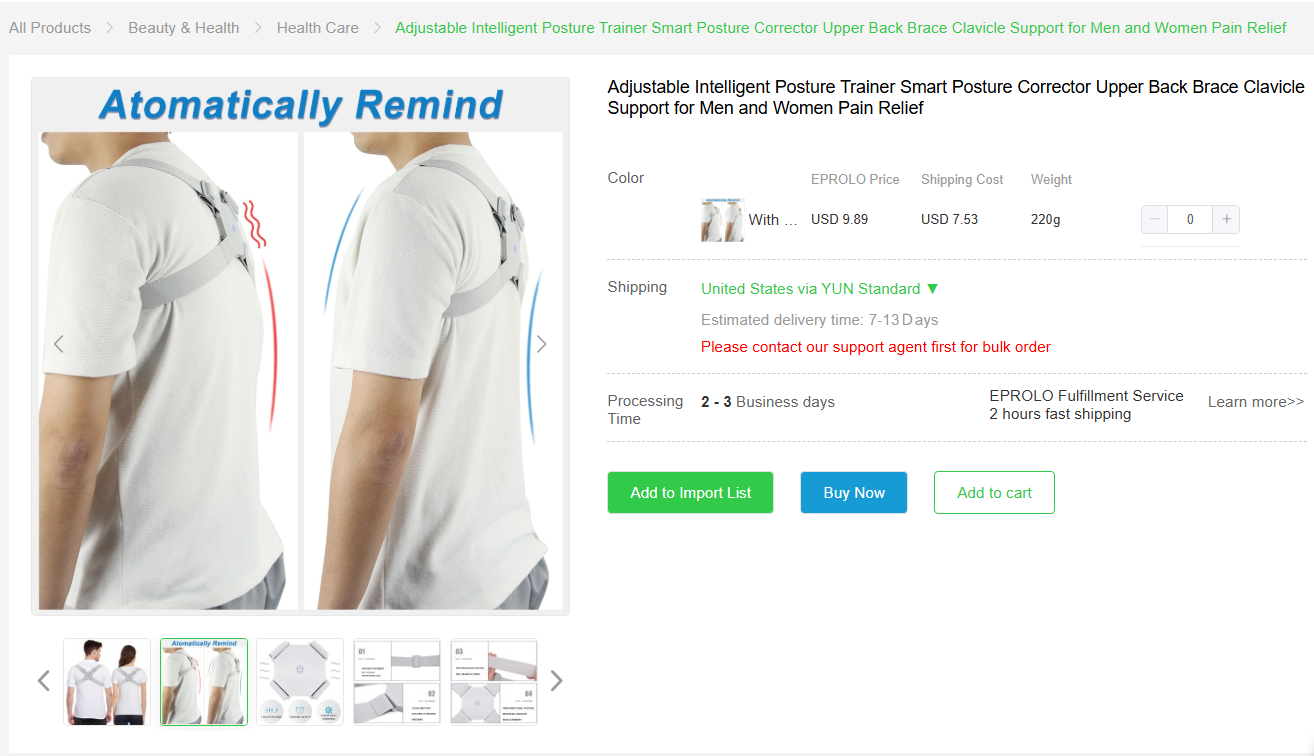
Corrector Postural Inteligente con Vibración
Los correctores de postura inteligentes con aviso por vibración son un producto muy demandado por trabajadores de oficina durante todo el año. Landed cost de 9 a 17 USD, PVP de 28 a 55 USD, y un peso que se mantiene muy por debajo de 0,5 kg (1 lb). Posiciónalo como "recordatorio postural para el día a día" en lugar de como tratamiento para dolores de espalda.
Señales de Alarma al Buscar Proveedores de Fitness: Evita Trampas de Envíos Voluminosos
El mayor obstáculo para la rentabilidad al buscar un proveedor de productos de fitness no es el precio del artículo, sino el peso volumétrico. Una manta de infrarrojos de 7 kg con un paquete de 125 cm de largo puede facturarse como bulto voluminoso en agencias de transporte, aunque el producto en sí no sea excesivamente pesado. Tres señales de alerta diferencian a las tiendas que escalan con beneficios de las que pierden silenciosamente entre un 8% y un 15% de su margen bruto cada mes.
Señal de alarma 1: Proveedores que solo indican el "peso del producto" y no el peso volumétrico. Si tu proveedor no puede indicarte el largo × ancho × alto del paquete en centímetros o pulgadas, busca otra opción. La mayoría de transportistas en EE. UU. y la UE cobran el valor más alto entre el peso real y el peso volumétrico, y este cálculo penaliza especialmente a los artículos de fitness que superan los 50 cm en cualquiera de sus lados.
Señal de alarma 2: Confusión entre DDP y DDU en equipamiento de fitness voluminoso. Las condiciones DDP (Delivered Duty Paid / aranceles pagados) parecen más sencillas pero vinculan tu coste final al agente aduanero del proveedor. DDU (Delivered Duty Unpaid / aranceles no pagados) te da mayor control pero puede exponer al comprador a costes de aduana sorpresa. Confirma qué modalidad utiliza tu proveedor de productos de fitness en tus mercados de destino antes de fijar el PVP de cada SKU.
Señal de alarma 3: Mensajes publicitarios que rozan las afirmaciones terapéuticas. Cualquier texto de proveedores que use palabras como "curar", "sanar", "tratar", "diagnosticar" o "prevenir" se arriesga a revisiones de cuentas de anuncios, penalizaciones en marketplaces y reclamaciones de consumo en EE. UU., la UE y Reino Unido. Elimina estos términos de tus fichas de producto incluso si el proveedor los incluye en sus títulos originales.
Estrategia de prevención: selecciona entre 12 y 15 SKUs de alto margen cuyas dimensiones encajen en las tarifas estándar de paquetería (menos de 45 cm por lado y menos de 2 kg), y reserva de 3 a 5 SKUs más pesados solo para compradores dispuestos a asumir un recargo específico por envío voluminoso. La lista de proveedores anterior es un punto de partida; la auditoría de los gastos de transporte es lo que hace que el catálogo sea rentable.
Proceso Recomendado de Validación de Proveedores para Vendedores
Antes de invertir presupuesto publicitario para escalar el catálogo de un nuevo proveedor, los vendedores deben seguir un proceso estructurado de comprobación:
- Pide Muestras Físicas de Producto: Comprueba de primera mano la resistencia de los materiales, las costuras, el nivel de ruido del motor (en pistolas de masaje) y la precisión de las pantallas electrónicas.
- Revisa la Uniformidad del Embalaje: Asegúrate de que los productos se entreguen en cajas limpias, neutras o con tu propia marca personalizada, sin folletos promocionales de terceros ni publicidad del proveedor internacional.
- Comprueba la Precisión del Seguimiento: Rastrea los envíos de prueba desde la expedición hasta la entrega final para verificar si los plazos de entrega prometidos (SLAs) coinciden con los hitos reales de seguimiento.
- Evalúa la Respuesta del Soporte al Vendedor: Envía una consulta técnica sobre disponibilidad de inventario o incidencias de envío para valorar el tiempo de respuesta del servicio de atención al cliente en un escenario real de trabajo.
Lanza Tu Tienda Automatizada de Fitness Hoy
Una vez definidos la lista de proveedores, el subnicho y la selección de SKUs con los gastos de envío auditados, el funcionamiento de una tienda automatizada de dropshipping de fitness resulta muy sencillo. Conecta tu tienda con el proveedor principal mediante la app oficial de la plataforma, configura el enrutamiento automático de pedidos como alternativa de respaldo, audita los tramos de envío una vez al trimestre y programa una revisión mensual de tus 10 SKUs principales.
El ecosistema de proveedores de productos de fitness en 2026 es muy favorable: los almacenes locales son estables, la automatización está consolidada y los SKUs con mayores márgenes están claramente identificados. El riesgo restante es operativo: pérdidas por envíos voluminosos, cumplimiento normativo en temas de salud y devoluciones provocadas por roturas de stock. Elige a tu proveedor principal de productos de fitness calculando el coste total puesto en destino (landed cost) y no solo la variedad de catálogo, y tendrás una estrategia de lanzamiento sólida.
Para consultar el mapa actualizado de almacenes en EE. UU. y las normas vigentes de tarifas de envío para equipamiento de fitness, revisa la información de fulfillment de EPROLO y compárala con el catálogo estadounidense de Spocket. Para una guía básica sobre qué es realmente el dropshipping, consulta la guía de inicio de EPROLO. Si buscas private label con MOQs reducidos, HyperSKU sigue siendo la opción más competitiva. Plantea el lanzamiento con 15 a 25 SKUs, valida los resultados de tus campañas en 60 días y a partir de ahí continúa expandiéndote.
Preguntas Frecuentes (FAQs)
¿Con qué rapidez debe enviar los pedidos un proveedor de productos de fitness en EE. UU.?
Para compradores en EE. UU. en 2026, el plazo de entrega estimado en SKUs con stock disponible es de 4 a 8 días a través de proveedores con almacenes locales (EPROLO, Spocket, Zendrop y rutas seleccionadas de AutoDS Marketplace). Los SKUs procedentes de almacenes internacionales pueden tardar entre 14 y 21 días, lo cual es admisible para accesorios de fitness con un AOV bajo, pero perjudicial para SKUs premium como mantas de infrarrojos y pistolas de masaje por percusión. Comprueba siempre el mapa de almacenes del proveedor antes de fijar un precio de venta al público específico.
¿Cómo evitan los propietarios de tiendas las disputas de tallas en ropa deportiva?
Existen tres estrategias que funcionan en 2026. Primero, recurrir a proveedores con stock local donde las tablas de medidas sigan los estándares de EE. UU. o la UE, como garantizan Spocket y EPROLO. Segundo, crear una página de guía de tallas que muestre las medidas reales de la prenda junto a las medidas corporales del cliente, en lugar de una tabla genérica S/M/L. Tercero, establecer políticas claras que cubran los primeros 30 días para devoluciones de ropa sin usar. Las incidencias por tallas se reducen entre un 30% y un 50% cuando las devoluciones locales son rápidas y gratuitas.
¿Qué productos de fitness tienen menor porcentaje de devoluciones para principiantes?
Los SKUs más recomendables para principiantes por su baja tasa de devoluciones son las bandas de resistencia (menos del 5% de devoluciones), las combas de saltar y las botellas mezcladoras (por debajo del 4%), así como los lastres para tobillos y muñecas (del 5% al 7%). Los productos con mayores tasas de devolución incluyen fajas de compresión por discrepancias de talla, mantas de sauna por infrarrojos (expectativas sobre su funcionamiento eléctrico) y dispositivos con pantallas contadoras que los compradores perciben como poco precisas. Inicia tu catálogo con bandas, combas y lastres, y amplía hacia SKUs de recuperación con mayor AOV a medida que se consolide la reputación de tu tienda.
Artículos Relacionados
Escrito por
Inverse
Inverse es un especialista en operaciones de SEO en Google, con amplia experiencia en auditorías técnicas de sitios web, clustering de contenidos y estrategia de palabras clave. Experto en visibilidad en motores de búsqueda y optimización del tráfico orgánico, Inverse ofrece de forma constante análisis prácticos en los principales canales de búsqueda. Este enfoque estratégico ayuda a las marcas de comercio electrónico a generar tráfico orgánico sostenible y a expandir su presencia digital eficazmente.
Nota editorial:
Este artículo tiene fines exclusivamente informativos. La capacidad de los proveedores, las tarifas, las dimensiones de los productos de fitness y los tiempos de envío global varían con frecuencia y fueron comprobados con la máxima precisión por los autores en el momento de su redacción. Ni el autor ni EPROLO se hacen responsables de pérdidas derivadas del uso de cualquier producto de fitness adquirido a través de los proveedores citados anteriormente. Verifica siempre que el producto cumpla con las normativas locales de seguridad del consumidor y de importación antes de ponerlo a la venta.