Fashion sizing disparities are the single largest silent profit leak in cross-border apparel in 2026. A boutique that imports the same numeric size from three different overseas factories will ship three different physical sizes, absorb three different fit-related return rates, and field three different sets of customer complaints. When buyers see a "Medium" on the tag and an XL on their body, they do not blame the factory; they blame your store.
This guide walks through five tactical ways boutique owners can cut clothing return rates by treating Asian size vs US size apparel gaps as a measurable engineering problem, not a customer-service problem. By the end of this article you will have a vendor-verified custom sizing charts e-commerce workflow that ships inside the product detail page, not buried in a return-policy footnote.
Key Takeaways
- Cross-border apparel measurement variations can be 2 to 5 centimeters per dimension for the same numeric size across factories.
- Asia-first sizing runs smaller than US sizes by one half to one full size tag for the same body measurement.
- Generic size multipliers fail because cross-border factories change patterns silently with the season, not the size tag.
- A vendor-verified size chart attached to every SKU is the only way to make dispute resolution favor the boutique, not the buyer.
- Five operational moves can cut a 25 percent return rate to under 10 percent without raising prices.
Table of Contents
- 1. What Are Cross-Border Apparel Measurement Variations?
- 2. Why Asian Size vs US Size Apparel Misalignments Cost Store Owners Money
- 3. How to Convert Overseas Clothing Production Metrics for Western Buyers Safely
- 4. Generic Multipliers vs Precise Sizing Charts Verified by Vendors
- 5. Secure Flawless Fit Accuracy for Your Buyers
- 6. Frequently Asked Questions
What Are Cross-Border Apparel Measurement Variations?
Cross-border apparel measurement variations are the systematic differences in chest, waist, hip, sleeve, and inseam dimensions between identical numeric size tags across factories in different countries. A "Medium" in a Guangzhou factory, a "Medium" in a Karachi factory, and a "Medium" in a Hanoi factory can each refer to a different set of body measurements, even though the customer reads the same label.

Three sources drive the variation. First, the body measurement standards each country assumes as the "reference customer" are different. A US size tag is built around a 5'4" to 5'7", 140 to 160 pound average customer. An Asian size tag is built around a 5'2" to 5'5", 110 to 130 pound average customer. The numeric size is the same, but the underlying body is one to two sizes smaller.
Second, the pattern grading rules differ. Western pattern grading systems usually grade by 2 inch chest increments per size; many Asian grading systems grade by 1.5 to 1.75 inch increments. The result is that after four sizes up the difference between two factories is meaningful, not negligible.
Third, fabric behavior plus cut choice changes the finished garment. A knit tee from the same factory can run half a size different in summer cotton than in winter wool. The factory will not always update the size chart for the seasonal fabric.
The cumulative gap is large. Industry benchmarks show cross-border Fashion Sizing Disparities between 2 and 5 centimeters per dimension for the same numeric size across factories. A "Medium" chest that ranges from 96 to 102 centimeters is, in customer terms, two different sizes.

In practice, the most common failure pattern is a chest measurement that drifts 3 to 5 centimeters from one restock to the next because the factory switched knit fabric suppliers without updating the size chart. The buyer who sourced the first run on October 1 ships a Medium at 100 centimeters chest; the second run ships the same numeric Medium at 103 centimeters chest, and the boutique returns pile up within the first month. Catching this drift requires measuring at least one finished garment per shipment, not assuming the chart holds across production rounds.
Why Asian Size vs US Size Apparel Misalignments Cost Store Owners Money
Most cross-border boutiques assume Asian size vs US size apparel differences are small and can be solved with a one-time "size up" rule. That assumption is the most expensive mistake in the channel.
The math is unforgiving. A boutique that averages a 25 percent return rate on apparel will typically find that more than half of those returns are "wrong size" returns. The boutique loses the original shipping cost, the return shipping cost, the restocking time, the marketplace fee on the second sale, and the lifetime value of the customer who wanted one outfit and got a fitting room frustration instead.

Three reasons the misalignment is financially devastating. First, the customer does not see a regional sizing gap; they see "your size chart was wrong." Second, the boutique absorbs the cost of both legs of shipping. Third, the marketplace review section absorbs the reputational cost long after the financial cost is paid.
A boutique with a 25 percent return rate on a $40 average order, paying $5 outbound shipping and $7 return shipping per order, leaks more than $3 per shipped order to sizing disputes. Scale that to 1,000 orders per month and the leak is $36,000 per year before counting the lost lifetime value of the unhappy buyers.
The fix is not "size up once." The fix is a vendor-specific, garment-specific, measure-the-actual-finished-garment workflow. Three of the five tactics below focus on measurement, not on guessing.
How to Convert Overseas Clothing Production Metrics for Western Buyers Safely
Converting overseas clothing production metrics into a workable Western chart takes three steps. Skipping any one of them means the conversion is just a guess with extra steps.
Step 1. Demand the flat-measure spec sheet, not the model spec. Ask the factory for the finished-garment measurements at each size, taken flat on a table (chest pit-to-pit, shoulder seam-to-seam, body length top-to-hem, sleeve length shoulder-to-cuff, and inseam for bottoms). Model measurements are taken on a body; they are not the same as garment measurements.
Step 2. Convert to allow-for-fit language. Western customers expect a knit tee chest measurement to allow 2 to 4 inches of ease beyond their actual chest circumference, and a tailored shirt to allow 4 to 6 inches of ease. Build the size chart from finished-garment spec plus the expected ease per category, not from the factory's numeric size label.
Step 3. Re-measure on every restock. The factory may change fabric or supplier silently between production runs. Pull one piece per restock shipment and re-measure against the chart. Update the published chart the moment the measurement drifts by more than 1 centimeter.
Generic Multipliers vs Precise Sizing Charts Verified by Vendors
A generic "size up two" multiplier is the most common shortcut in cross-border apparel. It works once. It fails the second time, every time.
The generic multiplier assumes every factory uses the same grading rule. It does not. It assumes the fabric is consistent across the year. It is not. It assumes the customer body measurements are the same. They are not. The generic multiplier averages all of these variations into one rule, and that rule becomes a return magnet the moment a customer reads "order one size up" and receives a fit that does not honor the promise.
A precise sizing chart verified by the vendor looks different. Each SKU has its own numeric table, published in the product detail page, with a stamp or signature from the supplier, the date the chart was verified, and a clear instruction to re-measure on arrival. The chart is signed, dated, and tied to the actual production batch, not to a previous season's guess.
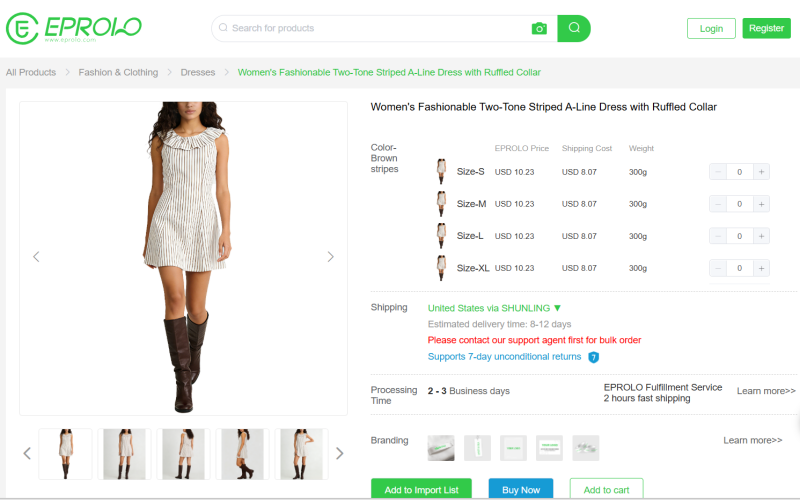
The difference matters in dispute resolution. A customer who can show the size chart was outdated gets a refund. A customer who is told "we measured this batch and your garment does not match the published chart" gets a different conversation. The vendor-verified chart is the boutique's strongest evidence in a fit dispute, and it is also the boutique's strongest content asset for organic search on "sizing chart" related queries.
The cost difference is small. A vendor-verified chart is two to five hours of measurement work per SKU. A generic multiplier is zero hours of measurement work. The verified chart pays for itself after two or three avoided fit-related returns.
Secure Flawless Fit Accuracy for Your Buyers
Use this five-step rollout to lock in fit accuracy on every new apparel SKU without slowing down the catalog.
Step 1. Pick the ten highest-volume SKUs in your apparel catalog. These are the SKUs driving most of the return-rate damage.
Step 2. Pull a finished garment from each of those ten SKUs, lay it flat, and measure pit-to-pit, shoulder-to-shoulder, body length, sleeve length, and inseam where applicable.
Step 3. Build the per-SKU chart as a one-page PDF or HTML block, signed by the supplier and dated within the last 90 days. Attach to the product detail page above the buy button, not below.
Step 4. Add a fit-vetting note in the product description: "This garment measures X chest at Medium and runs true to size for body measurements below Y." Specific number, specific guidance, no generic multiplier.
Step 5. Build a small SOP for re-measuring every restock. Pull one piece per shipment, re-measure against the chart, and update the published table if the measurement drifts.
Done well, the Fashion Sizing Disparities between Asia and US labels stop driving returns, and the boutique captures the difference in margin and lifetime value that was leaking to the wrong-sized garment.
Frequently Asked Questions
Why do foreign production facilities run smaller than domestic fashion standards?
Foreign production facilities run smaller than domestic fashion standards because their reference body measurements assume a smaller average customer frame than the US standard. Asia-based grading usually assumes a 5'2" to 5'5" customer weighing 110 to 130 pounds, while US grading assumes a 5'4" to 5'7" customer weighing 140 to 160 pounds. The numeric size tag is the same, but the underlying body is one to two sizes smaller.
How do you adjust store product pages for international sizing charts?
Adjust store product pages for international sizing charts by replacing the factory's numeric size tag with a finished-garment measurement table. Each size row should list pit-to-fit chest, shoulder-to-shoulder, body length, sleeve length, and inseam where applicable. The chart must be measured on the actual SKU, signed and dated by the supplier, and re-verified on every restock.
Should apparel dropshippers automatically size up when sourcing overseas?
No, apparel dropshippers should not automatically size up when sourcing overseas. The "size up" shortcut assumes every factory uses the same grading rule and the same fabric weight, which is rarely true. A vendor-verified size chart per SKU will outperform a generic "size up" rule on return rates and on customer trust.
What is the most effective way to communicate apparel dimensions to reduce size-related disputes?
The most effective way to communicate apparel dimensions is a per-SKU measurement table that is published above the buy button, signed and dated by the supplier, and accompanied by a one-line fit description in plain language. Generic sizing copy buried in a returns-policy footnote is the least effective method and is the strongest predictor of fit-related chargebacks.
Related reading
Written by
Inverse
Inverse is a skilled Google SEO operations expert, with deep expertise in technical site audits, content clustering, and keyword strategy. Excelling at search engine visibility and organic traffic optimization, Inverse consistently delivers actionable insights across key search channels. This strategic approach helps e-commerce brands build sustainable organic traffic and expand their digital footprint effectively.
Editorial note: The cross-border apparel measurement variation, vendor chart practices, and return rate figures described in this article reflect general industry data and not any specific supplier's measurements. Apparel sizing, fabric behavior, and grading practices vary by factory, fabric, and order complexity. Verify every chart, measurement, and disclaimer with your chosen supplier before publishing the chart on your storefront. No fit outcome, return rate, or vendor agreement is guaranteed.