TikTok Shop Affiliate allows creators to earn commissions by promoting products without managing inventory, packing orders, or handling customer service. Instead, creators focus on content creation, while merchants manage fulfillment and parcel delivery. However, building consistent revenue depends on choosing the right products, creating engaging video demonstrations, and establishing audience trust.
This step-by-step guide covers current creator eligibility guidelines, application procedures, product research frameworks, sample request strategies, high-converting video structures, settlement timelines, and methods to scale from an affiliate creator into an independent ecommerce brand.
Key Takeaways
- Zero Inventory or Logistics: Affiliates earn commissions by tagging products in short-form videos and livestreams without managing inventory, packaging, or customer support.
- Native In-App Purchases: Viewers complete transactions directly through the yellow shopping basket icon, reducing drop-offs and maximizing conversion rates.
- Flexible Onboarding Pathways: Creators can apply via the standard Creator Marketplace or explore Seller Center account linking options while building audience reach.
- Content Strategy That Sells: Natural unboxings, quick demonstrations, 3-second visual hooks, and AI-assisted workflows convert far better than polished ads.
- Path to Brand Ownership: Proven affiliate products can be transitioned into standalone ecommerce storefronts with automated fulfillment, custom packaging, and global express shipping.
Table of Contents
- What is a TikTok Shop affiliate program?
- TikTok Shop Affiliate Requirements in 2026
- How to Apply for the TikTok Shop Affiliate Program
- How to Choose Products to Promote & Get Free Samples
- How to Make Videos That Actually Sell
- How to Maximize TikTok Shop Affiliate Earnings with AI
- How Commissions and Payouts Work
- Common Mistakes and Policy Violations to Avoid
- TikTok Shop Affiliate vs. Dropshipping vs. Brand Ownership
- From TikTok Shop Affiliate to Building Your Own Ecommerce Brand
- Frequently Asked Questions
What is a TikTok Shop affiliate program?
TikTok Shop Affiliate allows creators to promote products through tagged videos and livestreams. When customers purchase through affiliate links or product tags, creators earn commissions based on the seller's commission settings. Unlike traditional ecommerce businesses, affiliates typically do not need to manage inventory or handle order fulfillment themselves.
How the TikTok Shop Affiliate Program Works
The entire purchasing journey happens natively inside the application:
- A creator adds a product tag or link to a short-form video or live broadcast.
- A yellow shopping basket icon appears directly on the viewer's screen.
- A viewer taps the basket and completes checkout with native payment options without leaving TikTok.
- The seller handles order fulfillment, packaging, and parcel dispatch according to TikTok Shop marketplace requirements.
- TikTok tracks attribution, logs the sale, and releases the commission to the creator once the post-delivery return window clears.
Understanding TikTok Shop Affiliate Roles
Three key stakeholders maintain the social commerce ecosystem:
- Creators: Produce original video demonstrations and live broadcasts that drive viewers to click embedded showcase links.
- Sellers and Merchants: Maintain product inventory, fulfill orders on schedule, establish commission rates, and manage customer service.
- Agencies & TikTok Affiliate Partners (TAPs): Manage creator rosters, coordinate campaign matching, and negotiate custom brand deals.
TikTok Shop Affiliate Marketing vs. Selling Your Own Products
Comparing both models helps determine whether to start as an affiliate creator or launch an independent seller storefront:
| Business Model | Upfront Capital | Inventory & Warehousing | Fulfillment & Shipping | Margin / Commission | Customer Service Responsibility |
|---|---|---|---|---|---|
| TikTok Shop Affiliate | Little to none | Not required | Handled by seller | Variable commission rates set by sellers and campaigns | Handled by seller |
| Selling Your Own Products (Seller) | Moderate to high | Required, unless using an automated fulfillment partner | Your responsibility | Full retail profit margin | Your responsibility |
TikTok Shop Affiliate Requirements in 2026
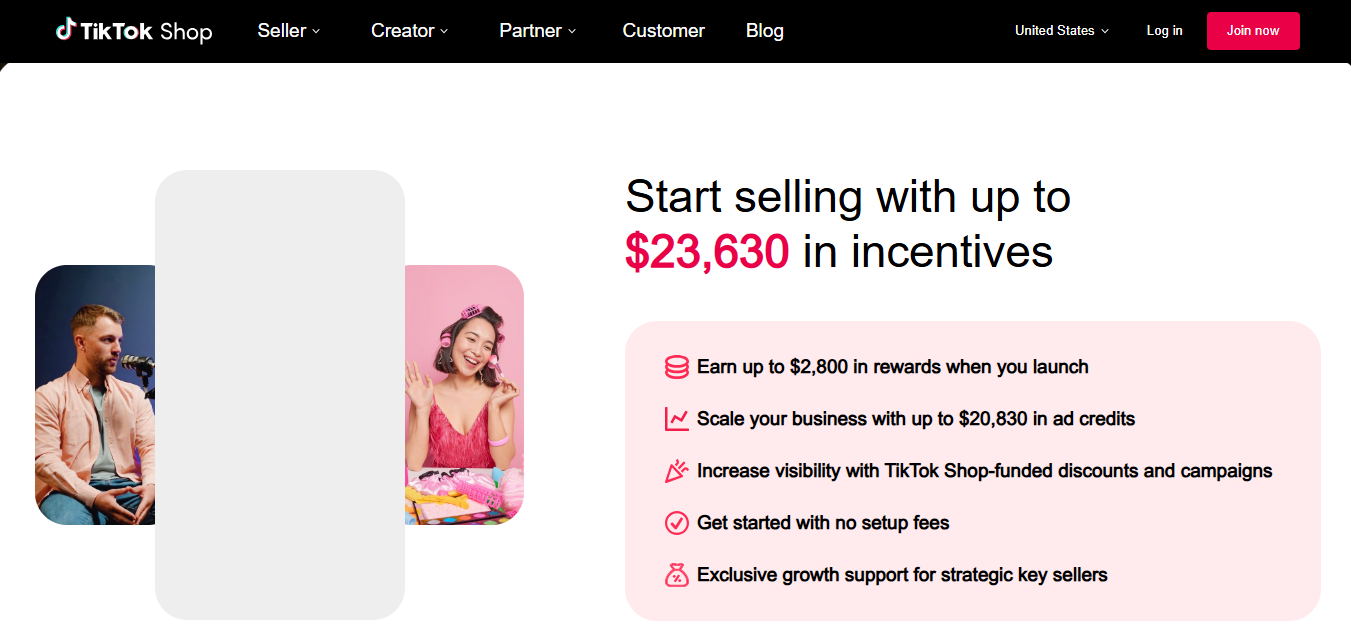
Before applying for TikTok Shop Affiliate, creators should check whether their account meets TikTok's current eligibility requirements. Requirements may vary depending on region, account status, and TikTok Shop policies.
Basic Account and Identity Requirements
TikTok typically reviews several factors before allowing creators to access affiliate features, including age eligibility, identity verification, account standing, and regional availability.
- You must meet TikTok's minimum age requirement for creator and affiliate features. In many markets, users must be 18 or older to participate.
- TikTok may require identity verification information depending on your location and account type. This can include government-issued identification or other verification details required for payment processing.
- TikTok Shop availability depends on your market. The program has expanded beyond its initial launch markets, and creators should check TikTok's official eligibility pages for the latest supported regions.
- Your account should remain in good standing and follow TikTok's Community Guidelines and Shop policies. Previous violations may affect your eligibility or access to certain features.
Meeting eligibility requirements improves your chances of approval, but TikTok may review accounts individually based on market and policy requirements.
Follower Requirements and Creator Access Pathways
Follower requirements for TikTok Shop Affiliate access may vary depending on account type, region, and TikTok's current policies. Some creator pathways may require audience thresholds, while other TikTok Shop features may be available through seller account connections.
TikTok has tested different creator access programs and eligibility pathways in selected markets. Availability and requirements may change over time, so creators should confirm the latest information through TikTok Shop's official resources.
How to Access TikTok Shop Product Features Without a Large Following
If you do not have a large audience yet, another option is exploring TikTok Shop seller account features that allow merchants to connect products with TikTok profiles.
- Create your individual or business profile at the TikTok Shop Seller Center.
- Navigate to "My Account" > "Linked TikTok Accounts" inside the Seller Center dashboard.
- Add your personal TikTok profile as an Official or Marketing Account on your Seller profile. Available account linking options depend on your region and Seller Center permissions.
- Once linked, your basket icon and Product Showcase features will be available, enabling product tagging capability while you grow your audience organically.
This option allows creators to utilize seller account connection features while building their following over time.
How to Apply for the TikTok Shop Affiliate Program
The application process is generally straightforward, but the time required depends on your account setup, region, verification status, and whether additional information is needed.
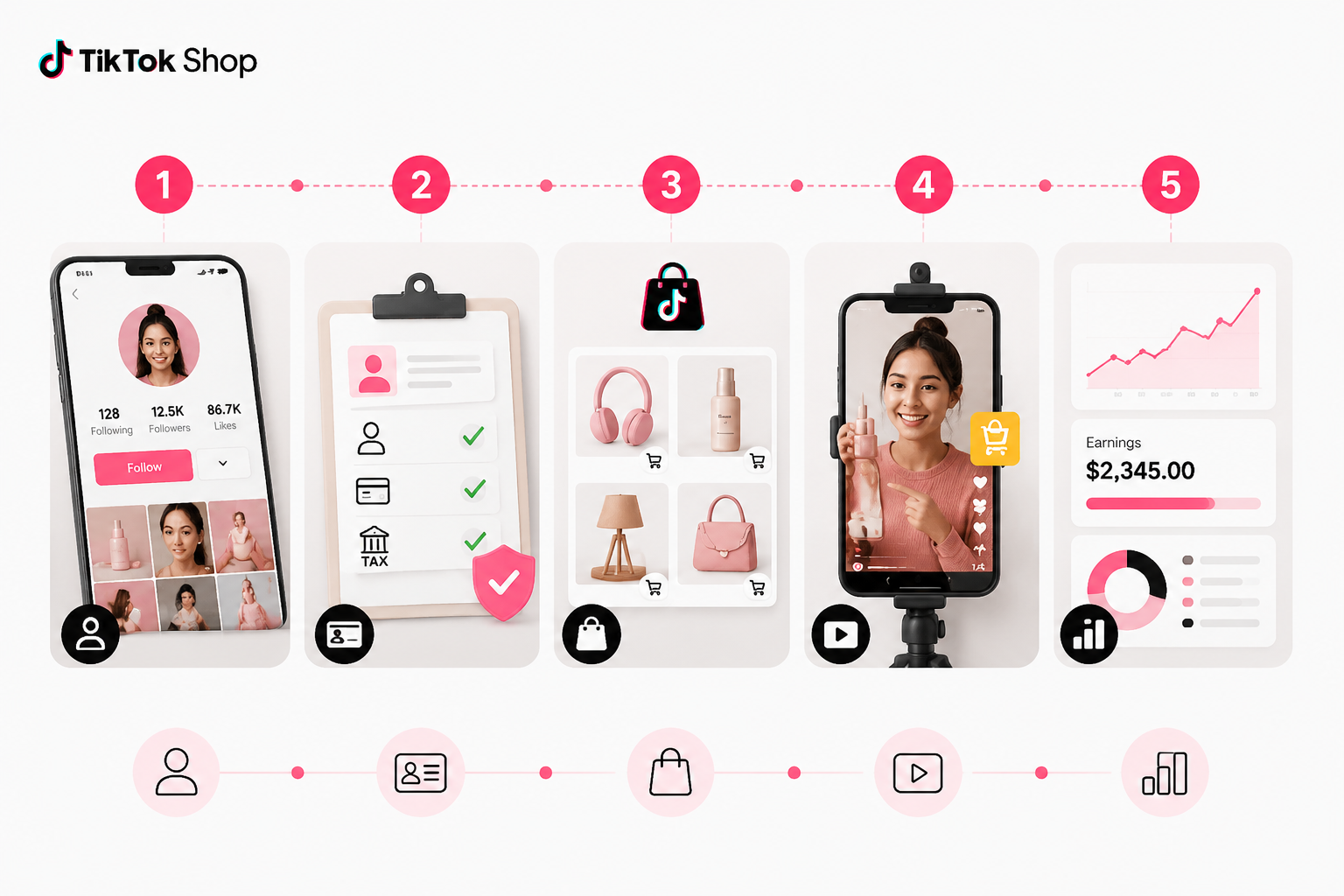
Step 1: Set Up an Eligible Account & Define Your Niche
Start with an eligible TikTok account that can access TikTok Shop creator features. Existing accounts may be able to apply depending on account type, region, and eligibility requirements.
Creator Tip: Before applying, make sure your profile clearly communicates your niche. Accounts focused on a specific category, such as beauty, fitness, home products, or gadgets, often make it easier to create consistent affiliate content and convert viewers into buyers.
Step 2: Submit Identity and Tax Details
Access the creator monetization section inside the app to complete your profile verification. Ensure that all information you provide is accurate, especially identity, payment, and tax-related details. Incorrect information may delay verification or affect your ability to receive commissions.
Depending on your country or region, TikTok may require tax information before you can receive commission payments. Creators should provide accurate tax details according to their local regulations to maintain compliant payout processing.
Step 3: Source from the Product Marketplace
After approval, explore TikTok Shop's product marketplace and evaluate products based on factors such as audience fit, content potential, price point, reviews, and commission structure. You can add chosen items directly to your profile showcase or request product samples for eligible listings.
Step 4: Create Problem-Solving Content
Create short-form videos or livestream content that demonstrates the product naturally. Effective affiliate content usually focuses on product benefits, demonstrations, comparisons, tutorials, or customer problems rather than direct advertising. Tag the product in your upload so the yellow basket appears directly on viewer screens.
Step 5: Track Performance and Payouts
TikTok tracks eligible sales and calculates commissions according to its payment and attribution policies. Commission availability may depend on order status, returns, and regional payment schedules. Keep monitoring your creator analytics to see which video styles and product tags drive the highest conversion rates.
How to Choose Products to Promote & Get Free Samples
Product selection is the foundation of affiliate conversions. A high-demand product with practical utility can convert effectively even with simple filming techniques, whereas a poor product rarely succeeds despite polished editing.
What Products Perform Best for Affiliates
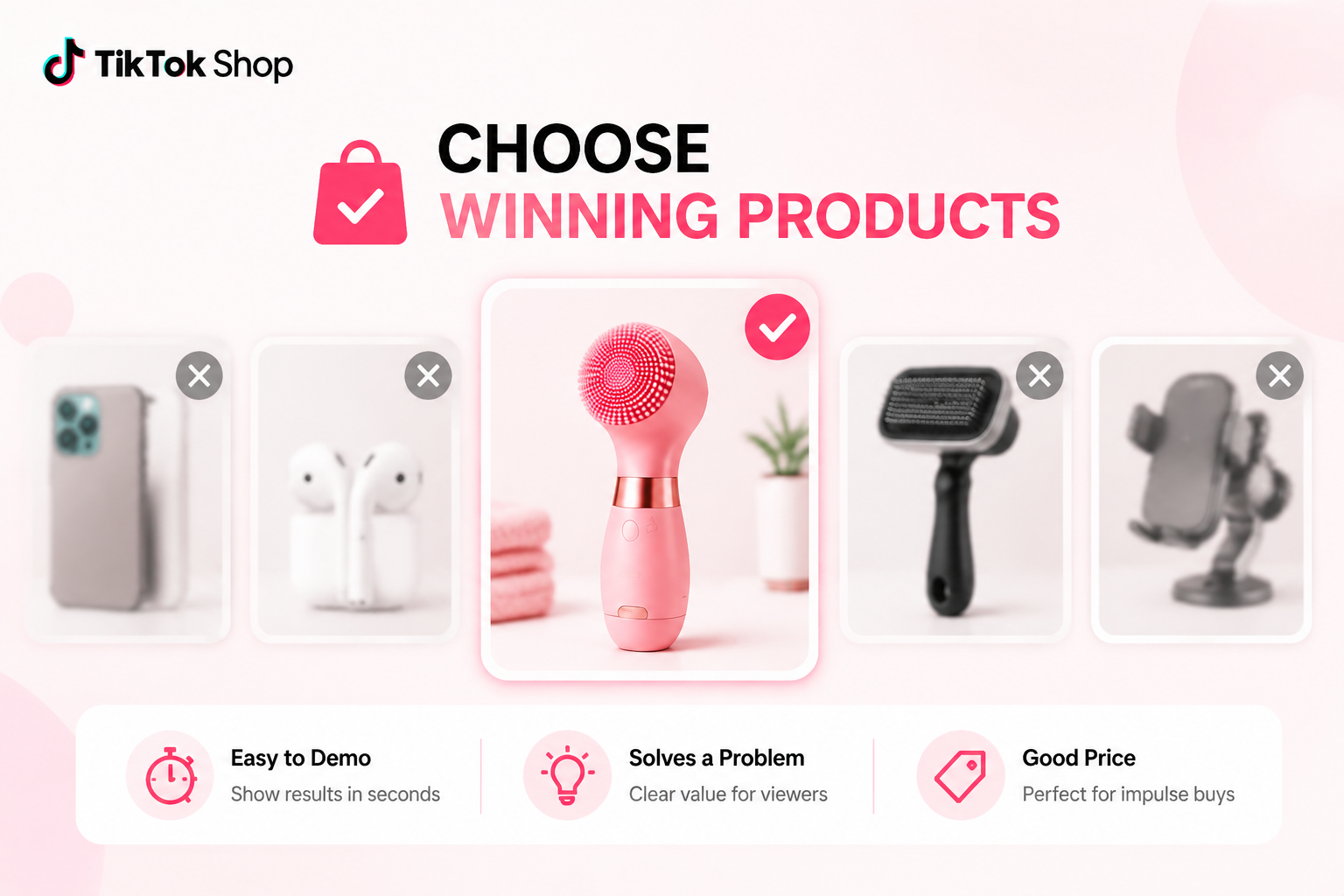
Beauty tools, home gadgets, pet accessories, and skincare products are popular affiliate categories because their value and transformations can be demonstrated clearly on camera. Focus on items priced moderately (often under $50) that solve evident daily problems and encourage impulse checkout decisions.
Product Selection Checklist for Affiliates
- Can the product be demonstrated in seconds? Products featuring immediate before-and-after results, comparisons, or intuitive demonstrations capture viewer attention instantly.
- Does it solve a clear, recognizable problem? Focus on items with distinct utility—such as a portable travel steamer or an anti-bark pet tool—rather than generic items lacking clear benefits.
- Is the price point suitable for impulse buying? Accessible price ranges minimize purchase hesitation inside short-form video feeds.
- Does the supplier maintain reliable fulfillment? Consistent merchant dispatch times and positive customer reviews protect your reputation and minimize refund-driven commission clawbacks.
Products to Avoid
Avoid products with obscure value propositions, excessively high shipping fees, or histories of frequent customer returns. If an item requires extensive explanation before viewers understand its purpose, audiences are likely to scroll past the video before reaching the checkout link.
How to Request and Receive Free Product Samples
Creators can apply for free product samples directly through open collaboration listings in the Product Marketplace. Sellers review applicant profiles based on content consistency, average view volume, and audience relevance before approving sample shipments. Once a sample arrives, creators are typically expected to publish shoppable review content within a designated timeframe to maintain favorable collaboration ratings.
How to Make Videos That Actually Sell
Content execution is the primary driver of affiliate conversion. Tagging a product link without sufficient viewer engagement and watch time will not produce meaningful sales.
Top Video Formats for Affiliate Products
Organic, user-generated formats consistently outperform polished commercial ads. The most effective formats include unboxings, side-by-side product comparisons, problem-and-solution demonstrations, and concise tutorial walkthroughs that blend naturally into user feeds.
How to Hook Viewers in the First 3 Seconds
Structure videos by presenting the outcome or core transformation first. Opening with a dramatic before-and-after visual, addressing a widespread annoyance directly, or leading with a compelling hook question prevents viewers from scrolling away before they understand the product's value.
Tagging Products and Clear Calls to Action (CTAs)
Tag products directly during the upload process so the yellow basket appears immediately when the item is shown on screen. Combine visual screen pointers with explicit verbal prompts—such as reminding viewers to tap the yellow basket for pricing and availability—to guide interested buyers through in-app checkout.
How to Maximize TikTok Shop Affiliate Earnings with AI
Scaling earnings as an affiliate requires systematic testing and efficient production workflows. Integrating AI-assisted tools into daily operations accelerates research and creative optimization across multiple product categories.
Using AI Tools to Accelerate Content Creation in 2026
Modern creators use AI applications to speed up trend research, scriptwriting, and video variation testing:
- Generating Varied Opening Hooks: Rapidly produce alternative hook scripts (e.g., negative angles, question-based openers, curiosity prompts) to test which intro retains the highest percentage of viewers.
- Analyzing Customer Review Sentiment: Extract recurring objections and frequently asked questions from product reviews to address buyer hesitations directly in video copy.
- Iterating Creative Angles: Structure multiple narrative approaches around the same product to reach different viewer personas across the TikTok algorithm.
Leveraging TikTok Live for Real-Time Conversions
Hosting shoppable livestreams allows creators to showcase product features in real time, answer viewer questions on the spot, and build community trust. Combining live demonstrations with time-sensitive bundle promotions creates buying urgency that boosts overall conversion velocity.
How Commissions and Payouts Work
Understanding commission structures, settlement timelines, and payout procedures ensures accurate cash flow management for your affiliate business.
Commission Rates by Collaboration Type
Standard open collaboration rates are set by individual merchants and typically vary across product categories. High-margin items such as beauty tools and apparel frequently offer higher baseline percentages, while consumer electronics generally operate on narrower margins. Creators with established sales records can negotiate customized Target Collaborations or private campaign rates directly with merchants.
Payment Settlement Schedules and Return Buffers
Commission funds enter a holding clearance period upon verified parcel delivery. This standard buffer period accounts for customer return windows, refunds, and potential order cancellations. Once the settlement window elapses without active disputes, the commission moves into your withdrawable balance in accordance with TikTok Shop's regular payment schedules.
Setting Up Payouts and Withdrawing Earnings
Configure your preferred bank account or payout method directly within the Affiliate Center. Once funds clear the post-delivery settlement buffer, withdrawals can be executed automatically or manually based on platform settings, without requiring manual merchant invoicing.
Common Mistakes and Policy Violations to Avoid
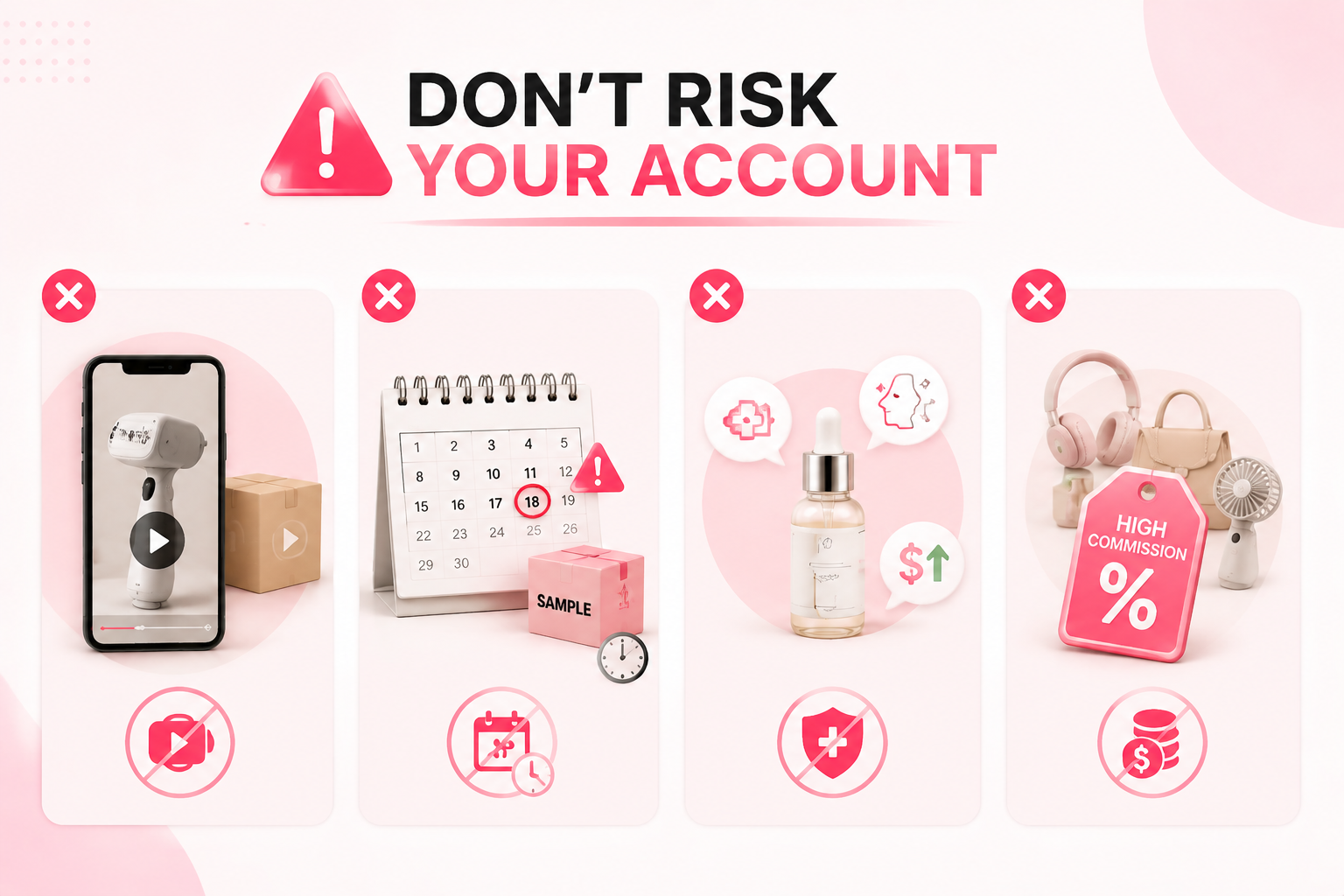
Maintaining strict policy compliance is essential to keep your creator monetization access in good standing. Avoid these common pitfalls that trigger algorithmic restrictions or account suspension:
Reusing stock manufacturer video clips without original demonstrations triggers unoriginal content flags and limits video distribution across user feeds.
Failing to post shoppable content within agreed sample fulfillment windows lowers creator collaboration scores and restricts future sample eligibility.
Making exaggerated medical, cosmetic, or financial promises violates community commerce guidelines, leading to commission holds and account strikes.
Promoting low-quality or irrelevant products solely for high commission rates harms audience trust, reduces view retention, and increases return rates.
TikTok Shop Affiliate vs. Dropshipping vs. Brand Ownership
As creators gain traction, understanding the difference between earning affiliate commissions and building an independent ecommerce business is critical for long-term growth.
| Comparison Metric | TikTok Shop Affiliate | Dropshipping (Seller) | Custom Branded Store |
|---|---|---|---|
| Primary Role | Content creator & promoter | Storefront owner & marketer | Brand builder & business owner |
| Profit Potential | Commission per sale (variable) | Retail price minus product/ad costs | High long-term brand equity & margins |
| Logistics Management | Zero logistics responsibilities | Managed via fulfillment partners | Automated supply chain & packaging |
| Customer Data Ownership | No customer data access | Direct customer order access | Full CRM, email list & repeat buyer data |
From TikTok Shop Affiliate to Building Your Own Ecommerce Brand
Some creators eventually move beyond affiliate marketing by using their product knowledge, audience insights, and customer feedback to develop their own ecommerce brands. While affiliate commissions provide a practical entry point into social commerce, owning your product line enables you to build long-term business equity, protect profit margins, and manage direct customer relationships.
Why Affiliates Explore Brand Building
Affiliate marketing allows creators to test product demand without purchasing inventory upfront. By analyzing which products receive consistent views, comments, and in-app checkouts, creators gain direct market validation. Once a specific item proves to have lasting consumer demand, transitioning to a private-label or branded dropshipping model captures full retail margins rather than single-digit commission cuts.
When Should You Consider Building Your Own Brand?
- Consistent Sales History: A specific product or category generates steady conversions across multiple videos rather than a one-time viral spike.
- Audience Brand Recognition: Viewers associate your profile with specific niche recommendations (such as skincare tools or home organization), establishing personal credibility.
- Direct Customer Feedback: Video comments highlight common product flaws or requested variations, showing clear opportunities for custom product improvements.
- Margin & Channel Control: You want to expand sales across multiple storefronts (such as Shopify, Amazon, and TikTok Shop) while retaining customer data for retention marketing.
Solving Supply Chain and Fulfillment Operational Challenges
When creators transition to selling their own branded products, operational demands increase significantly. Managing inventory levels, international product sourcing, custom packaging, and daily order fulfillment requires dependable logistics infrastructure.
Working with dedicated fulfillment platforms simplifies these operational requirements. Solutions such as EPROLO enable ecommerce sellers to automate order synchronization, source quality items from verified manufacturers, add custom branding elements (such as branded packing tape, custom stickers, and thank-you cards), and dispatch orders through fast express shipping lines.
Frequently Asked Questions
What is TikTok Shop Affiliate?
TikTok Shop Affiliate is an in-app monetization program that allows creators to tag third-party merchant products in their videos and livestreams. When viewers buy through the embedded yellow basket, the creator receives a performance commission while the merchant handles product sourcing, packing, and customer delivery.
How does TikTok Shop Affiliate work?
Creators browse the Product Marketplace, select items fitting their content niche, and tag them in short videos or live broadcasts. Viewers complete native checkout inside TikTok without leaving the application. TikTok logs the attribution, and commissions are credited to the creator once the post-delivery return buffer period concludes.
How many followers do you need to become a TikTok Shop Affiliate?
Follower requirements for TikTok Shop Affiliate access vary depending on region, account category, and active platform pilot initiatives. While certain creator marketplaces require audience minimums, creators building their audience can also explore connecting personal accounts via the TikTok Shop Seller Center to enable product tagging and showcase features.
Can beginners become TikTok Shop affiliates?
Yes. Beginners can start by selecting a focused niche, testing visual problem-solving products, and producing authentic demonstration content. Success is driven by consistent posting, strong 3-second visual hooks, and audience trust rather than extensive technical production.
Is being a TikTok Shop affiliate worth it?
TikTok Shop Affiliate is an effective low-risk monetization channel for creators who want to earn commissions without managing inventory or shipping. However, performance varies based on niche selection, video consistency, audience engagement, and product demand.
What products are best for TikTok Shop Affiliate marketing?
Top-converting items typically share three characteristics: clear visual before-and-after demonstration value, recognizable problem-solving utility (such as beauty tools, pet items, and smart home accessories), and impulse-friendly price points that reduce purchasing hesitation.
Do TikTok Shop affiliates need to handle shipping or customer service?
No. Affiliates do not handle inventory, packing, postage labels, or customer inquiries. The merchant who owns the product listing fulfills the order according to platform shipping SLAs, while TikTok manages customer payment processing and tracking.
How long does TikTok Shop affiliate approval take?
Approval times vary based on account readiness. Many profiles with completed identity records receive automated approval within minutes, while applications requiring manual document or tax verification typically take 24 to 72 business hours.
Can I promote dropshipping products as an affiliate?
Yes. Affiliates can promote products supplied via dropshipping models as long as the merchant complies with platform fulfillment speed, quality standards, and tracking upload policies. Affiliates focus purely on content while the merchant fulfills orders.
Is TikTok Shop Affiliate better than dropshipping?
They serve different business stages. Affiliate marketing has zero financial barrier to entry and requires no logistics management, making it ideal for content creators. Dropshipping and brand ownership offer higher profit margins, custom packaging control, and multi-channel customer retention. Many creators begin as affiliates to validate product demand before transitioning into branded ecommerce operations.
Can I transition from affiliate marketing to my own brand?
Yes. Affiliate marketing acts as practical market testing. Once you identify items with strong recurring demand, you can launch an independent storefront and partner with automated fulfillment platforms like EPROLO to handle custom branding, packaging inserts, and express international shipping.
Read More from EPROLO Blog
Written by
Josie
Josie is a skilled marketing specialist with expertise in TikTok, Facebook, and YouTube. She excels at audience growth and social media account management, consistently delivering valuable insights across key social marketing channels. Her strategic approach helps brands build meaningful engagement and expand their digital presence effectively.