AI dropshipping is real in 2026, but most beginner sellers automate the wrong layer of their business. AI product research, AI store builders, and AI ad generators speed up workflows, yet they do not fix product selection, supplier reliability, or thin margins. This guide separates what AI dropshipping genuinely does well from the hype, so new operators can build a store that survives its first 90 days.
Key Takeaways
- AI dropshipping is a real category in 2026, built on product research, store builders, ad copy, and pricing automation.
- Pure automation does not rescue a broken product, supplier, or margin structure; it just accelerates failure.
- Most beginner losses come from integration mistakes, not from the AI tools themselves.
- Beginners with no retail experience can use AI, but they still need to validate suppliers and unit economics manually.
- You can start with no money if you pair free AI research with a free EPROLO account and a free Shopify trial.
Table of Contents
Is AI Dropshipping Actually Worth Trying or Just Hype?
AI dropshipping is a real category of e-commerce tooling in 2026. The major platforms market AI-powered product research. According to Grand View Research’s AI in Retail Market Analysis, the global retail AI market is projected to reach USD 40.74 Billion by 2030, expanding at a CAGR of 23.0%. Furthermore, the enterprise generative AI sector specifically within retail and e-commerce is scaling. This data proves that automation is no longer an optional growth hack—it is the baseline infrastructure of modern B2B commerce. However, the honest answer sits in the middle.
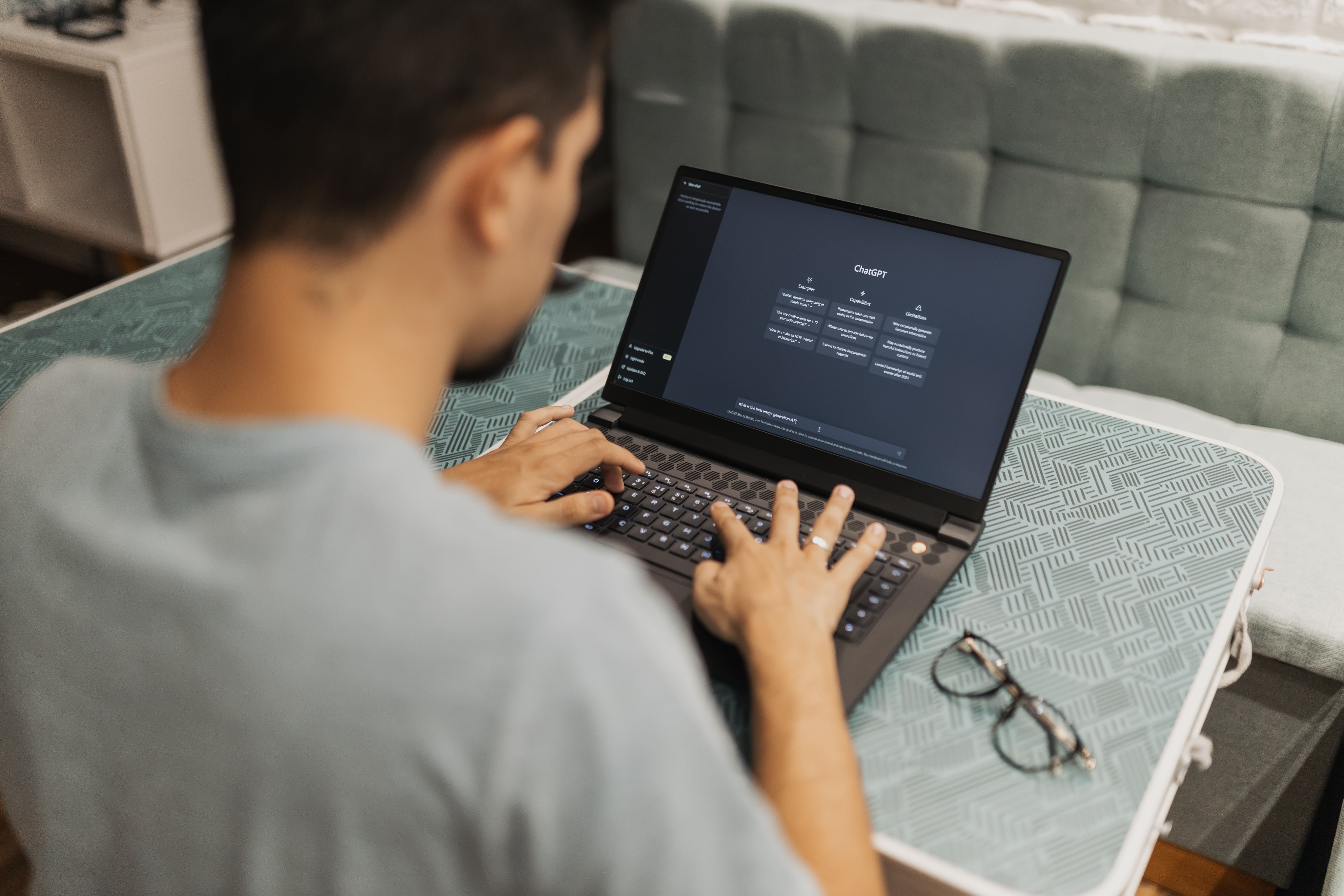
What AI genuinely does well: scan thousands of supplier listings in seconds, flag items with rising search volume, draft product descriptions in your brand voice, generate ad creative variants for A/B testing, and monitor competitor prices. These tasks used to consume a full-time employee per store. AI compresses them into an afternoon of prompt setup and review.
Where the hype overstates: AI does not pick a winning niche for you. It does not negotiate supplier terms. It does not absorb the cost of an ad that flops. It does not rewrite a 12 percent margin into a 30 percent margin. If the inputs are weak, the outputs are weak at higher speed. Most failed AI dropshipping stores did not fail because the AI was bad; they failed because the operator automated a broken business model.
So is ai dropshipping worth trying in 2026? Yes, if you treat AI as a force multiplier on a sound foundation: validated products, real supplier reliability, and unit economics that survive ad spend. No, if you expect a chatbot to replace every judgment call.
The next section breaks down which AI dropshipping tools the major platforms actually ship today, and where each one breaks.
Top AI Dropshipping Tools and Why They Limit Pure Automation
The AI dropshipping market in 2026 splits into four functional layers. Understanding which layer each tool covers is the difference between building a real store and burning ad spend on a polished storefront with nothing behind it.
Layer 1: AI product research. Sell The Trend, Ecomhunt, PipiAds, Dropship.io, and TikTok Creative Center use machine learning on marketplace sales velocity, Google Trends, and engagement signals to score products. They predict which items may sell before you commit ad budget. The limit: trend signals lag by 24 to 72 hours, and a high score does not guarantee margin after shipping and duty.
Layer 2: AI store builders. Shopify Magic, AutoDS AI Store Builder, and Shoplazza AI generate theme layouts, product copy, and homepage hero text from a one-line niche prompt. Useful for a fast first draft. The limit: generated copy reads as generic across thousands of new stores, so differentiation still requires manual editing.
Layer 3: AI ad and creative generation. Tools like AdCreative.ai and native Meta Advantage+ campaigns generate image variants in seconds. However, as highlighted in eMarketer’s 2026 AI Advertising Forecast, this widespread automation has triggered severe creative fatigue across social channels. Because every beginner leverages the same synthetic assets, ad platforms are increasingly favoring distinct, human-edited brand voices.
Layer 4: AI pricing and inventory automation. AutoDS, Ecomdash, and Inventory Source reprice based on competitor moves and pause listings on stockouts. The limit: their decisions optimize the existing catalog, not the catalog selection itself. A bad catalog with smart repricing still loses money.
Does ai dropshipping work when all four layers are stacked? In mature stores run by experienced operators, yes. In first-store beginner setups, stacking all four layers before validating one product is the most common path to a closed shop in under 60 days.
How to Use AI for Dropshipping to Minimize Beginner Risks
If you are starting your first store, the goal is not to automate everything. The goal is to automate the highest-leverage tasks and keep judgment on the rest. Here is the sequence most beginner survivors follow in 2026.
Step 1: Use AI product research to build a shortlist of 10 to 15 candidate products, then manually validate each one against Amazon Best Sellers, Google Trends 12-month charts, and at least three supplier pages. AI research compresses this from a week to an afternoon, but the validation step is non-negotiable.
Step 2: Use an AI store builder for the first draft of your homepage, collection pages, and product descriptions. Then rewrite the headline, the value proposition, and the FAQ in your own voice. AI gives you a starting template; you give the store a soul.
Step 3: Run AI ad creative variants against a small daily budget, roughly 20 to 50 USD per ad set, for 7 days. Pause anything with a cost per click above your target. AI creative is for testing, not for the only ad your store will ever run.
Step 4: Layer AI pricing automation only after you have 30 days of order data. Data tracked by McKinsey reveals that retail operators deploying AI-driven dynamic pricing models report a 15% to 20% improvement in profit margins within their first quarter of optimization. But remember the catch: these software algorithms calculate optimal pricing points based on your historical conversion rates and competitor positioning. If your baseline product costs and supply chain logistics are unstable, the AI will default to aggressive price-cutting, accelerating your losses instead of lifting your contribution margin.
Step 5: Keep supplier selection manual. The single biggest beginner killer is a supplier who ships wrong items, ships late, or disappears. No AI tool in 2026 screens supplier reliability as well as a 14-day test order with photo verification. Run that test before you scale any winning product.
Common Integration Mistakes That Liquidate E-commerce Stores
Most failed AI dropshipping stores do not die from the AI. They die from integration mistakes made in the rush to launch. These are the five failure modes that show up again and again in 2026 storefront autopsies.
Mistake 1: Auto-syncing every supplier listing into Shopify. A 10,000 SKU catalog with no curation looks like a warehouse, not a brand. Visitors bounce in 8 seconds because they cannot tell what the store sells. Curate to 30 to 80 SKUs per collection, even when the supplier offers 800.
Mistake 2: Trusting AI-generated copy verbatim. AI product descriptions often claim fabric, fit, or origin that the supplier cannot deliver. The first refund dispute becomes a chargeback, then a Trustpilot review, then a lower ad quality score. Always rewrite the AI copy to match the actual product photo and supplier spec sheet.
Mistake 3: Connecting AI pricing to a catalog with negative margins. Repricing tools optimize around the existing price, not the unit cost. If your landed cost including shipping, duty, and ad spend is already negative at the current price, AI will cut the price further and accelerate the loss. Fix the cost structure first; then automate pricing.
Mistake 4: Running AI ads to a generic landing page. Advantage+ and Meta AI ad delivery expect a clear product-market fit signal in the first 3 seconds. If the landing page is the AI-generated template without an edited headline, the algorithm cannot find the right audience and your CPM drifts up by 40 to 80 percent over 14 days.
Mistake 5: Skipping supplier quality checks because AI says the product is trending. Trending demand does not equal shipping reliability. Test every new supplier with a 14-day paid order, photo on receipt, and tracking before you connect them to your live ad account. One bad supplier on a viral product will refund-flood your store within a week.
Build a Sustainable Automated Storefront Today
A sustainable AI dropshipping store in 2026 is one where AI handles the heavy operational lifting while the operator handles the strategic decisions. The storefront survives because every layer was tested before it was automated.
Start with the foundation. Pick a niche where you can name three to five competitor brands that already sell at scale. Validate your supplier with a paid test order and a 14-day clock. Confirm your unit economics on paper before you spend a dollar on ads. EPROLO's free account gives new operators product sourcing, custom branding, and warehouse fulfillment across 26 global locations without upfront fees, which removes the largest fixed cost for a beginner storefront.
Layer AI on top, not underneath. Add product research first, then store copy refinement, then ad creative, then pricing automation. Each layer gets 7 to 14 days of human review before the next layer goes live. This sequence prevents the all-at-once failure mode where a broken supplier takes down a fully automated ad campaign.
Track the four numbers that decide store survival: contribution margin per order, refund rate, customer acquisition cost, and repeat purchase rate. If any of these move in the wrong direction for 14 consecutive days, pause the AI layer that touches that number and investigate manually. AI is a multiplier; it amplifies whatever is already true about your business.
Finally, treat automation as a privilege earned by validation, not a starting point. The beginners who treat AI dropshipping for beginners as a question about which tool to plug in first usually close their store in under 90 days. The beginners who treat it as a question about which foundation to validate first usually build stores that survive their second year.
Frequently Asked Questions
How much money can you make from AI dropshipping?
Income from AI dropshipping varies widely based on niche, ad budget, and supplier margins. Public case studies in 2026 show beginner stores earning anywhere from 0 to 2,000 USD per month in the first 90 days, and 3,000 to 15,000 USD per month after 12 months of operation. AI tools improve speed and creative throughput, but they do not change the underlying math: revenue minus product cost minus shipping minus ad spend minus refunds equals your actual take-home. Plan on a 90-day runway before judging any AI dropshipping store's earnings.
Can I start AI dropshipping with no money?
Yes, with constraints. You can launch an AI-assisted dropshipping store with 0 USD of upfront capital by combining free trials (Shopify 3-day, then 1 USD per month for the first 3 months) with a free EPROLO account that requires no subscription and no minimum order. AI product research tools offer free tiers, AI store builders generate a draft homepage in minutes, and AI ad copy tools have free monthly credits. Your first real cost is ad spend, which you can cap at 5 to 10 USD per day until a product proves itself.
What do I need for AI dropshipping?
You need four things to launch an AI dropshipping store in 2026: a hosted storefront (Shopify, Shoplazza, or WooCommerce), a free supplier account such as EPROLO that handles sourcing, branding, and fulfillment, an AI tool stack for product research, ad creative, and pricing, and a 200 to 500 USD monthly ad budget to test products. You also need 10 to 15 hours per week for the first 60 days to validate suppliers, edit AI copy, and review ad performance manually.
Does ai dropshipping work for people with zero retail experience?
AI dropshipping works for first-time operators if they accept that AI compresses execution time but does not replace retail judgment. Beginners without retail experience still need to learn unit economics, supplier verification, and refund handling. The realistic path is to use AI tools to skip the parts you do not yet know how to do (product research, ad creative, pricing) while manually handling the parts where inexperience costs money (supplier vetting, refund decisions, niche selection). After 6 to 12 months of operation, AI can take over more of the operational layer.
Related reading
- How to Find Best Dropshipping Items That Actually Sell in 2026
- How to Build a Branded Dropshipping Store With Zero Inventory
- The Real Pros and Cons of Dropshipping in 2026
- White Label Dropshipping: Risk Management for New Operators
- Is Amazon Dropshipping Profitable in 2026? Operator Analysis
- China Clothing Wholesale Market: The 2026 Sourcing Guide
Written by
Inverse is a skilled Google SEO operations expert , with deep expertise in technical site audits, content clustering, and keyword strategy. Excelling at search engine visibility and organic traffic optimization, Inverse consistently delivers actionable insights across key search channels. This strategic approach helps e-commerce brands build sustainable organic traffic and expand their digital footprint effectively.
Editorial note: This article reflects EPROLO operator practice as of July 2026. AI tooling in the dropshipping space evolves quickly; verify any specific tool feature, pricing tier, or marketplace policy against the vendor's current documentation before committing ad budget. Statistics cited from third-party sources are attributed inline.