Efficient fulfillment is crucial for any ecommerce business. It goes beyond shipping, covering inventory storage, order processing, and returns management to ensure customers receive their orders quickly and accurately. Choosing the right fulfillment solution can improve delivery speed, reduce errors, and enhance the overall customer experience.
With so many providers offering different services, knowing which one fits your business is essential. This guide explores ecommerce fulfillment in 2026, covering key factors to consider, tips for selecting the right provider, and a detailed look at top solutions like EPROLO, ShipBob, and Red Stag Fulfillment to help you scale successfully.
Key Takeaways
- Fulfillment drives customer experience & profitability: Fast, accurate delivery builds trust and repeat purchases, while poor fulfillment leads to negative reviews and lost revenue. Optimized fulfillment controls costs and supports scaling.
- Choosing the right model matters: In-house, 3PL, and dropshipping each suit different business sizes. Evaluating product size, order volume, accuracy rates, warehouse locations, and automation ensures operational success.
- Key performance factors: Returns/reverse logistics, shipping speed, carrier diversity, real-time inventory visibility, custom branding, transparent pricing, and quality customer support are essential for sustainable fulfillment.
- Top providers target specific needs: EPROLO excels at dropshipping & branding, ShipBob for fast US shipping, Red Stag for heavy products, while Easyship, FBA, ShipMonk, ShipHero and others serve cross-border, high-volume, or complex inventory requirements.
Table of Contents
1. What Is Ecommerce Fulfillment?
Ecommerce fulfillment refers to the entire operational process that takes place after a customer places an order online. This includes inventory storage, order processing, picking and packing, shipping, delivery, and handling returns.
While often overlooked, fulfillment is one of the most critical components of an ecommerce business. It directly impacts how customers perceive your brand, how efficiently your operations run, and how profitable your business becomes over time.
Why Ecommerce Fulfillment Matters
Fulfillment is not just logistics—it’s part of your customer experience.
Fast and reliable delivery builds trust and increases repeat purchases. Customers now expect 2–5 day shipping as a standard, especially in competitive markets like the United States.
Poor fulfillment, on the other hand, leads to delayed shipments, damaged products, and negative reviews. Even if your marketing is strong, bad delivery experiences can quickly hurt your reputation.
From a financial perspective, fulfillment also affects your margins. Inefficient storage, high shipping costs, and frequent errors can significantly reduce profitability. Optimized fulfillment helps control costs and supports scaling without operational chaos.
2. Types of Ecommerce Fulfillment Solutions
Choosing the right fulfillment model depends on your business size, budget, and long-term goals.
In-House Fulfillment
In-house fulfillment means you manage storage, packing, and shipping yourself. This gives you full control over operations and branding but requires time, labor, and warehouse space. It’s typically suitable for very small businesses or brands with low order volume.
Third-Party Logistics (3PL)
3PL providers handle warehousing, order processing, and shipping on your behalf. This allows you to outsource logistics and focus on marketing and growth. It is one of the most common solutions for scaling ecommerce businesses.
Dropshipping Fulfillment
Dropshipping eliminates the need to hold inventory. When a customer places an order, the supplier ships the product directly to the customer. Dropshipping fulfillment reduces upfront costs and risk, making it ideal for beginners and product testing.
3. How to Evaluate Ecommerce Fulfillment Services
Not all fulfillment providers are created equal. Choosing the wrong partner can lead to operational issues and lost revenue.
Product Size and Handling Capability
Different providers specialize in different product types. Some are optimized for small parcels, while others handle oversized or fragile items. If your products require special handling, make sure the provider has the right infrastructure.
Order Volume Requirements
Many fulfillment providers require a minimum monthly order volume, especially for warehousing services. This is important if you are considering scaling. Some platforms are flexible for beginners, while others are designed for established brands.
Accuracy and Error Rates
Order accuracy is critical. A reliable provider should consistently maintain accuracy rates above 99%. Even small error rates can result in refunds, returns, and customer dissatisfaction.
Warehouse Locations
The closer your inventory is to your customers, the faster and cheaper shipping becomes. Providers with multiple warehouses can help reduce delivery times significantly.
Integration and Automation
A good retail fulfillment solution provider like Outvio should integrate directly with ecommerce platforms like Shopify or WooCommerce, allowing orders to sync automatically.
International Shipping Support
If you sell globally, your provider must handle customs clearance, duties, and cross-border shipping efficiently. This is especially important for avoiding delays and unexpected costs.
4. Key Factors That Impact Fulfillment Performance
Returns and Reverse Logistics
Returns are unavoidable in ecommerce. A good fulfillment partner should have a clear and efficient process for inspecting returned items, restocking them when possible, and handling refunds.
Shipping Speed and Carrier Options
Working with multiple carriers allows flexibility in choosing the best shipping rates and delivery times. This also helps reduce delays during peak seasons.
Inventory Visibility
Real-time inventory tracking helps prevent stockouts and overselling. It also allows better demand forecasting and planning.
Custom Packaging and Branding
Branded packaging enhances customer experience and helps differentiate your business. This is especially important for private-label brands.
Pricing Transparency
Understanding the full cost structure is essential. This includes storage fees, pick-and-pack costs, shipping rates, and return handling fees.
Customer Support Quality
Reliable support is crucial when issues arise. Fast response times and quick access to internal information through Glean can prevent small problems from becoming major disruptions.
5. Comparison of Top Ecommerce Fulfillment Providers
| Provider | Best For | Key Strength |
|---|---|---|
| EPROLO | Dropshipping & branding | Sourcing, branding, and global fulfillment in one platform |
| AMZ Prep | Amazon sellers & omnichannel brands | Amazon-native fulfillment network with FBA prep, cold chain capabilities, and enterprise parcel rates |
| ShipBob | Growing ecommerce brands | Fast US shipping with distributed warehouses |
| Red Stag Fulfillment | Heavy products | Specialized handling for oversized and high-value items |
| Easyship | Cross-border sellers | Global carrier network and duty/tax automation |
| Fulfillment by Amazon (FBA) | Amazon sellers | Prime shipping and marketplace integration |
| OTW Shipping | Shopify beginners | Low entry barrier and simple pricing |
| ShipMonk | High-volume sellers | Advanced analytics and inventory management |
| ShipHero | Complex inventory | Strong warehouse management system |
| eFulfillment Service | New sellers | No minimum order requirements |
| Shipfusion | Specialized logistics | Cold chain and customized fulfillment solutions |
6. Top Ecommerce Fulfillment Providers in 2026
EPROLO
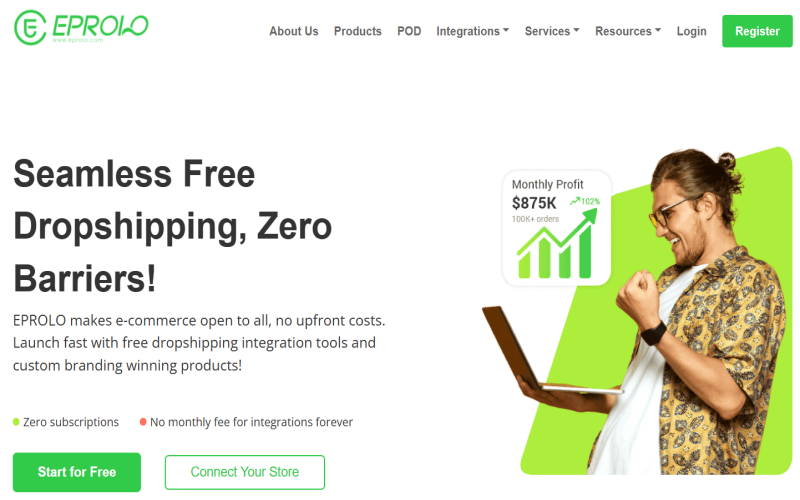
EPROLO is a fulfillment platform that combines dropshipping, product sourcing, and branding services into one ecosystem. It is particularly attractive for ecommerce beginners and growing brands because it reduces the complexity of managing multiple suppliers.
One of EPROLO's biggest advantages is its ability to support custom branding without requiring large upfront commitments. Sellers can add branded packaging, tapes, and inserts to create a stronger brand identity.
In addition, EPROLO integrates with platforms like Shopify and WooCommerce, allowing automated order processing and real-time tracking. Its global logistics network supports international shipping through multiple carriers, helping sellers reach customers worldwide.
AMZ Prep
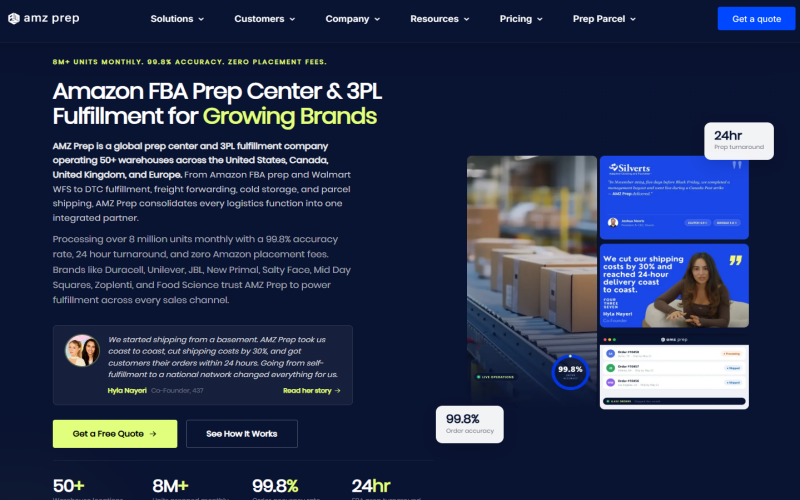
AMZ Prep is a North American 3PL and fulfillment network with 50+ centers across the US, Canada, and Europe, built for brands selling on Amazon and across multiple channels.
The platform covers Amazon FBA prep, cold chain, big and bulky handling, Seller Fulfilled Prime, and omnichannel fulfillment across Shopify, Walmart, and TikTok Shop. Its proprietary WMS, Navigate, automates shipping plan creation and provides real-time inventory visibility, while Prep Parcel gives brands access to enterprise carrier rates across 35+ carriers without needing enterprise volume.
Inbound check-in times average 2 to 4 days, compared to 15 to 30 days through standard Amazon logistics. It is best suited for Amazon-first brands scaling into omnichannel fulfillment.
ShipBob
ShipBob is one of the most popular 3PL providers for ecommerce brands looking to scale. Its large network of fulfillment centers allows businesses to offer fast domestic shipping, especially within the United States.
The platform provides strong technology support, including real-time inventory tracking and automated order routing. This helps businesses optimize shipping costs and delivery times as they grow.
However, ShipBob requires inventory storage and typically charges monthly storage fees, making it more suitable for established businesses rather than beginners.
Red Stag Fulfillment
Red Stag Fulfillment specializes in handling heavy, oversized, and high-value products. It is a strong option for businesses selling furniture, appliances, or fitness equipment.
The company focuses on accuracy and careful handling, which reduces the risk of damage during shipping. Its operations are primarily based in the United States, making it ideal for domestic fulfillment but less flexible for global expansion.
Fulfillment by Amazon (FBA)
Fulfillment by Amazon is designed for sellers operating within the Amazon ecosystem. It provides access to Amazon Prime shipping, which significantly improves conversion rates.
Amazon handles storage, packing, shipping, and even customer service for FBA orders. However, the platform comes with strict requirements, storage fees, and limited branding opportunities, which may not align with independent ecommerce brands.
Easyship
Easyship is a shipping-focused platform rather than a full fulfillment provider. It connects sellers with hundreds of global carriers and simplifies international shipping.
The platform automatically calculates duties and taxes, reducing the complexity of cross-border ecommerce. It is best used alongside another fulfillment solution rather than as a standalone system.
OTW Shipping
OTW Shipping is designed specifically for Shopify users who want a simple transition into 3PL services. Its pricing structure reduces upfront costs by charging fees only when orders are shipped.
This makes it a good option for startups and small businesses. However, its international capabilities and scalability are more limited compared to larger providers.
ShipMonk
ShipMonk is built for high-growth ecommerce businesses that require advanced fulfillment capabilities. Its platform offers detailed analytics, inventory forecasting, and multi-location fulfillment.
It is particularly suitable for brands with consistent order volume and more complex logistics requirements.
ShipHero
ShipHero combines fulfillment services with powerful warehouse management software. It is ideal for businesses with complex inventory systems, multiple SKUs, and large product catalogs.
Its system provides detailed control over inventory and operations, making it a strong choice for established ecommerce brands.
eFulfillment Service
eFulfillment Service is a beginner-friendly 3PL provider with no minimum order requirements. It allows new sellers to start outsourcing fulfillment without large commitments.
While it is cost-effective, it may not offer the same level of automation and scalability as larger providers.
Shipfusion
Shipfusion focuses on specialized fulfillment needs, including temperature-sensitive products and subscription box services. It provides a more customized approach, making it suitable for businesses with unique logistics requirements.
Its higher cost structure makes it more appropriate for established brands rather than small startups.
7. How to Choose the Right Fulfillment Solution
Step 1: Check your order volume
Determine how many orders you process each month. Low-volume businesses should prioritize flexibility, while high-volume stores need speed and scalability.
Step 2: Match provider to your product type
Ensure your provider can handle your products safely, whether they are small, fragile, bulky, or high-value.
Step 3: Consider shipping speed and coverage
Look at warehouse locations and delivery times. For international sales, confirm the provider can manage cross-border shipping efficiently.
Step 4: Understand total costs
Review all fees, including storage, pick-and-pack, shipping, and returns. Transparent pricing helps protect your margins.
Step 5: Check integration and automation
Providers that integrate with your ecommerce platform save time, reduce errors, and allow real-time order tracking.
Step 6: Review returns handling
Make sure the provider has a clear, efficient process for inspecting returns, restocking, and processing refunds.
Step 7: Test before committing
Start with a small batch of orders to evaluate speed, accuracy, packaging, and customer support before fully transitioning.
8. Conclusion
Ecommerce fulfillment is a critical part of building a successful online business. It affects everything from customer satisfaction to operational efficiency and long-term profitability. By choosing the right fulfillment solution, you can reduce complexity, improve delivery speed, and create a better overall customer experience. Take the time to evaluate your options carefully and test providers before making a long-term commitment.
9. FAQ
What is ecommerce fulfillment?
It is the process of storing, packing, and shipping products to customers after an order is placed.
How do I choose the right fulfillment provider?
Focus on your order volume, product type, shipping needs, and budget. Always test before committing.
What is the cost of e-commerce fulfillment?
Costs vary depending on the provider and services used. Traditional 3PLs often charge storage fees plus pick-and-pack fees. Always request a full pricing breakdown, including shipping, returns, and any potential hidden fees.
How can I improve my fulfillment process?
To improve fulfillment, choose a provider with warehouses close to your customers to reduce delivery times. Automate order processing through platform integrations, maintain real-time visibility of orders and inventory, and regularly monitor performance metrics like order accuracy and fulfillment speed.
Read More from EPROLO Blog
Written by Iris
Iris is a digital marketing expert with 3+ years of experience in e‑commerce and dropshipping. She helps online store owners grow their sales through SEO-friendly content, supplier guides, and practical marketing tips, making it easier to run and scale profitable stores.