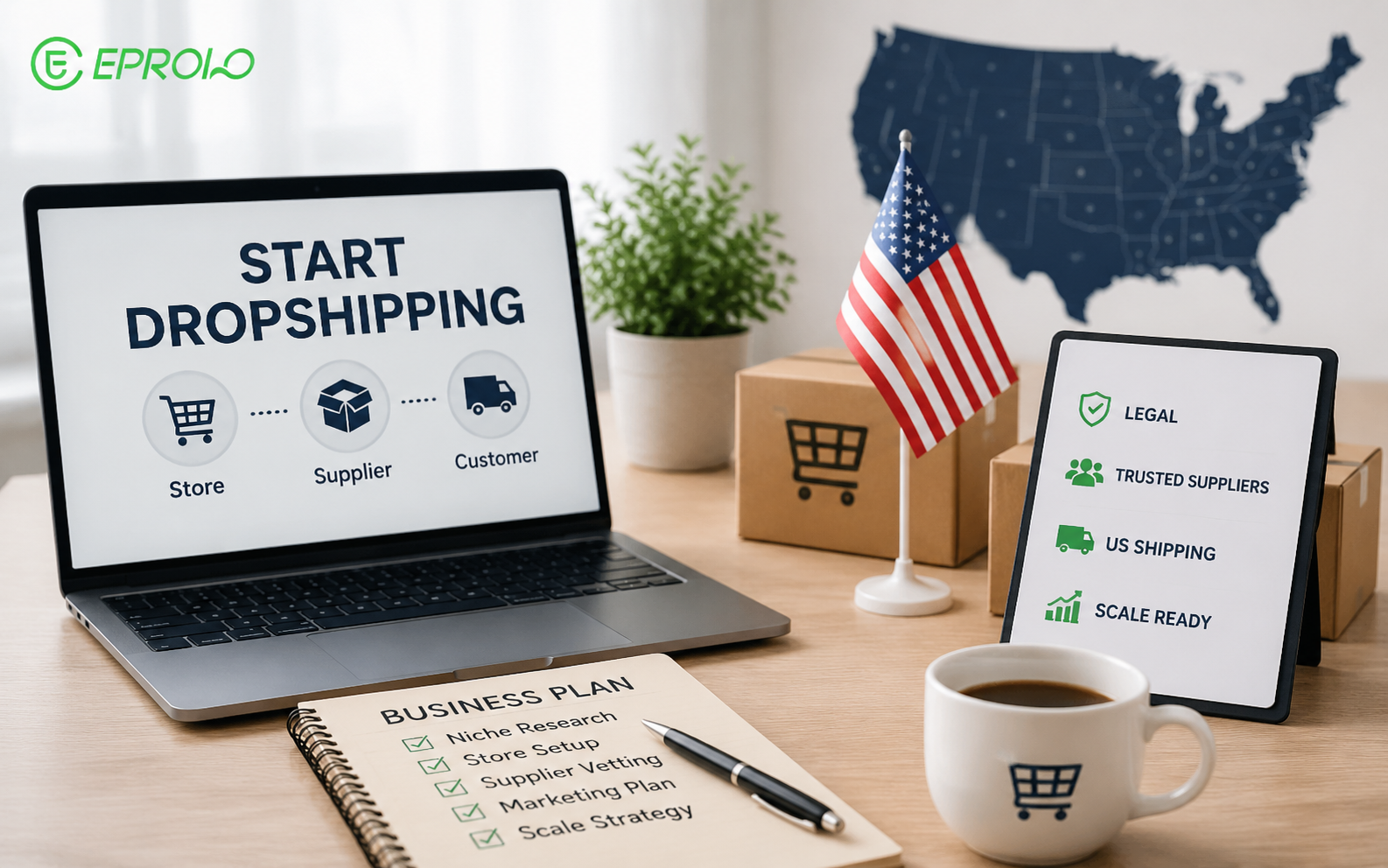
Starting a dropshipping business requires no inventory investment, yet selling legally in the US demands more than a Shopify store. This guide covers LLC formation, EIN registration, tax compliance, supplier agreements, and payment setup for a scale-ready US store in 2026.
While finding winning products and building a Shopify store are the first steps of learning how to start dropshipping, securing your legal backend is what ensures your business long-term survival in the US market.
Key Takeaways
- Corporate Asset Protection: Forming an LLC protects personal finances from liability and is necessary for obtaining EINs, business bank accounts, and merchant processing.
- Eliminating Double Taxation: Registering a state resale certificate prevents automated supplier platforms from charging redundant sales tax on wholesale purchases.
- Risk Mitigation Protocols: Long-term survival requires managing FinCEN BOI reporting, USPTO trademark checks, and keeping chargeback rates below processor thresholds.
Table Of Contents
Why Is A Legal Corporate Structure Required To Start Dropshipping In The USA?
A legal corporate structure protects your personal assets from business liabilities. In dropshipping, liability can arise from supplier errors, product defects, or customer injury claims. Without a formal business entity, you are personally responsible for these risks. Beyond protection, payment processors and suppliers require an EIN, which you can only obtain through a registered business entity such as an LLC, C-Corp, or sole proprietorship with a filed schedule.
Stripe, PayPal, and other payment processors classify dropshipping as high-risk e-commerce. Their compliance teams verify business registration, identity, and intended transaction volume before approving merchant accounts. A sole proprietorship operating under a personal name account will face stricter limits and higher freeze risk compared to a properly registered LLC with a dedicated business bank account. Most processors enforce internal chargeback limits of 0.5%–0.9% to protect their acquirer standing, well below Visa's official VAMP "Excessive" threshold of 1.5% (lowered from 2.2% in April 2026)
State LLC registration fees typically range from $35 to $500. Colorado, Wyoming, and New Mexico offer budget-friendly options. Delaware is popular for business law infrastructure, though you should register in the state where you physically operate or where registration is cost-effective. Registration is completed through your state secretary of state office, and most states offer online filing. Commercial registered agent services typically cost $100–$300 per year.
Key 2026 update: Under FinCEN's March 2025 interim final rule, US-formed LLCs are exempt from Beneficial Ownership Information (BOI) reporting. Only foreign companies registered to do business in the US must file. If your LLC was formed outside the US and registered in a US state, check FinCEN's official BOI portal for deadlines and requirements.
How To Navigate A Dropshipping LLC Setup Without Stalling Your Product Testing
You can begin validating products before forming your LLC. Order sample items from potential suppliers, test shipping times, and assess packaging quality. These steps do not require a business entity. However, once you are ready to drive traffic and accept real orders, you need the LLC, EIN, and business bank account in place.
Here is the practical sequence to set up your LLC without stopping product testing:
- Choose your state: Check filing fees and processing times on your state secretary of state website.
- Appoint a registered agent: Most states require one; services typically cost $100–$300 per year, with Northwest Registered Agent at $125/year after the first free year.
- File articles of organization: Submit online, pay the state fee, and receive approval within 1 to 5 business days.
- Get your EIN: Apply free directly from the official IRS portal; no attorney or third-party agent required.
- Open a business bank account: Bring your EIN confirmation and formation documents to any bank branch.
Regarding tax implications: a single-member LLC defaults to pass-through taxation, meaning profits report on your personal tax return. If your net income is significant, electing S-Corp status can reduce self-employment tax exposure. Consult a CPA to evaluate your specific situation.
Why Do Automated Dropshipping Platform Systems Force Double Taxation Without A Resale Certificate?
When you use an automated dropshipping platform, products ship from the supplier to your customer. Without a resale certificate, the platform may charge sales tax on the full transaction amount to the dropshipper, then the dropshipper charges the customer again, creating tax on the gross margin rather than just the retail price. This is double taxation at the administrative level, and it silently shrinks your margins on every order.
Sales tax is typically due at the point of sale. When you purchase from a supplier for resale, your supplier should not charge you tax if you provide a valid resale certificate. Without one, the supplier or platform has no way to verify that you are not the end consumer, so tax gets applied at each step.
Here is how to prevent double taxation on automated supplier platforms:
- Register for a resale certificate: Apply through your state department of revenue, then provide the certificate to your dropshipping supplier or platform.
- Update platform settings: Upload the resale certificate in your account so the platform adjusts its tax collection logic.
- Monitor nexus thresholds: If your revenue exceeds state thresholds, you may owe use tax on out-of-state purchases. A tax professional can help you track these obligations.
Without these steps, you are paying tax twice on every order. That hidden cost compounds as volume grows, making profitability harder to achieve. Setting up the resale certificate from the start is far cheaper than correcting it mid-scale.
How Do I Work With E-commerce Branding Suppliers Without Getting Hit By Copyright Lawsuits?
When you brand dropshipping products with your store name and logo, the supplier ships generic catalog items that may include images, graphics, or designs owned by third parties. Using those assets without permission creates trademark infringement and copyright liability. The supplier typically holds no liability for how you use their product images.
Generic catalog photos from a supplier are generally fine for resale purposes. However, images containing third-party logos (brand marks on clothing, trademarked characters, patented product designs) are not safe to use without written authorization. A real scenario: a dropshipper sold apparel featuring a supplier stock photo of a tiger illustration. The image was later identified as a licensed design owned by a creative studio. The seller received a cease-and-desist letter and had to pull the product and absorb the cost of any remaining inventory.
How to protect yourself when sourcing branding products:
- Run trademark searches: Use the official USPTO Trademark Search tool to check product names, logos, and design elements before publishing product pages.
- Use original photography: Order product samples and photograph them yourself for every branded listing.
- Request branding authorization: Ask suppliers for written documentation confirming you have the right to use their branding assets for resale.
- Verify supplier contracts: Read the supplier agreement to confirm what branding rights they actually hold versus what they are merely distributing.
Why Do Payment Processors Freeze Merchant Funds During Cross-Border Supply Chain Disruptions?
Payment processors monitor merchant accounts for unusual activity patterns that signal fraud or high-risk behavior. Cross-border supply chain disruptions create exactly the kind of anomalies that trigger automatic holds. When shipping routes change, delivery times extend, or suppliers fail to fulfill orders, customers receive late packages or nothing at all, leading to chargebacks.
While many guides still cite a 1% threshold, Visa's VAMP program lowered the "Excessive" merchant threshold from 2.2% to 1.5% effective. However, most payment processors enforce internal limits of 0.5%–0.9% to protect their own acquirer standing. In cross-border dropshipping, supply delays make even the lower threshold easy to breach during disruptions. Additionally, if multiple merchant accounts share the same supplier IP address or fulfillment data, processors may flag them as potentially coordinated fraud, resulting in simultaneous freezes.
The financial impact of a frozen account can be severe. You may be unable to pay suppliers, cover advertising spend, or meet payroll obligations. Funds are typically held for 60 to 120 days during review depending on the processor—Shopify Payments commonly applies a 20%–30% reserve for up to 120 days when chargeback rates approach 1%, and in cases of suspected fraud, the hold can extend longer.
Risk mitigation steps to protect your merchant account:
- Keep business and personal accounts separate: Never commingle funds or use your personal bank account for business transactions.
- Document supplier reliability: Maintain contracts, track record data, and performance history that show your supplier operates legitimately.
- Set realistic shipping estimates: Add buffer days to estimated delivery times rather than listing the fastest possible scenario.
- Use order verification tools: Enable processor-side fraud and velocity checks within your payment dashboard.
- Respond quickly to holds: When your account gets flagged, submit documentation immediately rather than waiting for resolution.
Automate And Secure Your Store Logistics Today
A legal structure keeps your business safe, but operational automation keeps it scalable. Manual order tracking, spreadsheet-based inventory management, and email updates handled one by one do not survive growth. In 2026, customers expect real-time tracking updates and same-day dispatch on most products.
Key systems to automate before you scale:
- Order routing: Connect your store to your supplier platform via API. Orders placed on your Shopify or WooCommerce store automatically forward to the supplier without manual entry.
- Tracking updates: Automated emails notify customers when orders ship and when they are delivered, reducing support tickets and improving feedback scores.
- Returns handling: Set clear returns windows and policies, then connect them to your supplier workflow so defective items flow back to the right fulfillment center.
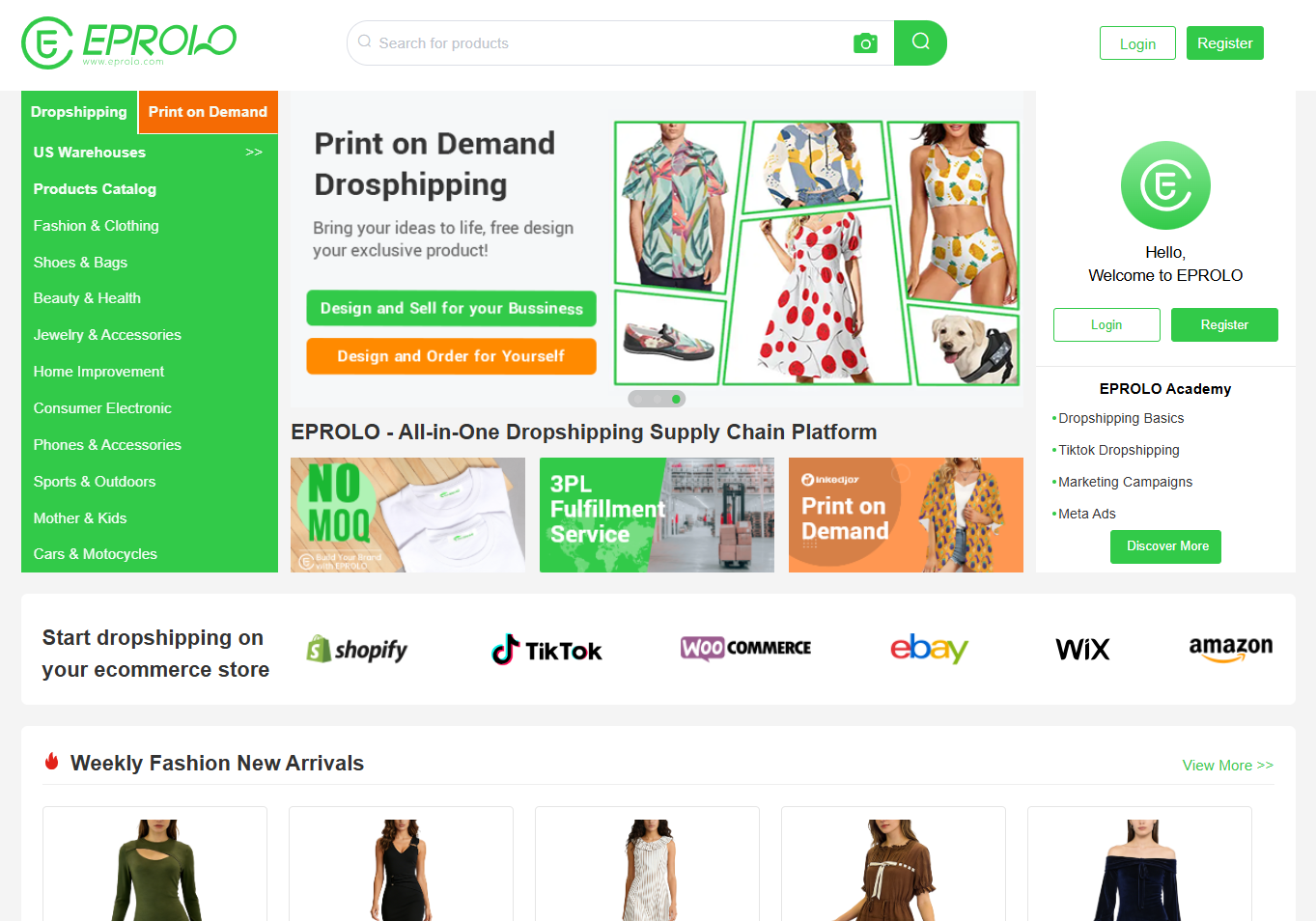
EPROLO connects directly with Shopify, WooCommerce, and other major e-commerce platforms, handling order routing and tracking synchronization from a single dashboard. This integration eliminates the manual work that causes errors and delays as order volume increases. Before launching, test the full customer purchase flow yourself to catch any breakdowns in the automation pipeline.
Frequently Asked Questions (FAQs)
Q1: Do I need a business license if I dropship from outside the United States?
If you are selling to US customers, most states require a sales tax permit once you exceed a small revenue threshold, regardless of where your business is physically based. You do not need a US residency to register a US business entity, but having one makes it easier to open US business bank accounts and onboard with payment processors. Consult a business attorney familiar with cross-border e-commerce to evaluate your specific exposure.
Q2: Can an automated supplier refuse to sync orders if I do not have an EIN?
Yes. Most automated supplier platforms and third-party fulfillment services require an EIN before activating API access or order syncing. An EIN verifies your business is registered and enables tax documentation for your transactions. Without it, suppliers may limit your account features or decline to process orders on your behalf.
Q3: How do I avoid getting sued for copyright infringement on Shopify templates?
Shopify's theme marketplace includes both free and paid themes, but using a theme does not grant you rights to the images, fonts, or design elements bundled with it. Copyright infringement claims arise when you copy product images from other brands, use trademarked logos in your store design, or adopt layout patterns from competitors. Use only licensed fonts and original product photography. When in doubt, run a reverse image search on any third-party asset before publishing.
Q4: What is the minimum capital required to handle legal US backend setup?
The direct cost of legal backend setup is relatively low. State LLC filing fees range from $35 to $500 depending on the state. Registered agent services typically cost $100-$300 per year. EIN registration is free directly from the IRS. Business bank accounts are typically free with an EIN and formation documents. The largest early investment is usually the domain name, store platform subscription, and initial sample orders. Most operators can complete the full legal setup for under $600.
Q5: Will my personal bank account get blocked if I use it for business store orders?
Personal bank accounts used for business transactions violate most bank account agreements and can be closed without notice. More critically, if a payment processor or supplier dispute escalates, your personal account information may be subpoenaed, exposing your personal funds to business liabilities. Keep the two completely separate from day one. Open a business checking account as soon as your EIN is issued.
Related Reading
- How to Build a Branded Dropshipping Store Without Holding Inventory in 2026
- How to Start Dropshipping Successfully: A Beginner's Guide
- How to Avoid White Label Dropshipping Risks in 2026
- The Comprehensive Guide to Dropshipping Fulfillment in 2026
- The Brutal Truth: 10 Pros and Cons of Dropshipping (What No One Tells You)
- Is Dropshipping Still Profitable in 2026? The Ultimate Comprehensive Guide
- Top Dropshipping Products in 2026: The Ultimate Data-Backed Guide to E-commerce Success
Written by
Josie is a skilled marketing specialist with expertise in TikTok, Facebook, and YouTube. She excels at audience growth and social media account management, consistently delivering valuable insights across key social marketing channels. Her strategic approach helps brands build meaningful engagement and expand their digital presence effectively.
Editorial note: This article is for general educational purposes. Business registration requirements, tax obligations, and payment processor policies are subject to change. Consult a licensed attorney, CPA, or business compliance professional before making legal or financial decisions for your dropshipping operation.