Custom label clothing dropshipping lets boutique founders launch a branded apparel line without buying a single blank tee up front. The promise is simple: send your logo to a private label clothing supplier, let them stitch or heat-press your neck tags, and ship finished pieces straight to your customer. The reality is messier. Every pre-printed tag, every uncommitted minimum, and every outfit that arrives with the manufacturer's brand still hanging on it creates real inventory risk long before your first sale clears.
This guide walks through five practical ways sellers are cutting dead stock on custom apparel tags in 2026, from negotiating low minimum clothing labels with third-party factories to choosing between factory sewn labels and heat transfer tagless apparel finishes. If you have ever paid for two thousand woven tags you cannot use, read on.
Key Takeaways
- Private label fashion suppliers now accept label minimums as low as 50 to 100 pieces per design, removing the 1,000-unit floor that used to lock small brands out.
- Pre-ordered apparel tags are one of the top three sources of dead stock in custom label clothing dropshipping, because style refreshes invalidate leftover tags within months.
- Heat transfer tagless apparel finishes let small brands skip woven labels entirely and skip tag-disposal labor at the warehouse.
- The cleanest branded apparel launch combines on-demand fulfillment, factory-sewn main labels, and removable care tags so a future rebrand costs nothing in stock.
- Always confirm a dropship supplier will physically remove the original manufacturer's tag before shipping before you finalize the order.
Table of Contents
What Are Private Label Fashion Supplier Tagging Policies?
Private label fashion suppliers run two very different tagging tracks, and confusing the two is the single most common cause of inventory lock-up for new clothing line fulfillment operations.
The first track is full private label. You supply your own designs, your own fabric or blanks, and your own custom neck tags apparel trim. The supplier only assembles, sews, packs, and ships. Under this model, every garment is meant to carry your tag from day one, and the supplier has no business branding to apply.
The second track is white-label or co-branded. The supplier keeps a base SKU already produced in volume, often with their own woven main label and care label, and lets you buy finished pieces at near-wholesale price, often with a 7 to 30 piece minimum. In this model, the supplier's tags are already on every garment when they reach you. If you resell without altering those tags, your customers will see a brand they did not order. If you require the supplier to swap tags before shipping, you have re-opened the door to minimum order quantities and lead time.
A surprising number of private label fashion suppliers blur these two tracks without telling you. They will quote you a low minimum, accept your private label designs, but quietly leave the manufacturer's brand tag under the new one. Always request a written tagging policy that names where each label sits on the finished garment, who owns the cost of removing legacy tags, and what happens when the legacy tag is left in place by mistake.
Why Pre-Ordered Apparel Tags Create Dead Stock Traps
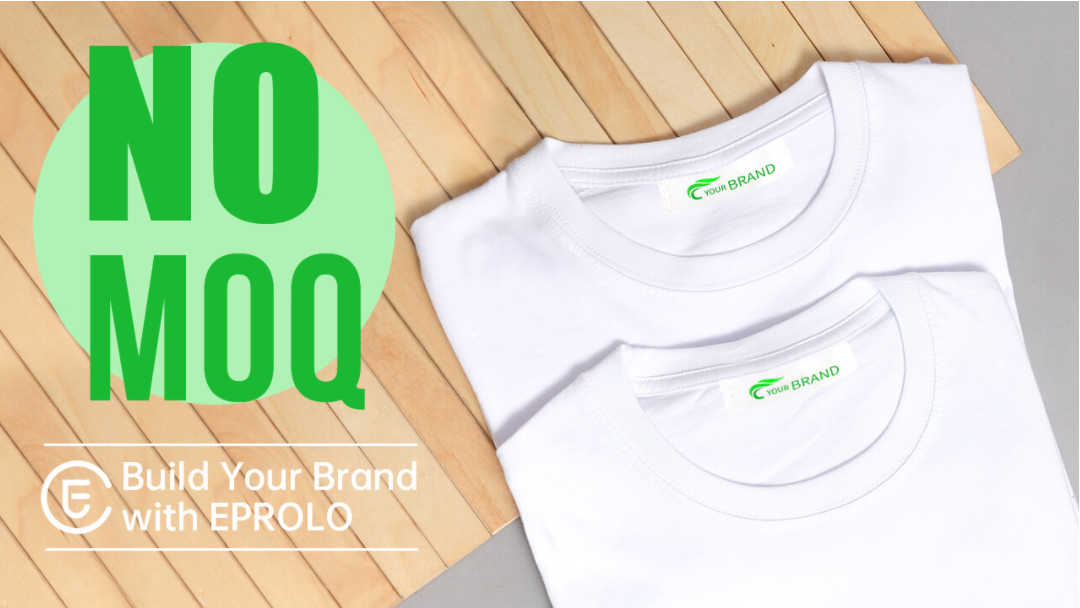
Every woven, printed, or heat-applied apparel tag has three timers running from the moment you place the order: a print life, a fabric match life, and a brand life. Miss any one of them and the tag becomes dead stock that you still have to ship, store, or destroy.
Print life is the easiest to ignore. Custom woven labels have a typical shelf life of 18 to 36 months before the fabric yellows, the dye fades, or the weave loosens. If you ordered 5,000 tags for a spring 2026 launch and the launch slips to spring 2027, half the batch will look sub-standard by the time it ships.
Fabric match life is even tighter. A tag produced for a specific fabric weight, dye lot, or factory cut line becomes unusable the moment you switch suppliers, change the garment spec, or refresh the colorway. Most small brands re-spec at least once a year for fit or pricing reasons, and every pre-printed tag tied to the old spec is now scrap.
Brand life is the third and most painful timer. Tagging decisions made before product-market fit get baked into every future order. If your launch brand is "Pearl Apparel Co." in 2026 and you rebrand to "Saltwater Studio" in 2027, every leftover Pearl tag is un-shippable, full stop. This is why low minimum clothing labels exist. A 50 or 100-piece minimum keeps the commitment small enough that a future rebrand does not create a pile of branded garbage.
How to Negotiate Low Minimum Clothing Labels with Third-Party Factories
Negotiating a low minimum on custom labels is not magic. It is a packaging exercise where you trade commitment size for a higher per-piece price, or you share risk in ways the factory is willing to accept.
Five levers work in 2026.
1. Negotiate a tagged-and-stored model. Many third-party factories will produce and store your labels for free for 90 to 180 days as long as your committed total volume over that period reaches a threshold (often 1,000 to 3,000 pieces). You pull from the bonded store as orders arrive, instead of taking delivery of 5,000 tags at once.
2. Accept a digital proof in exchange for the smaller run. Factories that offer woven label minimums of 100 pieces or printed care labels at 50 pieces almost always require you to skip the physical strike-off sample, or to pay for it separately. If your design tolerates digital approval, your committed quantity can drop by 80 percent.
3. Standardize one label spec and reuse it across SKUs. A single size 60mm x 15mm center-fold woven label can sit on a tee, a hoodie, and a tote bag. Reusing one physical tag spec across multiple SKUs lets you order 200 tags instead of three orders of 200, hitting the factory's run minimum for the line.
4. Offer a multi-color fade-in commitment. If you can commit to ordering the same design at a higher quantity in 12 months (even with no defined date), many factories will run your initial 100-piece order at near the 1,000-piece per-piece price.
5. Pair with two other brands. Three small brands that share label spec, material, and care-tag content can order a 300-piece run together, splitting 100 each. This is a common pattern in private label collectives and works especially well for first-launch woven neck tags.
Factory Sewn Labels vs Heat Transfer Tagless Apparel
The choice between a sewn label and a heat-applied (tagless) label shapes both your unit economics and your brand feel. Neither is universally better, and the right answer depends on the garment, your customer, and the scale you expect to reach.
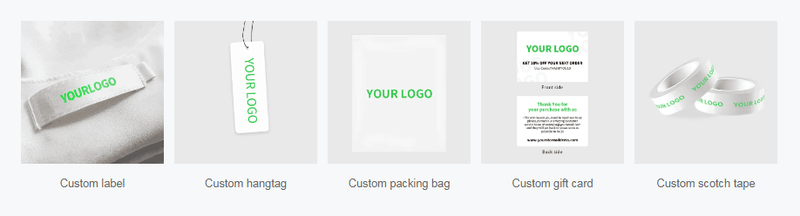
Factory sewn labels include center-fold woven neck labels, hem labels on totes, and sew-in care tags. They look premium, survive repeated washing, and signal quality to a customer who can feel the brand. They also cost a few cents more per garment, require the factory to attach them at a specific step in the production line, and create inventory risk if you rebrand or restyle later.
Heat transfer tagless apparel uses screen-printed or digital ink printed directly onto the inside of the garment. There is no tag to sew, no woven trim to inventory, and no label to remove before relabeling. Print quality on modern transfers is durable enough for 50+ wash cycles on cotton, modal, and poly blends. The downside is the visual feel: tagless prints always read as printed, never as woven, which can undercut the "premium tactile" signal of a sewn label.
A practical hybrid is common. Use factory-sewn woven labels for the main neck tag (the visible premium cue) and heat-transfer printed care information on the inside back neck or side seam (the regulatory content, not the brand cue). This way the woven label can be re-ordered in low minimums, while the care info is content the factory can switch instantly with no inventory at all.
Whichever you choose, push the apparel factory to keep a digital master file of your label artwork for at least 24 months. File-only retention is essentially free for the factory and removes the only remaining inventory risk on a future rebrand.
Secure Your Branded Apparel Launch Plan Now
Use this five-step checklist to lock in a custom label apparel launch that does not leave you holding three thousand branded tags in a closet by the end of the year.
Step 1. Decide your launch volume per SKU. Anything below 200 pieces per design is in the "low minimum" zone where woven labels and screen-print care tags both work.
Step 2. Standardize on one label spec that can survive across at least three SKUs in your catalog. This lets you split the minimum across products.
Step 3. Confirm in writing whether your private label apparel dropship supplier removes the factory's original main tag. If they do not, choose heat transfer or a relabel workflow before you place the first order.
Step 4. Negotiate a tagged-and-stored agreement with the factory. Pay a small per-piece premium for the right to pull labels as orders arrive rather than taking delivery up front.
Step 5. Keep the artwork file inside the factory's digital master file directory for at least 24 months so a rebrand costs almost nothing.
Done correctly, custom label clothing dropshipping becomes a low-risk launch channel instead of a balance-sheet liability. The five habits above keep your brand flexible while the suppliers do the inventory heavy lifting.
Frequently Asked Questions
Can I send my own woven labels to a dropshipping supplier?
Yes, most established private label clothing dropshipping suppliers accept buyer-supplied woven labels, hang tags, and poly bags. Expect an extra handling fee per piece (often $0.10 to $0.30), a longer inbound receiving window, and a quality control gate on every shipment. Send at least 10 percent extra labels so the supplier can replace damaged units before sewing.
What is the average minimum order for custom clothing neck tags?
In 2026, the typical minimum order quantity for custom woven neck tags runs from 100 pieces for digital-proof runs up to 1,000 pieces for premium damask weaves at the lowest per-piece price. Smaller runs are available from boutique label houses if you accept a slightly higher per-piece cost.
How do I build an apparel brand with zero bulk label commitment?
Use heat transfer tagless apparel for the inside neck and care tag content, choose a removable hang tag that is added at packing (not at the factory), and run a digital strike-off only on the main neck label. Pair this with a tagged-and-stored agreement so the supplier pulls labels from their bonded store as orders arrive instead of producing your minimum up front.
Will dropship suppliers remove the original manufacturer's tag before shipping?
Sometimes, but not always. White-label and co-branded suppliers often ship with the original factory tag intact because removing and re-tagging is a manual step that adds cost. Always ask the supplier to write into the order confirmation whether they will remove the original tag, what fee applies if they do, and what happens to a garment that ships with both tags in place by mistake.
Related reading
- Build a Branded Dropshipping Store with No Inventory
- Best Dropshipping Items and Selling Winners
- How to Start a Supplement Dropshipping Business
- White Label Dropshipping Risk Management
- White Label Packaging Dropshipping Guide
- China Clothing Wholesale Market Sourcing Guide
- Top 10 Private Label Clothing Dropshipping Suppliers
- Pros and Cons of Dropshipping
- Amazon Dropshipping Profitability
Written by
Inverse is a skilled Google SEO operations expert, with deep expertise in technical site audits, content clustering, and keyword strategy. Excelling at search engine visibility and organic traffic optimization, Inverse consistently delivers actionable insights across key search channels. This strategic approach helps e-commerce brands build sustainable organic traffic and expand their digital footprint effectively.
Editorial note: The label minimums, per-piece pricing, and supplier policies described in this article reflect general industry practice in 2026 and not any specific supplier's offer. Label minimums, woven label finishes, and tag-removal practices vary by factory, region, and order complexity. Verify every commitment, including the supplier's tag-removal policy and any bonded-storage agreement, with your chosen private label fashion supplier in writing before placing a launch order. No inventory outcome, lead time, or apparel factory behavior is guaranteed.