The allure of launching your own online business is undeniable. You can be your own boss, set your own hours, and turn your passions into profits. But the reality of managing inventory, warehousing costs, and complex shipping logistics can quickly turn that dream into a logistical nightmare. With dropshipping, you can skip the headaches of inventory management and focus on the creative side of things.
But before you jump on the dropshipping bandwagon, make sure you weigh the pros and cons of dropshipping. This comprehensive guide will take you on a deep dive into this popular business model, exploring its exciting possibilities and potential pitfalls. Let's delve into everything from dropshipping process to dropshipping pros and cons. Get ready to discover if dropshipping is the key to unlocking your e-commerce dreams.
Table of Contents
What Is Dropshipping?
Imagine an online store brimming with unique products, ready to be shipped to eager customers. But here's the twist: you don't hold any of that inventory yourself. In the world of dropshipping, you act as the middleman, connecting customers with products from a third-party supplier. When a customer places an order on your online store, you relay it to the supplier.
The supplier then handles all the fulfillment logistics. This eliminates the need for you to manage inventory, warehouse space, or handle physical products yourself. Dropshipping allows you to focus on building your brand, all while offering products without the upfront investment. Sounds too good to be true? Let's see this intriguing model works and explore dropshipping pros and cons.
How Does Dropshipping Work?
Dropshipping might sound complex, but the core process revolves around a streamlined flow:
- Dropshippers Build an Online Store: This is your digital storefront, where you showcase the products you'll be selling. Most entrepreneurs use ecommerce platforms like WooCommerce and Shopify to create a user-friendly website.
- Partner with Dropshipping Suppliers: Research and identify reliable suppliers in your niche. These suppliers will hold the inventory and handle dropshipping fulfillment.
- Customers Place Orders: Excited customers browse your online store, find the perfect product, and place their order.
- Auto-Sync Orders to Suppliers: Many dropshipping platforms offer automated features that seamlessly transfer customer orders to your chosen suppliers. No need for manual data entry!
- Suppliers Fulfill Orders: Once they receive your order, the dropshipping supplier springs into action. They carefully package the product and ship it directly to your customer.
- Payment Processing: You collect payment from the customer at the retail price you set. Once the order is fulfilled, you pay the supplier for the wholesale cost of the product.
- Customer Receives Products: Finally, through the complete and efficient supply chain, the happy customer receives their purchase, completing the dropshipping cycle.
Remember, you're essentially the middleman, connecting customers with products from a supplier. Your key role lies in marketing your store, managing customer service, and ensuring a smooth buying experience. Plus, analyze the pros and cons of dropshipping before embarking on this journey to make better choices.
A quick look at the pros and cons
| What sellers like | What sellers struggle with |
|---|---|
| No need to buy stock upfront | Margins can be thin |
| Easy to test products | Shipping is partly out of your hands |
| No warehouse needed | Supplier mistakes become your customer service problem |
| Works well with Shopify | Generic products are easy to copy |
| Can grow into a branded store | Refunds and chargebacks can hit hard |
That table is the polite version. The real version is messier, so let’s get into it.

The Pros of Dropshipping
The world of e-commerce beckons with its vast potential, but the thought of investments and logistical nightmares can be daunting for entrepreneurs. Enter dropshipping, a business model that throws open the doors of e-commerce with surprisingly low costs. Let's delve into the enticing advantages that make dropshipping an attractive option:
Pro 1: You can start without buying a pile of inventory
This is the reason dropshipping attracts so many new sellers. You can test a product without ordering hundreds of units and hoping they move.
Anyone who has bought inventory too early knows the feeling. The product looked great. The supplier sounded confident. The spreadsheet made sense. Then the orders did not come, and suddenly your “business asset” is sitting in a spare room.
Dropshipping helps you avoid that specific mistake. You can put a product in front of the market first and let customers show you whether they care.
Pro 2: Product testing is faster
With traditional e-commerce, testing a product can take weeks or months. You order samples, negotiate pricing, wait for production, arrange freight, build pages, and only then find out whether the market wants it.
Dropshipping shortens that cycle. You can test a product angle, a price point, or a niche without waiting for pallets to arrive.
This is useful, especially if you are still learning. A beginner does not need to make a perfect product decision on day one. Sometimes the best thing dropshipping gives you is feedback.
Pro 3: You do not need to run a warehouse
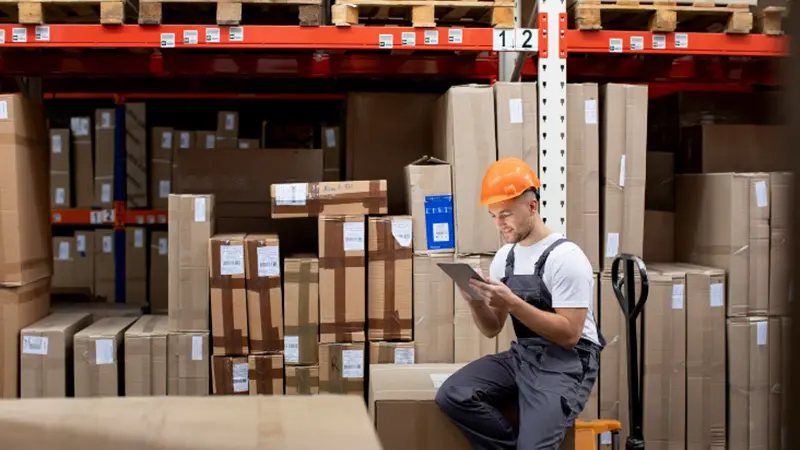
Warehousing sounds boring because it is boring. It is also expensive.
You need storage, packing materials, shipping labels, returns space, and someone to keep count of stock. If orders increase, the work increases with them.
Dropshipping lets you skip that early. The supplier stores and ships the product, so you can focus on the store, the offer, and the marketing.
For a one-person business, that is a big deal.
Pro 4: You can change direction quickly
One underrated benefit of dropshipping is flexibility.
If a product stops working, you can move on. You are not stuck trying to clear 300 units at a loss. You can test another angle, another product, or even another niche.
That flexibility is useful when you are still figuring out where demand is.
Pro 5: It teaches real e-commerce skills
Even a small dropshipping store forces you to learn useful skills.
You learn how to write product pages. You learn how pricing feels once fees are included. You learn that customer service is not optional. You learn that a product with lots of clicks can still fail if the page does not answer the right questions.
Those lessons carry over. If you later build a private label brand or buy inventory, you will be better prepared.
Pro 6: Automation saves time
A good dropshipping setup should reduce manual work. Orders should flow from Shopify to the supplier. Tracking should come back into the store. Inventory should update before you sell something that is out of stock.
That is the point of using tools in the first place.
EPROLO connects with Shopify and supports automated fulfillment, sourcing, tracking, and product management. For sellers handling several products, this can prevent a lot of small mistakes that become big problems at volume.

Pro 7: Dropshipping can become a brand
Some people talk about dropshipping as if it has to stay cheap and generic. It does not.
A better way to use the model is to test first, then improve what works. If a product sells consistently, you can negotiate better terms, add branded packaging, create bundles, improve photos, or move toward private label.
That is how dropshipping becomes a stepping stone instead of a dead end.
EPROLO fits this path because it offers branding support, including custom packaging options. That matters when you want customers to remember your store, not just the product they bought.
Pro 8: There are many niches to explore
Dropshipping gives you access to a wide product range. Home goods, pet accessories, beauty tools, hobby items, fitness products, travel accessories, kitchen gadgets. The list is long.
That variety makes niche testing easier. You can explore different audiences without locking yourself into one inventory bet.
A supplier platform with sourcing support can also help you compare options instead of taking the first product you find.
Pro 9: You can grow without packing every order yourself
If a product works, dropshipping lets you grow without turning your home into a warehouse.
You can spend more time on product pages, ads, email, support, and finding the next product. The supplier or fulfillment platform handles the shipping workload.
That is one of the cleanest advantages of the model.
Pro 10: The model is easy to understand
Dropshipping is simple on paper: sell first, buy second, let the supplier ship.
That simplicity makes it a good entry point for new e-commerce sellers. You can learn how online selling works without building a full supply chain from scratch.
There is value in that. Many sellers use dropshipping as their first real classroom.
The Cons of Dropshipping: Understanding the Challenges
While dropshipping offers a multitude of advantages, it's not without its challenges. Before diving headfirst into this business model, it's good to consider the potential downsides:
Con 1: Starting cheap does not mean the business is safe
Low startup cost is not the same as low risk.
You can still burn money on ads. You can still refund orders. You can still get hit with chargebacks. You can still spend your evening answering angry emails because a package has not moved in ten days.
Dropshipping mostly changes the type of risk. Instead of betting on inventory, you are betting on the supplier, the product page, the ad angle, the shipping route, and your ability to fix problems fast.
That is manageable. But it is not passive.
Con 2: Everyone else can test fast too
Here is the annoying part. If a product is easy for you to test, it is easy for other sellers to test as well.
That is why generic dropshipping stores look so similar. Same product. Same supplier images. Same discount. Same “limited time” line. Customers notice, even if they do not say it out loud.
If you want to avoid that race to the bottom, you need something more specific. A clearer audience. Better product education. Better photos. A bundle that makes sense. Faster delivery. Better support. Branded packaging if the product has traction.
This is where EPROLO can be useful. Its sourcing and branding options give sellers more room to move beyond the plain catalog look.
Con 3: Less warehouse work means less control
The downside is obvious once orders start coming in. If you do not control fulfillment, you do not fully control the customer experience.
A supplier can ship late. They can send the wrong item. They can use cheap packaging. They can run out of stock without warning.
And the customer will still email you.
This is why supplier vetting matters so much. Before scaling a product, check processing time, tracking, packaging, product quality, refund rules, and how the supplier replies when something goes wrong.
EPROLO helps by giving sellers a more organized fulfillment workflow, including Shopify order processing, tracking updates, and quality checks. You still need to choose products carefully, but you are not juggling random suppliers in a spreadsheet.
Con 4: Flexibility can turn into product hopping
This is where many sellers get stuck.
They test one product for three days, panic, switch to another one, rewrite the store, launch new ads, panic again, and repeat the cycle. After a month, they have tested a dozen things and learned almost nothing.
Dropshipping should help you learn faster, not avoid thinking.
If a product gets signs of interest, stay with it long enough to improve the page, creative, price, offer, and fulfillment. A half-tested product is not proof of anything.
Con 5: The learning curve is rougher than YouTube makes it look
Most dropshipping videos skip the ugly middle.
They show the winning product, the revenue screenshot, the clean dashboard. They do not show the failed tests, the ad spend, the refund requests, the supplier delays, or the hours spent trying to understand why people added to cart but did not buy.
Dropshipping is not dead. It is just not as smooth as the sales pitch.
Con 6: Automation does not fix a weak product
Automation is helpful, but it is not strategy.
If the product is boring, the offer is unclear, the page looks untrustworthy, or the numbers do not work, automation will not save it. It will only move bad orders faster.
Before scaling, check the unglamorous stuff. Does the product solve a clear problem? Can people understand it in a few seconds? Is the margin still healthy after ads, shipping, refunds, and fees? Can the supplier actually deliver what the page promises?
The boring questions are usually the ones that keep you from losing money.
Con 7: Branding is harder when you never touch the product
A brand is not just a logo at the top of the site.
It is the box that arrives. The way the product feels. The instruction sheet. The delivery time. The support email when something goes wrong.
If you have never ordered the product yourself, you do not really know what your customer is getting.
Before you advertise anything heavily, buy it like a normal customer. Open it. Use it. Check the packaging. Ask yourself if you would be comfortable sending that experience to someone who trusted your store.
If the answer is no, fix it or drop it.
Con 8: Some products are not worth touching
Not every product is beginner friendly.
Be careful with children’s products, supplements, cosmetics, electronics, medical-adjacent items, safety gear, branded goods, and anything with strict import or labeling rules.
These products may need certificates, warnings, age labels, ingredient disclosures, safety testing, or authorization documents. If you do not understand the rules, wait.
A supplier saying “many sellers use this” is not enough. Ask for documents. Check your market. Get proper advice when the product category calls for it.
Con 9: Scaling makes problems louder
At five orders a week, a supplier issue is annoying.
At 500 orders a week, the same issue can become a mess.
A small delay becomes hundreds of “Where is my order?” messages. A bad batch becomes a refund wave. A stockout can break your ad momentum and your cash flow at the same time.
Before scaling, ask boring operational questions. How many orders can the supplier handle per day? How deep is the stock? What happens during peak season? How fast do they respond when tracking fails?
Scaling does not hide weak operations. It exposes them.
Con 10: Simple does not mean easy
The model is simple. Running it well is not.
You still need product research, supplier checks, product pages, ads, email, customer service, refund handling, and margin tracking. You still need to make judgment calls when something breaks.
The sellers who last tend to treat dropshipping like operations, not a hack. They know their numbers. They test carefully. They watch fulfillment. They fix the offer instead of jumping at every trend.
So, is dropshipping worth it?
Yes, if you use it for the right reason.
Dropshipping is useful for testing products, learning e-commerce, and starting lean. It is a poor fit if you expect guaranteed profit, no customer service, or a business that runs itself.
The best version looks like this: choose a niche, pick products with clear use cases, vet suppliers, order samples, calculate real margins, set up reliable fulfillment, then turn winning products into a stronger brand.
That is where EPROLO makes sense. It helps with the parts that often get messy: sourcing, fulfillment, Shopify integration, tracking, quality checks, and branding support. You still need a product people want. You still need an offer that converts. But you are building on a better foundation.
When dropshipping is a good fit
Dropshipping may fit you if you want to test products before buying inventory, have limited startup capital, and are willing to learn marketing, customer service, and supplier management.
It also makes sense if you see it as a first stage, not the whole plan. Test with dropshipping. Improve what works. Build toward better margins and a more recognizable brand.
When dropshipping is a bad fit
Dropshipping is probably a bad fit if you need quick guaranteed income, dislike customer service, do not want to check suppliers, or cannot handle delays and refunds.
It is also risky if you plan to sell regulated products without understanding the rules.
Conclusion
The dropshipping business model offers a tempting gateway into the world of e-commerce. With its low entry barrier, flexibility, and potential for scalability, it's no wonder dropshipping has captured the imagination of aspiring entrepreneurs. However, navigating the pros and cons of dropshipping is crucial for making informed decisions.
The key lies in carefully considering your goals, resources, and risk tolerance. By understanding dropshipping pros and cons, you can determine if this business model aligns with your vision. If you're willing to invest the time and effort to build a strong brand and manage supplier relationships strategically, dropshipping can be a viable option. Additionally, if you prioritize customer service excellence, dropshipping can greatly enhance your chances of success in your e-commerce journey.
FAQs about Dropshipping
What are the biggest pros of dropshipping?
The main advantages are low startup cost, no upfront inventory, fast product testing, no need for your own warehouse, and easier Shopify fulfillment when the right tools are in place.
What are the biggest cons of dropshipping?
The biggest disadvantages are thin margins, supplier dependency, shipping delays, inconsistent product quality, stockouts, copycat competition, and customer service problems when orders go wrong.
Is dropshipping still profitable?
Dropshipping can still be profitable, but only when the product, supplier, offer, shipping, and marketing costs work together. It is not guaranteed income and it is not passive.
How does EPROLO help dropshipping sellers?
EPROLO helps with product sourcing, Shopify integration, automated fulfillment, tracking updates, quality checks, and branding options such as custom packaging. These features reduce some of the supplier and fulfillment problems that make dropshipping difficult.
Can you build a brand with dropshipping?
Yes, but it takes more than adding a logo. You need reliable products, clear positioning, consistent delivery, helpful support, and ideally branded packaging once a product proves it can sell.
Should beginners try dropshipping?
Beginners can try dropshipping as a way to learn e-commerce with less inventory risk. They should still order samples, check suppliers, calculate real margins, and avoid risky product categories until they understand the rules.
Read More from EPROLO Blog
Written by
CMO from EPROLO. With over 10 years of e-commerce experience, Carry specializes in dropshipping, website operation, and marketing strategies. She provides actionable insights that help online sellers grow, optimize their stores, and succeed in a competitive marketplace.