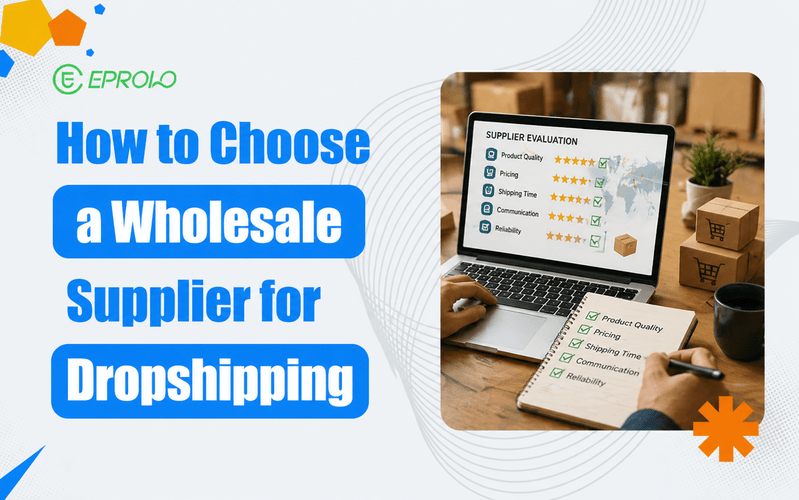
Choosing between wholesale and dropshipping can make or break your US store in 2026. Each model comes with trade-offs in inventory ownership, upfront costs, profit margins, and operational control. The right choice depends on your budget, risk tolerance, and business stage.
Beyond the business model, finding a reliable wholesale supplier for dropshipping is what separates profitable stores from those drowning in support tickets. Below, we break down how to compare these models, vet US-based suppliers, avoid costly mistakes, and move forward with confidence.
Key Takeaways
- Wholesale and dropshipping differ mainly in inventory ownership, upfront cost, profit margins, and operational control.
- A reliable wholesale supplier for dropshipping should offer fast US shipping, consistent stock updates, clear pricing, and low error rates.
- Review supplier credentials carefully, including business registration, product quality, fulfillment history, and return policies.
- Compare minimum order requirements, integration options, and support responsiveness before choosing a long-term supplier.
- Prioritize suppliers with domestic warehouses, transparent communication, and scalable systems to reduce delays and customer service issues.
Table of Contents
Wholesale or dropshipping: which model makes more sense for your US store in 2026?
For most new US sellers in 2026, dropshipping makes more sense first. Wholesale makes more sense later, after you know which products move, what return rates look like, and how much cash you can tie up in inventory without hurting ad spend or operations.
The practical difference is risk placement. With a wholesale supplier for dropshipping, dropshipping shifts inventory risk to the supplier but usually leaves you with thinner margins and less control over stock depth, packaging, and delivery speed. Traditional wholesale gives you better unit economics and stronger brand control, but you absorb purchasing risk, storage costs, and dead stock.
| Model | Usually works best for | Main drawback |
|---|---|---|
| Dropshipping | Testing niches, low starting capital, broad catalogs | Less control over fulfillment and margins |
| Wholesale | Proven winners, repeat demand, stronger branding | Inventory commitment and operational complexity |
A common mistake is choosing wholesale too early because the per unit cost looks better on paper. If you haven't validated demand, lower unit cost won't help much. Unsold inventory erases that advantage fast.
Another mistake is choosing dropshipping without checking supplier discipline. US buyers now expect reliable tracking, realistic delivery windows, and simple returns. That's why supplier vetting matters more than the model itself. Use criteria like inventory sync accuracy, order defect rates, return handling, and warehouse location. This is also why sellers compare platforms like ecommerce platforms for dropshipping and supplier guidance from sources such as Xero before committing.
If your store is new, start lean with dropshipping. If you already have steady winners, move selective SKUs into wholesale.
If you want a dependable wholesale supplier for dropshipping, a clear sourcing workflow can make supplier selection easier.
What to look for in a US-based supplier before you commit
A US based wholesale supplier for dropshipping should be judged on operational fit first, catalog size second. The biggest mistake new sellers make is choosing a supplier with attractive pricing but weak fulfillment discipline. Fast shipping only helps if inventory is accurate, orders are packed correctly, and returns don't become your customer support problem.
Start with four checks: inventory sync, shipping coverage, return handling, and margin after fees. Ask how often stock updates feed into your store, whether tracking is uploaded the same day, and which states they ship from. A supplier with two warehouses can outperform a cheaper one if it cuts delivery zones and lowers damage risk. For a general store, broad catalog depth matters. For a niche store, consistency matters more than endless SKU count.
| Check | What to confirm | Why it matters |
|---|---|---|
| Inventory | Update frequency and oversell rate | Prevents canceled orders |
| Shipping | Average dispatch time and carrier mix | Shapes delivery promises |
| Returns | Restocking fees and return window | Protects margin |
Also verify business fundamentals. A credible wholesale supplier for dropshipping should provide resale documentation requirements, clear MAP policies where relevant, and a direct support contact. If they avoid sample orders, hide fee structures, or can't explain damaged item procedures, treat that as a risk signal. This advice is especially useful for sellers targeting US customers who compete on delivery speed and trust.
For long-term brand building, it helps to work with a wholesale supplier for dropshipping that supports steady fulfillment.
How to vet a wholesale partner for pricing, inventory, shipping, and returns

A strong wholesale supplier for dropshipping should give you margin clarity, reliable stock data, realistic delivery times, and a return process you can actually manage. If one of those pieces is weak, customer service costs usually eat the savings.
Start with pricing. Don't judge only by unit cost. Ask for the full landed cost: product price, pick and pack fees, shipping charges, storage minimums, and return handling fees. A supplier with a slightly higher catalog price can still be cheaper if they ship from a US warehouse and keep fewer surprise fees. Look for stable pricing windows. If costs change every week, your storefront pricing becomes hard to trust.
Next, test inventory quality. A wholesale supplier for dropshipping should offer frequent stock updates through CSV, API, or app sync. The real question is how often quantities refresh and what happens when stock hits zero. Many sellers make the mistake of accepting "live inventory" claims without asking about sync delays, backorder rules, and discontinued SKUs.
| Area | What to verify |
|---|---|
| Pricing | Landed cost, fee schedule, MAP policy, price change frequency |
| Inventory | Sync method, update frequency, stockout handling |
| Shipping | Warehouse location, carrier mix, processing time, tracking speed |
| Returns | Return window, restocking fee, damaged item process, return address |
Shipping and returns deserve a small trial order before you commit. Place a few orders to different US regions and measure processing time, packaging quality, tracking upload speed, and response when something goes wrong. This vetting process matters most for stores selling fragile, seasonal, or fast moving products, where delays and return friction cause the most damage.
When a wholesale supplier for dropshipping is the better fit than marketplaces or direct brands
A wholesale supplier for dropshipping is usually the better fit when you need stable operations more than broad product access. Marketplaces can help with testing, but inventory changes, seller turnover, and inconsistent packaging often make them harder to scale. Direct brands can offer cleaner positioning, but many have strict reseller rules, limited catalog depth, or low tolerance for small accounts.
Choose a wholesale supplier for dropshipping if your store depends on repeatable fulfillment, margin discipline, and predictable customer service. This matters most for stores selling home goods, tools, pet products, office supplies, and other evergreen items where stock reliability matters more than being first to a trend.
| Option | Better for | Main risk |
|---|---|---|
| Wholesale supplier | Stable catalog, reorder consistency, US shipping standards | Less flexibility for one off trend chasing |
| Marketplace sellers | Fast product testing | Listing volatility and uneven fulfillment |
| Direct brands | Brand led niche stores | Approval friction and narrow assortment |
The practical test is simple. Ask whether the supplier provides inventory feeds, order cutoff times, return handling, MAP policy clarity, and response times you can rely on. A common mistake is choosing by unit price alone. In US dropshipping, a slightly higher item cost can still be the better decision if it reduces cancellations, tracking delays, and support tickets.
This route is less suitable if your model depends on viral products or constant assortment shifts. In that case, flexibility may matter more than wholesale structure.
Costly mistakes that ruin margins when choosing a supplier

The most expensive supplier mistake is judging only by unit price. A low catalog cost can still produce weak margins once you add shipping fees, payment processing, return rates, replacement delays, and the discounting required to offset slow delivery. A wholesale supplier for dropshipping should be evaluated on total landed cost per order, not headline cost.
Another common error is choosing a supplier with broad inventory but poor stock accuracy. In practice, inaccurate stock feeds create cancelled orders, refund friction, and higher support volume. That cost is easy to miss at the start and painful at scale. For US focused stores, check inventory sync frequency, backorder policy, and average fulfillment time before reviewing product range.
| Mistake | What to check instead |
|---|---|
| Lowest item cost wins | Landed cost, return cost, delivery speed |
| Large catalog means reliable partner | Stock accuracy, fill rate, defect rate |
| No minimums means less risk | Watch for higher per order fees and thin margins |
A third mistake is ignoring return handling. Some suppliers accept returns only at the buyer's expense or charge restocking fees that erase profit on lower priced items. If you sell apparel, beauty, or seasonal goods, return terms matter more than a small wholesale discount.
This advice matters most for newer operators comparing several US dropshipping suppliers quickly. If you already have stable sales data, use your actual refund rate and shipping mix to score each wholesale supplier for dropshipping with a margin model before you commit.
How to choose your best-fit supplier and move forward with confidence
Your ideal wholesale supplier for dropshipping is not the one with the biggest catalog. It is the one that matches your order volume, margins, shipping expectations, and operational tolerance for mistakes.
Start with a short scorecard. Compare suppliers on unit cost, shipping speed within the US, inventory accuracy, return handling, product data quality, and response time. A low price means little if stock feeds are outdated or support takes three days to answer. For a store testing products, flexible minimums and clean integrations usually matter more than the absolute lowest cost. For a business with proven demand, deeper discounts and stable replenishment often matter more.
| Supplier factor | Why it matters | Good fit for |
|---|---|---|
| Low minimum order requirements | Reduces risk while testing products | Newer dropship stores |
| US warehouse coverage | Improves delivery speed and consistency | Stores selling time sensitive items |
| Reliable stock sync | Prevents overselling and cancellations | Higher volume sellers |
Two common mistakes are choosing only on price and skipping a live test order. Place sample orders to different US regions, check packaging quality, and measure actual delivery times against stated timelines. Ask how damaged items, lost packages, and customer returns are handled before you list products.
If you need variety and speed, a vetted wholesale supplier for dropshipping with solid systems is usually the safer path. If you need tighter margins and can forecast demand, a traditional wholesale relationship may be the stronger move.
When comparing suppliers in the US, reliable product research and transparent operations can support better decisions.
For sellers who want to simplify supplier management without sacrificing reliability, using an all-in-one platform can reduce a lot of operational friction. Dropshipping services like EPROLO combine product sourcing, custom branding, and order fulfillment into a single workflow, which helps minimize errors and save time when scaling. Instead of coordinating with multiple suppliers manually, you can manage products, track orders, and maintain more consistent delivery performance from one place—especially useful for stores targeting US customers with higher expectations around shipping speed and service quality.
Frequently Asked Questions (FAQ)
Is wholesale or dropshipping better for starting an online store in the US?
Dropshipping is usually better for lower upfront risk because you do not buy inventory in advance. Wholesale can give better margins and more control, but it requires storage, cash flow, and inventory planning. The right model depends on your budget, speed, and tolerance for unsold stock.
How do I choose a reliable wholesale supplier for dropshipping in 2026?
Check US warehouse locations, processing times, return policies, product consistency, and integration with your selling channel. Ask for sample orders and verify business details before listing products. A dependable wholesale supplier for dropshipping should offer stable stock data, transparent fees, and clear communication.
What costs should I compare before working with a wholesale supplier?
Look beyond unit price. Compare shipping fees, monthly platform charges, return costs, order minimums, storage expenses, and payment processing fees. A lower product cost does not always mean higher profit if delivery times, defect rates, or refund volume create extra operational costs.
Is it risky to use one supplier for all my dropshipping products?
Yes, relying on one supplier increases risk if stock runs out, pricing changes, or fulfillment slows down. Many sellers reduce disruption by keeping backup suppliers for core products, tracking stock accuracy weekly, and testing order quality regularly before scaling ad spend or expanding product lines.
Can I use wholesale pricing and still run a dropshipping business legally in the US?
Yes, but you may need a resale certificate or sales tax permit depending on your state and supplier requirements. In 2026, sellers should also review marketplace rules, invoice handling, and product compliance standards so wholesale sourcing and dropshipping operations stay aligned with US tax and consumer laws.
Read More
Written by Bianca
Bianca is a content creator focused on sustainable e-commerce growth. She goes beyond quick hacks, teaching online sellers how to build lasting brands through strong SEO foundations and compelling storytelling. She turns searchers into loyal customers through the power of words.