Product-spy subscriptions can show demand signals, yet sellers may still struggle to source, inspect, and ship the product behind the chart. The right choice depends on whether you need more competitor data or an execution platform that protects cash flow. These five Dropship.io alternatives cover both jobs, from focused research to real fulfillment.
Table of Contents
What Is Dropship.io and Why Look for an Alternative?
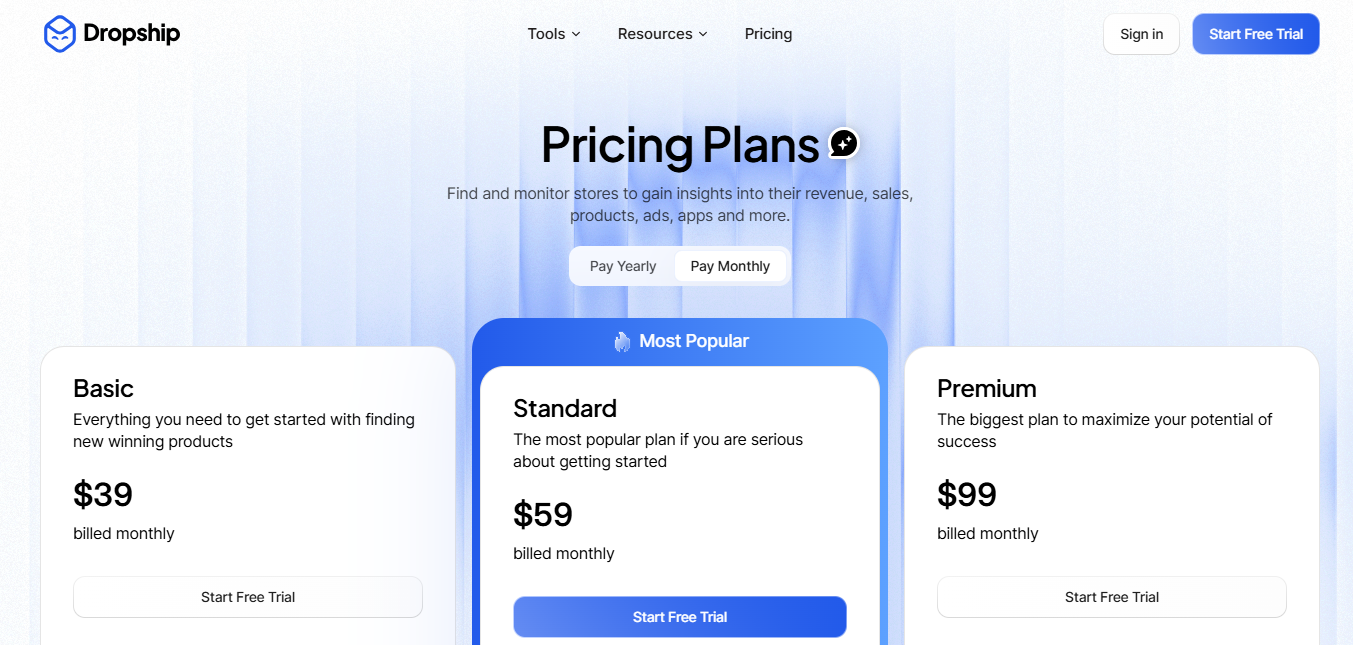
Dropship.io is a product and competitor research suite. Its current tools cover TikTok Shop products and shops, Facebook ads and advertisers, creator research, competitor monitoring, AI-assisted search, Shopify product imports, and sales tracking. The interface is approachable, and the historical charts are useful for macro-level validation: you can see whether a product or shop appears to be gaining or losing momentum before spending on a test.
The tradeoff is cost and metering. Monthly plans currently run from $39 to $99, while annual billing lowers the effective monthly rate. Each tier includes limits for research credits, tracked shops and products, AI searches, and Shopify imports. That can be reasonable for an established research workflow, but it creates fixed overhead before a new seller has validated an offer.
Research signals are not guaranteed profit. They do not reveal your landed cost, refund rate, creative quality, or achievable margin, and a product chart cannot source, inspect, package, or deliver an order.
Before switching, identify the actual bottleneck. If you need deeper competitor and ad visibility, choose a direct spy tool. If you already have ideas but cannot reliably source and fulfill them, use a sourcing and fulfillment platform instead.
The Best Alternatives to Dropship.io at a Glance
The optimal alternative is determined by the point at which your workflow fails. If you are primarily interested in competition and advertising intelligence, use PPSPY or Minea. Choose EPROLO if sourcing and fulfillment are major bottlenecks, AutoDS for multichannel automation, or Modalyst for access to selected supplier catalogs.
| Tool | Core Category | Starting Price | Free Plan / Trial? | Real Fulfillment? | Platform Integrations | Best For |
|---|---|---|---|---|---|---|
| EPROLO | All-in-one sourcing and fulfillment | $0 platform fee | Forever-free core platform | Yes | Major ecommerce stores and marketplaces | Moving from testing to fulfillment |
| PPSPY | Shopify spy tool | $39/month | No-card trial | No | Shopify research; Chrome extension | Shopify competitor research |
| Minea | Cross-platform ad research | $49/month | Limited free access | No | Shopify launch workflow | Ad creative and social-commerce research |
| AutoDS | Multi-channel automation | Paid, channel-dependent plans | 3-day trial for $0.99 | Automates/routs orders; terms vary | Shopify, eBay, Amazon, Etsy, TikTok Shop, Wix, WooCommerce, Facebook | Multi-channel catalog automation |
| Modalyst | Supplier marketplace | $0 for 25 products | Free Hobby plan | Suppliers fulfill orders | Wix, Shopify, BigCommerce; CSV options | US/EU and independent-brand catalogs |
Direct Dropship.io Alternatives for Competitor Spying & Research
These tools are the closest substitutes when your main requirement is competitor intelligence rather than supplier management.
1. PPSPY
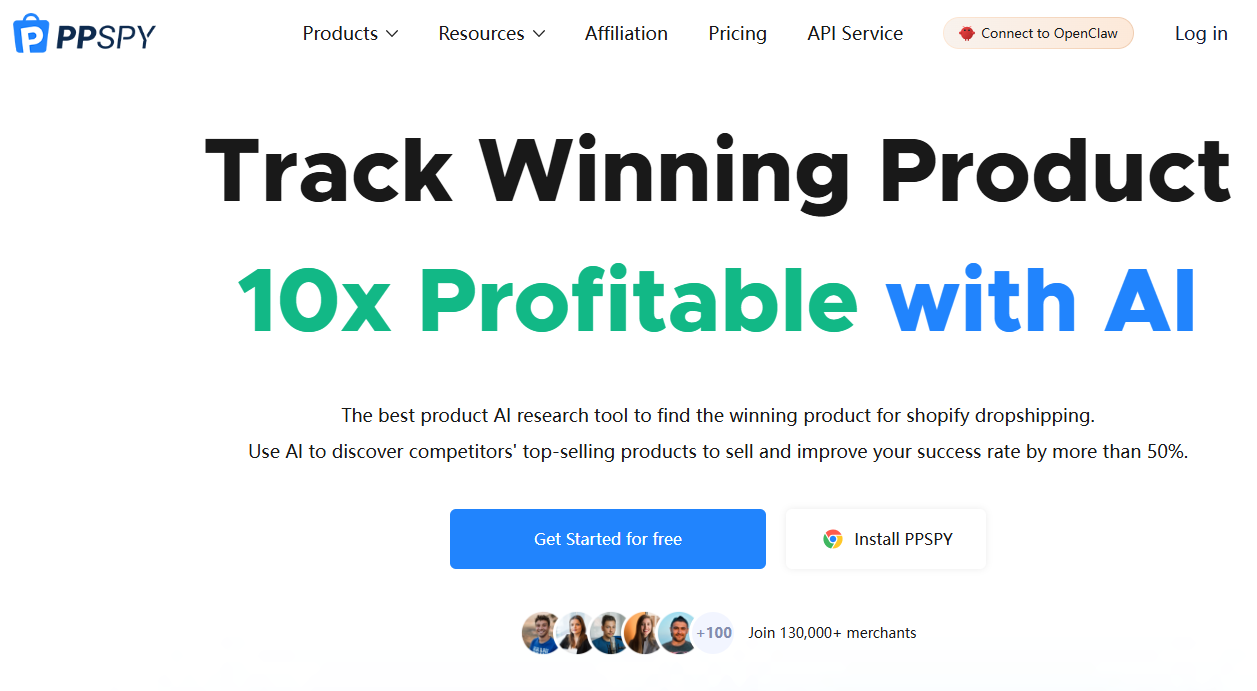
PPSPY is a Shopify-focused research platform with a Chrome extension. It helps users explore stores, products, themes, traffic patterns, ads, and predicted competitor sales. Importantly, PPSPY describes its order figures as algorithmic predictions, not verified access to a competitor's checkout records.
Pros: More tightly focused on Shopify store intelligence; A no-card trial is useful for sellers who wish to test a rival research tool before committing to a paid subscription.
Cons: It is not a permanently free plan, estimates remain estimates, and it does not source or fulfill orders.
Pricing: Standard starts at $39/month, with higher tiers offering more credits and trackers.
Best for: Shopify operators who want store-level reconnaissance before building a test list.
2. Minea
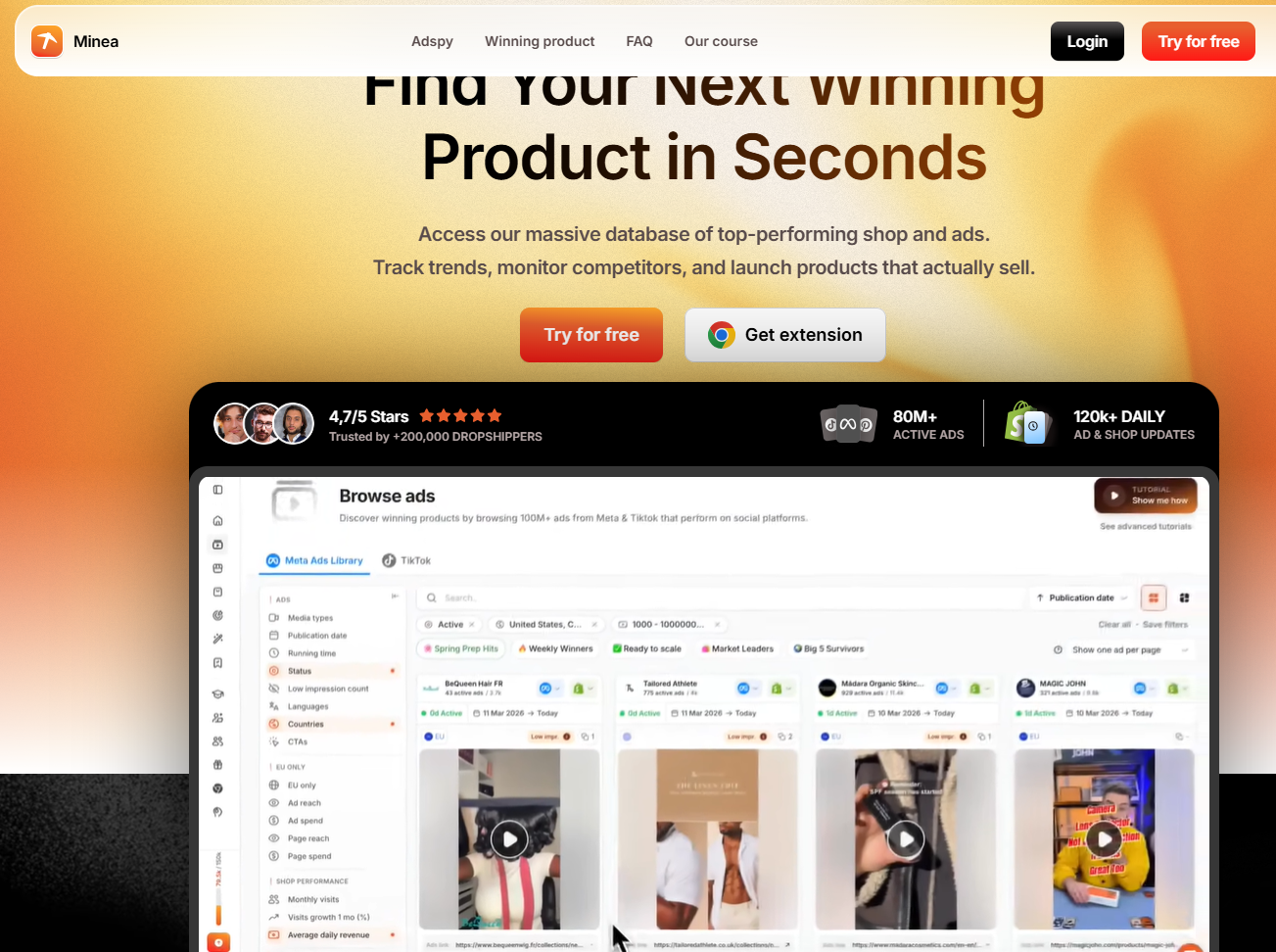
Minea is an ad and product research platform built around social-commerce discovery. It analyzes ads, products, shops, brands, and creative patterns, with particular emphasis on Meta advertising and additional social data depending on plan availability.
Pros: Stronger emphasis on creative strategy and cross-platform ad discovery.
Cons: The $49 entry plan is more expensive than Dropship.io Basic, feature limits vary by tier, and Minea does not become your supplier or logistics partner.
Pricing: Starter is $49/month, Premium $99/month, and Business $199/month on current monthly pricing.
Best for: Sellers whose edge depends on finding ad angles, studying creatives, and monitoring social-commerce competitors.
Sourcing & Fulfillment Alternatives to Dropship.io
These platforms address the operational gap after research: importing a product, keeping order data organized, paying a supplier, and getting the package to the customer.
3. EPROLO
EPROLO is a forever-free sourcing and fulfillment platform. Sellers can browse a large product catalog and curated winning-product content, request sourcing, connect a store, sync orders, and use EPROLO's fulfillment and tracking workflow. Unlike a research-only subscription, the core platform charges no membership or monthly integration fee; sellers pay product and delivery costs when orders are placed.
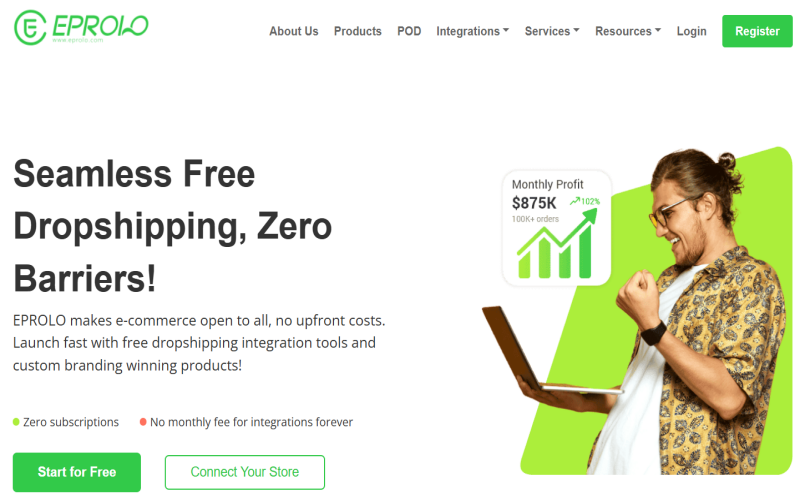
Pros: $0 recurring platform fee, real sourcing and fulfillment, and a direct path from product test to branded delivery.
Cons: It is not a like-for-like competitor-sales database, shipping varies by product and destination, and branding fees or category-specific conditions can apply.
Pricing: The core dropshipping platform is free; products, delivery, and optional services cost extra. Fashion branding has separate annual and per-item charges.
Best for: Sellers who need execution more than another analytics dashboard.
4. AutoDS
AutoDS is a paid multi-channel automation platform for product importing, monitoring, order management, and supplier workflows. It supports major storefronts and marketplaces, making it useful when an operator manages more than one selling channel.
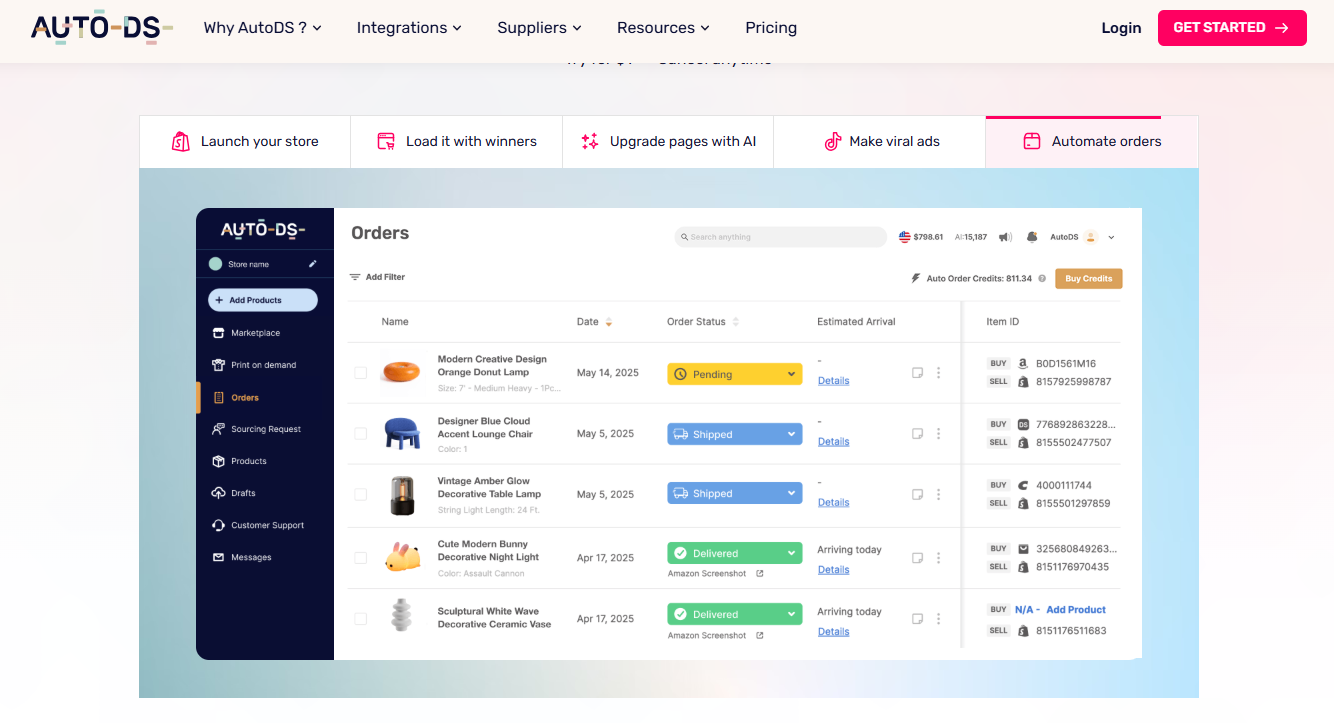
Pros: Deeper operational automation and much broader channel support.
Cons: It adds another subscription, exact prices depend on channel and tier, some automation is sold as an add-on, and the entry Import tier lacks price and stock monitoring.
Pricing: Paid plans with a three-day $0.99 trial; check the channel-specific pricing table before subscribing.
Best for: Operators managing larger catalogs or multiple marketplaces.
5. Modalyst
Modalyst is a supplier marketplace that connects retailers with US, European, independent-brand, private-label, international, and AliExpress inventory. Suppliers hold stock and ship orders, while Modalyst handles catalog, inventory, pricing, and order-transfer workflows.
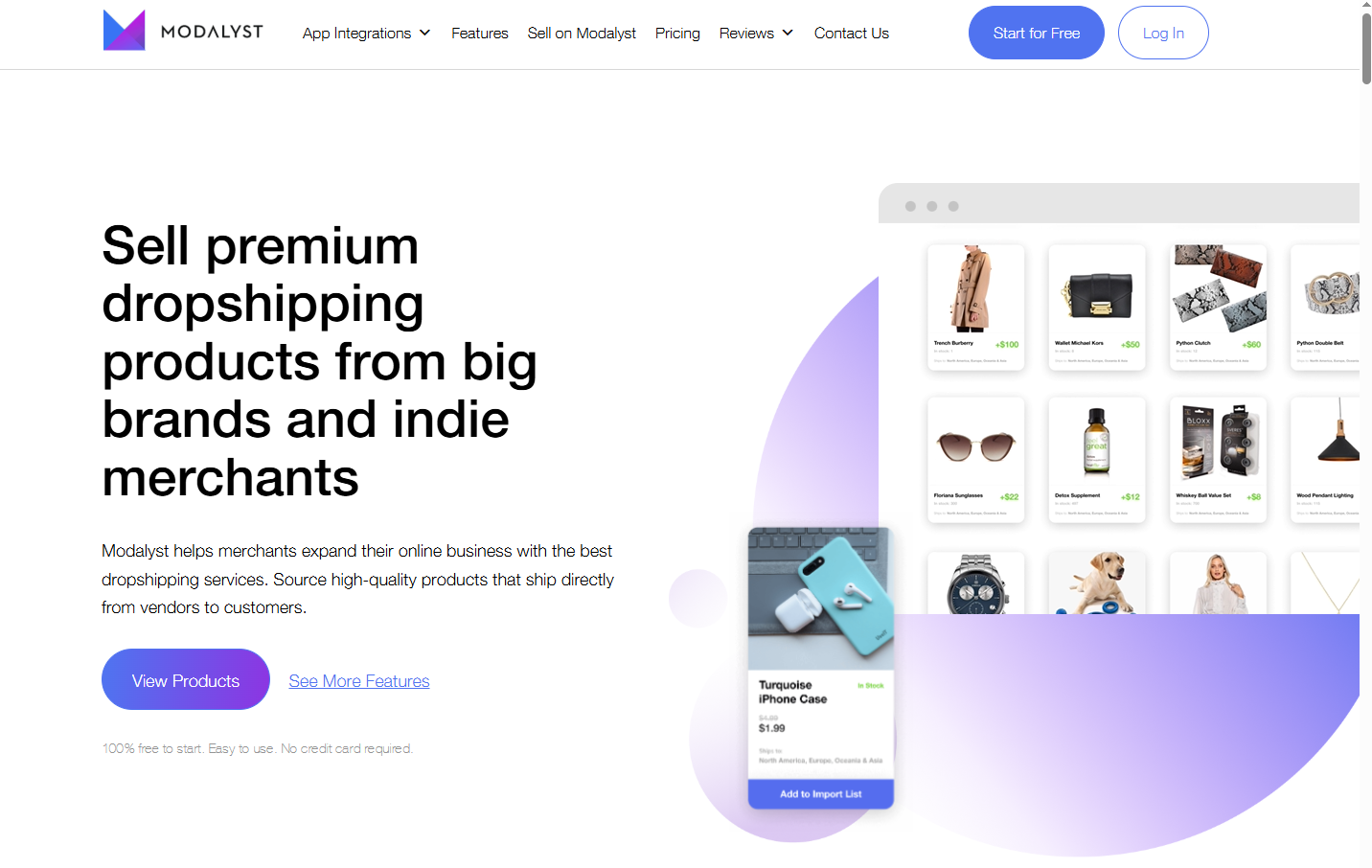
Pros: A true supplier marketplace, a useful $0 Hobby plan, and access to differentiated domestic and independent-brand catalogs.
Cons: The free plan is limited to 25 products, the merchant still approves and pays orders, and supplier performance varies.
Pricing: Hobby $0/month, Start Up $35/month, and Pro $90/month.
Best for: Wix or Shopify sellers prioritizing US/EU sourcing and a more curated catalog.
Why Choose EPROLO Instead?
EPROLO may be a better fit when the primary bottleneck is execution rather than competitor research. Competitor intelligence can suggest what to test, but profitability is usually constrained by landed cost, supplier stock, product quality, delivery expectations, returns, and the speed at which tracking reaches the buyer. EPROLO addresses those operational steps in one workflow rather than selling another layer of research data.
The cash-flow difference is concrete. Paying Dropship.io month to month costs $468 per year on Basic and $1188 on Premium. EPROLO's core platform fee is $0. Depending on an operator's testing budget, retaining several hundred dollars can fund multiple small creative tests, samples, or landing-page iterations. That is an operator example, not a promise that three or five campaigns will automatically find a winner.
A practical research-to-execution sequence
- Use free ad libraries and trend sources to create a shortlist.
- Check EPROLO sourcing and calculate full landed cost.
- Order samples before scaling.
- Connect the store after the supplier path is verified.
- Add branding gradually; no-MOQ terms are confirmed for clothing, while other categories require verification.
This is why EPROLO is the most useful dropship.io free alternative for cash-conscious sellers, even though it is not a direct replacement for every spy feature. It replaces recurring research overhead with a free operating layer and lets sellers add paid intelligence later, once store revenue justifies it.
Frequently Asked Questions (FAQ)
Is there a completely free alternative to Dropship.io?
Yes, but match the alternative to the job. Meta Ad Library and TikTok Creative Center provide free research signals, while EPROLO offers a forever-free core platform for sourcing and fulfillment. PPSPY offers a free trial rather than a permanent full-feature plan, and Modalyst has a limited free plan.
Is Dropship.io worth it in 2026?
It can be worth it for an operator who regularly uses its product, shop, creator, advertising, and competitor datasets and can turn the research into profitable tests. It is harder to justify when a new store has limited testing capital or when sourcing and fulfillment, rather than product ideas, are the main constraint.
What are the biggest drawbacks of using Dropship.io?
The main drawbacks are recurring cost, tier-based credits and tracking limits, and the gap between insight and execution. Research data cannot confirm your exact margin or solve supplier availability, quality inspection, packaging, shipping, and customer support. Sellers still need a fulfillment system after finding a product.
Why should I choose EPROLO instead of a paid product research tool?
Choose EPROLO when you need to preserve cash and execute orders. It combines sourcing, order synchronization, fulfillment, tracking, quality-control workflows, and optional branding without a required monthly platform fee. Choose a paid spy tool first only when competitor intelligence is clearly the highest-value gap in your current operation.
Related Reading
- Is AI Dropshipping Legit? The Truth Behind E-commerce Hype in 2026
- Using Facebook Ad Library to Identify Winning Products
- 20 Winning Dropshipping Products to Scale Your Store in 2026
- 25 Best Free Dropshipping Suppliers With No Monthly Fees (Global List)
- Ultimate Guide to White Label Dropshipping Packaging in 2026: Build Trust With Zero Inventory
Written by
Josie is a skilled marketing specialist with expertise in TikTok, Facebook, and YouTube. She excels at audience growth and social media account management, consistently delivering valuable insights across key social marketing channels. Her strategic approach helps brands build meaningful engagement and expand their digital presence effectively.