Starting a dropshipping business can feel overwhelming, especially with countless courses promising fast results. The difference between wasting time and building a real operation often comes down to the training you choose. In 2026, the best dropshipping courses do more than teach store setup; they help you make smarter decisions about product selection, supplier reliability, ad budgets, and long term profitability.
Whether you are a complete beginner validating the model or an existing seller trying to scale, the right course should match your skill level and current bottlenecks. Free training can get you started, but paid programs may save time if they offer updated frameworks, community support, and practical workflows.
This guide cuts through the hype. You will learn exactly how to evaluate a dropshipping course, compare free versus paid options, spot red flags, and identify the smartest next step based on where you are right now in your ecommerce journey.
Key Takeaways
- Match courses to your skill level: Beginners need setup basics, while intermediate sellers require advanced tactics on ads, margins, and fulfillment reliability.
- Free vs. paid tradeoffs are real: Free training is great for learning terminology, but paid courses often provide structure, updates, and support that save time and reduce costly mistakes.
- Judge by decision-making frameworks: A valuable course teaches you how to evaluate suppliers, test products, control ad budgets, and handle refunds, not just show revenue screenshots.
- Watch for red flags: Be cautious with courses promising fast income, hiding instructor experience, relying on one tactic, or lacking recent updates on platform policies and shipping expectations.
- Your next step depends on your bottleneck: If you have no store, start free. If you have sales but low profit, prioritize courses on unit economics, supplier consistency, and retention strategies.
Table of Contents
What a Dropshipping Course Should Help You Decide in 2026
A useful dropshipping course in 2026 should help you make operating decisions, not just explain store setup. The real question is whether the course shows you how to choose a business model that still works once ad costs, longer shipping windows, and thinner product margins are factored in.
The first decision is fit. A beginner needs a dropshipping course that covers product selection, supplier screening, pricing math, and customer service basics in one system. An intermediate seller needs sharper guidance on channel risk, repeat purchase potential, and how to improve fulfillment reliability through a supplier platform such as EPROLO or by comparing selling options on different ecommerce platforms. If a course spends more time on screenshots than on tradeoffs, it is usually light on practical value.
| What the course teaches | What you should be able to decide |
|---|---|
| Product research | Whether demand is stable enough to survive returns, fees, and slower delivery |
| Supplier sourcing | Whether the supplier can support branding, tracking quality, and dispute handling |
| Paid traffic or content | Whether your store needs cash upfront or can grow slower with lower risk |
Common mistake: choosing a dropshipping course because it promises quick wins in one channel. In 2026, platform dependence is risky. A stronger course teaches margin discipline, shipping method evaluation, and how to test products without assuming every trend will convert. That matters most for new sellers with limited capital. For experienced operators, the better courses are the ones that help reduce bad inventory bets, refund pressure, and acquisition costs.
If you're comparing every dropshipping course with real operations in mind, it helps to work with a partner that keeps sourcing and fulfillment clear.
Free vs. Paid Training: What You Actually Get for Your Time and Money
A free dropshipping course is usually enough to learn the model, store setup, supplier research, and basic product testing. It is often the right starting point for beginners who still need to confirm whether dropshipping fits their budget, risk tolerance, and time commitment. The problem is not that free training is bad. The problem is that it is often incomplete, outdated, or designed to funnel you into a paid offer.
A paid dropshipping course should give you more than longer videos. The real value is structure, current workflows, templates, private feedback, and clear decision rules. In 2026, that matters because supplier choice, shipping expectations, creative testing, and platform policies change fast. A course recorded around old AliExpress shipping assumptions or broad Facebook ads tactics can waste weeks.
| What to check | Free training | Paid training |
|---|---|---|
| Content depth | Usually broad | More step by step |
| Updates | Inconsistent | Should be ongoing |
| Support | Little to none | Community or coaching |
My practical rule: pay only if you have a store budget, a testing budget, and specific gaps to solve. For example, if you struggle with offer building, creative testing, or fulfillment systems, a focused paid dropshipping course can save money by reducing avoidable mistakes. If you are still learning terminology, free content is usually enough for now.
The common mistake is paying for motivation instead of process. Judge the curriculum by recency, proof of operator experience, and whether it teaches decision making, not just screenshots of revenue.
Beyond choosing the right dropshipping course, a reliable product workflow can make daily store management more consistent.
How to Judge a Dropshipping Course Before You Enroll
A good dropshipping course should help you make decisions, not just copy a store setup video. In 2026, the biggest difference between useful training and expensive content is whether it reflects how the model works now: tighter ad margins, longer supplier lead times, and stronger expectations around shipping clarity and customer support.
Start by checking what the course actually teaches. If most lessons focus on store design and product importing, it is probably too shallow. A stronger dropshipping course covers product research logic, supplier evaluation, shipping method selection, pricing, refunds, chargebacks, and basic retention. Those are the areas that affect profit after the first sale.
| What to check | Why it matters |
| Recent lesson updates | Platforms, shipping routes, and ad costs change fast |
| Real numbers and examples | Revenue without margin, refund, or delivery data is incomplete |
| Clear business model fit | A course for TikTok ads beginners is different from one for SEO or marketplaces |
Be careful with courses built around one tactic. If the instructor's results depend on one ad channel or one supplier source, the training may age quickly. I would also treat income screenshots cautiously unless they include time frame, ad spend, refund rate, and shipping issues.
Free content is often enough for beginners validating the model. Paid training makes more sense if you want structure, feedback, or a step by step system that saves testing time. If you already know Shopify basics, choose a course that improves judgment, not one that reteaches clicks and settings.
Recommended Free Options for Beginners Testing the Model
A free dropshipping course makes sense if you are still validating whether the model fits your budget, risk tolerance, and available time. It is less useful if you already have a store, ad budget, and a clear niche, because free training often stops right before supplier negotiation, conversion troubleshooting, and margin control.
The strongest free options usually come from three places: platform academies, software company tutorials, and long form YouTube walkthroughs. Platform content is usually the most reliable for setup basics such as Shopify navigation, product pages, and checkout settings. Software tutorials are useful for workflows like product importing, order syncing, and tracking updates. YouTube can be practical for store teardowns and ad examples, but quality varies widely, and many videos oversimplify product research.
| Free option type | Good for | Watch out for |
|---|---|---|
| Platform academy | Store setup and policy basics | Limited depth on product selection |
| Tool tutorials | Automation workflows | Can be biased toward one stack |
| YouTube case studies | Creative testing ideas | Cherry picked results |
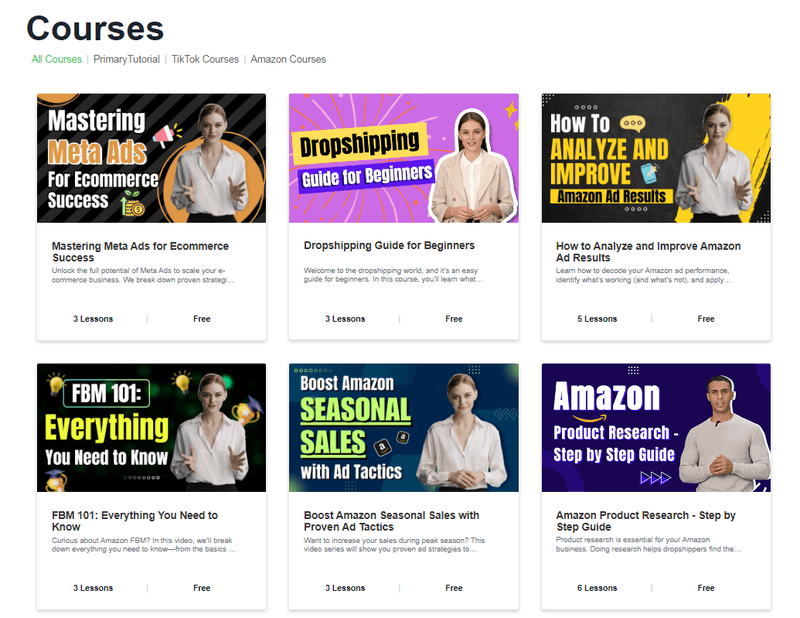
One example of a platform-based learning resource is EPROLO Academy, which focuses on practical workflows like product sourcing, order fulfillment, and store setup. Unlike generic tutorials, it connects training directly with real supplier operations, helping beginners understand how decisions around shipping, tracking, and product quality affect long-term performance.
Use one decision filter: does the dropshipping course teach you how to judge shipping speed, refund risk, and contribution margin before spending on ads? In 2026, that matters more than flashy revenue screenshots. A common beginner mistake is finishing ten hours of free lessons without building one product page or comparing supplier delivery windows. If you are testing the model, choose a free path that gets you to a basic live store, one supplier shortlist, and one realistic cost breakdown within a week.
Paid Programs Worth Comparing for Store Building, Ads, and Scaling
A paid dropshipping course should do more than explain setup steps. It should help you make better decisions once traffic, costs, and fulfillment problems show up. That is where paid programs start to separate.
For store building, look for curriculum depth around product selection, supplier checks, offer structure, and conversion basics. A course that spends hours on theme design but barely covers margins, shipping times, refund risk, or landing page testing is usually weak in real operating value. In 2026, that matters more because shoppers expect clearer delivery estimates and faster post purchase communication.
For ads, the main question is whether the teacher explains budget control and creative testing with enough detail to prevent expensive guessing. Good programs show how to read click through rate, cost per add to cart, break even CPA, and when to kill an ad. Weak ones rely on broad screenshots of winning campaigns without explaining why they worked.
| Focus | Worth paying for when | Less suitable when |
|---|---|---|
| Store building | You need a full launch process and product standards | You already know Shopify basics |
| Paid ads | You have test budget and need a repeatable framework | You are not ready to lose money while learning |
| Scaling | You already have sales and operational bottlenecks | You have not validated a product yet |
The most common mistake is buying an advanced scaling program before proving demand. If you are pre launch, a practical dropshipping course on store setup and testing is usually enough. If you already have orders, then coaching on ad systems, retention, and supplier backup plans becomes easier to justify.
Red Flags, Hidden Costs, and the Smartest Next Step for Your Skill Level
A dropshipping course should be judged by what it helps you decide and execute, not by how many modules it lists. Be cautious with courses that promise fast income, rely only on screenshots, hide the instructor's current store experience, or teach one traffic tactic without explaining margins, refunds, supplier reliability, and customer support.
The hidden cost is rarely just the course fee. In 2026, learners should budget for a Shopify plan, domain, sample orders, creative testing, apps, product research tools, ad spend if using paid traffic, and possible automation software. A free dropshipping course can be enough for basic store setup, but it may leave gaps around testing discipline, offer structure, and post purchase operations.
| Your level | Smarter next step |
|---|---|
| Beginner with no store | Start with a free course, then build a test store before paying for advanced training. |
| Store owner with low sales | Choose a course focused on conversion, product validation, supplier choice, and analytics. |
| Seller already running ads | Pay only for training with current media buying examples, testing frameworks, and retention lessons. |
The most practical approach is to match the dropshipping course to your current bottleneck. If you do not understand fulfillment, study operations first. If traffic is your problem, avoid generic store setup lessons. If profit is the issue, prioritize unit economics, shipping times, return handling, and supplier consistency. EPROLO and similar dropshipping suppliers can help you evaluate sourcing and fulfillment realities while you compare course advice against actual operating constraints.
For sellers focused on long term brand building, dependable logistics and private label support are worth considering alongside any dropshipping course.
Frequently Asked Questions (FAQ)
Are paid dropshipping courses worth it in 2026, or can I learn everything for free?
Paid courses can save time if they include a clear roadmap, updated platform guidance, and real examples. Free content is useful for basics, but it is often scattered or outdated. In 2026, the best choice depends on whether you need structure, support, and faster implementation.
How much should a good dropshipping course cost in 2026?
Most solid options range from low-cost beginner programs to premium mentorship offers. Price alone does not prove quality. Check whether the course includes current lessons on product research, ad strategy, supplier workflows, and store setup instead of focusing only on screenshots of results.
What should I look for before buying a dropshipping course?
Look for recent updates, practical walkthroughs, refund terms, and a realistic teaching style. A credible dropshipping course should explain costs, testing risk, fulfillment issues, and platform policy changes. Avoid courses that rely on vague income claims without showing the actual process.
Can a beginner start with a free course and switch to a paid one later?
Yes. Many beginners start free to learn store basics, supplier sourcing, and terminology. Moving to a paid course later can make sense if you need step-by-step systems, feedback, or advanced training on ads, conversion optimization, and scaling after you validate interest.
Do dropshipping courses still help if platform rules and ad costs keep changing?
They can, but only if the material is updated regularly. In 2026, ad pricing, marketplace rules, and fulfillment expectations can change fast. A useful course should teach decision-making frameworks and testing methods, not just fixed tactics that stop working when platforms shift.
Read More from EPROLO Blog
Written by Bianca
Bianca is a content creator focused on sustainable e-commerce growth. She goes beyond quick hacks, teaching online sellers how to build lasting brands through strong SEO foundations and compelling storytelling. She turns searchers into loyal customers through the power of words.