Las tiendas en crecimiento necesitan más que productos de bajo coste y anuncios atractivos. Una operación de fulfillment eficiente protege los márgenes de beneficio, los plazos de entrega prometidos, la visibilidad del stock y la confianza del cliente. Esta guía compara diez empresas de logística 3PL seleccionadas por la redacción, explica las variables de costes y demuestra cómo EPROLO puede dar soporte a modelos de dropshipping, sourcing y almacenamiento flexible, diferenciando claramente el modelo de venta sin inventario de todos los flujos de trabajo de un operador logístico 3PL.
Nota editorial de selección: Los proveedores indicados a continuación han sido seleccionados por la redacción según su relevancia para el e-commerce, la claridad de sus fuentes oficiales, su compatibilidad con Shopify o múltiples canales, su capacidad de fulfillment, la transparencia en sus costes y su idoneidad para tiendas online en crecimiento. Esta guía no constituye un ranking objetivo absoluto. La información y los enlaces se revisaron para garantizar su exactitud el 15 de julio de 2026; confirma siempre la disponibilidad, precios y condiciones vigentes directamente con cada proveedor.
Puntos Clave
- Las empresas de logística 3PL (Third-Party Logistics) ayudan a los comerciantes a escalar mediante la externalización del almacenamiento, las operaciones de picking, packing y preparación de pedidos, y las redes de distribución con transportistas.
- Evaluar los costes de logística 3PL exige un análisis exhaustivo de la recepción de mercancía (inbound), el espacio de almacenamiento, las tarifas de picking y los recargos de transporte aplicables.
- EPROLO combina flujos de dropshipping sin inventario con opciones flexibles de 3PL, lo que permite a las tiendas almacenar stock propio a medida que aumenta el volumen de pedidos.
Índice de Contenidos
¿Cuáles son las 10 mejores empresas de logística 3PL y servicios de fulfillment para e-commerce?
Las empresas de logística 3PL ayudan a los vendedores a externalizar tareas operativas como el almacenamiento, la recepción, el control de stock, el picking, packing, los envíos, las actualizaciones de seguimiento, las devoluciones y, en ocasiones, proyectos de transporte de carga o embalaje personalizado. Un operador logístico 3PL no sustituye la estrategia de producto ni de experiencia del cliente, pero ayuda a que una tienda pase de la gestión manual de pedidos a un proceso de logística y fulfillment predecible.
Las diez empresas que se muestran a continuación han sido seleccionadas porque son utilizadas con frecuencia por marcas de e-commerce y cuentan con páginas oficiales donde detallan sus servicios de fulfillment, precios, integraciones y capacidades logísticas. Algunas encajan mejor con marcas en fases iniciales, mientras que otras son ideales para operaciones corporativas (enterprise), transporte de gran volumen, distribución internacional o estructuras multicanal. Utiliza esta comparativa como una lista de referencia para tu investigación y no como un ranking absoluto aplicable a cualquier tienda.
| Proveedor | Más indicado para | Detalles de costes (fuentes oficiales) | Enlace oficial de interés |
|---|---|---|---|
| ShipBob | Marcas DTC (direct-to-consumer) que buscan servicios de fulfillment para e-commerce e integración con Shopify. | Tarifas personalizadas que desglosan recepción, almacenamiento, procesos de picking, packing y envío, y costes asociados a los envíos. | Precios de ShipBob |
| ShipMonk | Tiendas que buscan presupuestos detallados y sincronización en tiempo real con Shopify. | Presupuestos a medida para almacenamiento, fulfillment, envíos y proyectos especiales. | Precios de ShipMonk |
| Red Stag Fulfillment | Marcas que priorizan la fiabilidad operativa y un control exhaustivo del inventario. | Las condiciones de garantía incluyen protección contra pérdidas de inventario (zero shrinkage) e indemnizaciones económicas bajo condiciones específicas. | Garantías de Red Stag |
| eFulfillment Service | Pequeñas marcas que comparan el mejor 3PL para pymes y tiendas online en crecimiento. | Sus condiciones oficiales indican sin pedidos mínimos, sin cuotas de alta inicial y sin contratos de permanencia. | Condiciones de eFulfillment |
| Fulfillment.com | Marcas multicanal en expansión que buscan un proceso de integración (onboarding) guiado. | Modelo basado en presupuestos personalizados con más de 70 integraciones y un gestor de cuenta dedicado (Success Manager). | Proceso de Fulfillment.com |
| Amazon Multi-Channel Fulfillment | Vendedores que ya utilizan el inventario de Amazon y necesitan fulfillment fuera de Amazon. | Las tarifas por unidad varían según el tamaño, peso, rapidez de envío y número de unidades, con posibles recargos sujetos a cambios. | Tarifas de Amazon MCF |
| Flexport | Marcas que integran transporte de carga (freight), distribución y servicios de logística para e-commerce. | Su documentación oficial hace referencia a más de 50 canales, la app Shopify SFN y cobertura internacional. | Fulfillment de Flexport |
| DHL Fulfillment Network | Marcas que comparan redes globales de fulfillment y modelos pay-per-use (pago por uso). | Su web oficial indica pago por uso, sin costes de alta, integración ni cuotas anuales de suscripción; estimaciones de la calculadora no vinculantes. | Precios de DHL |
| FedEx Supply Chain | Comerciantes que investigan soluciones logísticas para operaciones corporativas (enterprise). | La documentación de FedEx detalla servicios de almacenamiento, fulfillment, embalaje, transporte y logística inversa; confirmar disponibilidad actual. | FedEx Supply Chain |
| UPS Supply Chain Solutions | Marcas que necesitan fulfillment multicanal, gestión de devoluciones y transporte integrado. | Su página oficial confirma servicios de almacenamiento, embalaje, logística inversa, transporte integrado y tecnología. | Distribución de UPS |
1. ShipBob
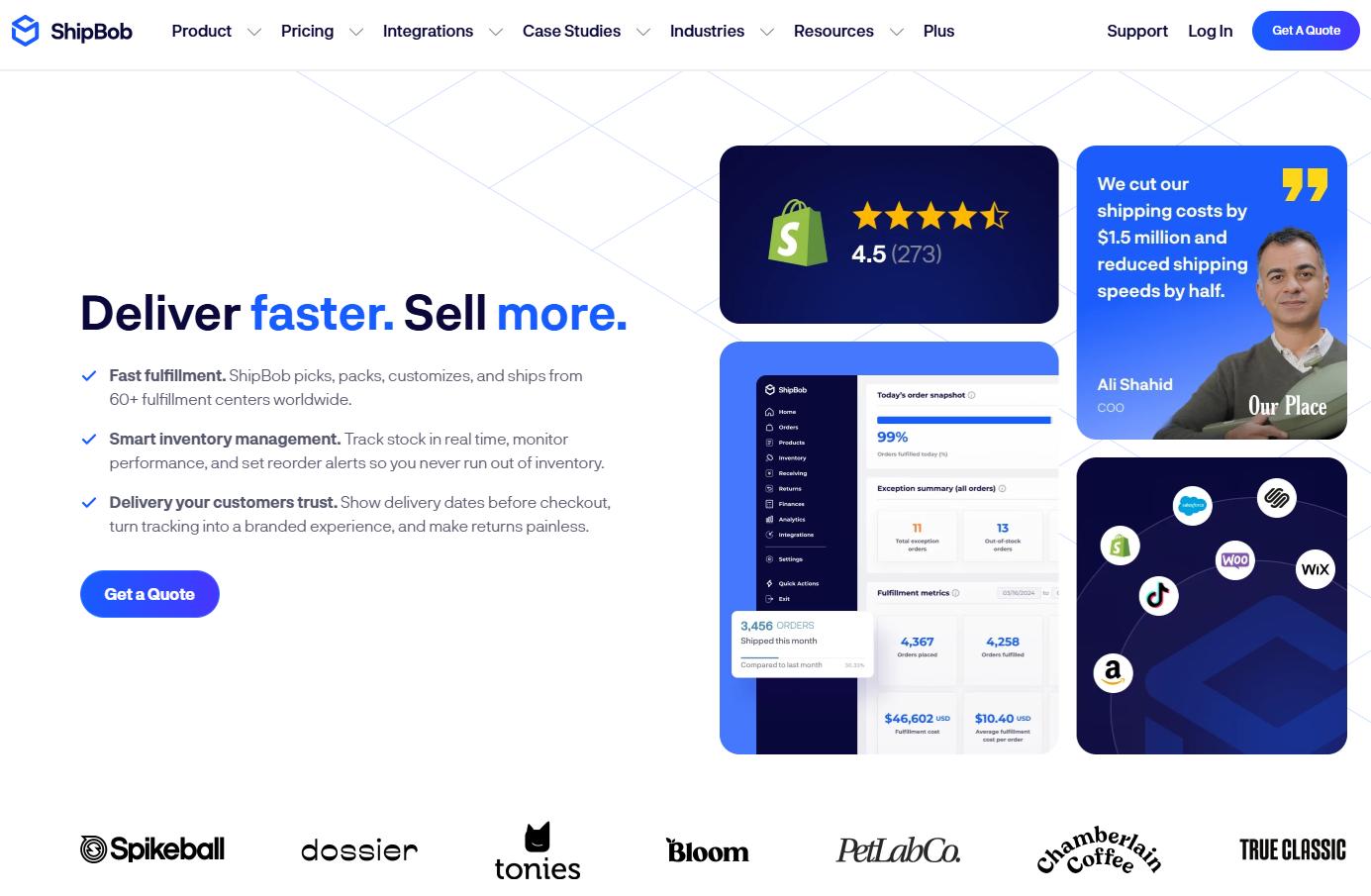
ShipBob es frecuentemente evaluada por marcas DTC (direct-to-consumer) que buscan servicios de fulfillment en almacén, visibilidad de stock e integración con tiendas online. Su página oficial de tarifas describe una estructura personalizada y categorías de costes como recepción, almacenamiento, procesos de picking, packing y envío, y costes asociados a los envíos. ShipBob también incluye integración con Shopify, un aspecto clave cuando se busca que los pedidos y las actualizaciones de seguimiento se gestionen sin hojas de cálculo manuales.
Representa una excelente opción de análisis para tiendas con un volumen recurrente de pedidos, múltiples SKUs y la necesidad de servicios de fulfillment y logística para e-commerce más estructurados. Antes de dar el paso, conviene revisar las normas de gestión de SKUs, requisitos de recepción de mercancía (inbound), periodicidad de facturación del almacenamiento, necesidades de embalaje, acuerdos de nivel de servicio (SLA), procesamiento de devoluciones y posibles recargos por proyectos especiales o artículos fuera de estándar.
2. ShipMonk
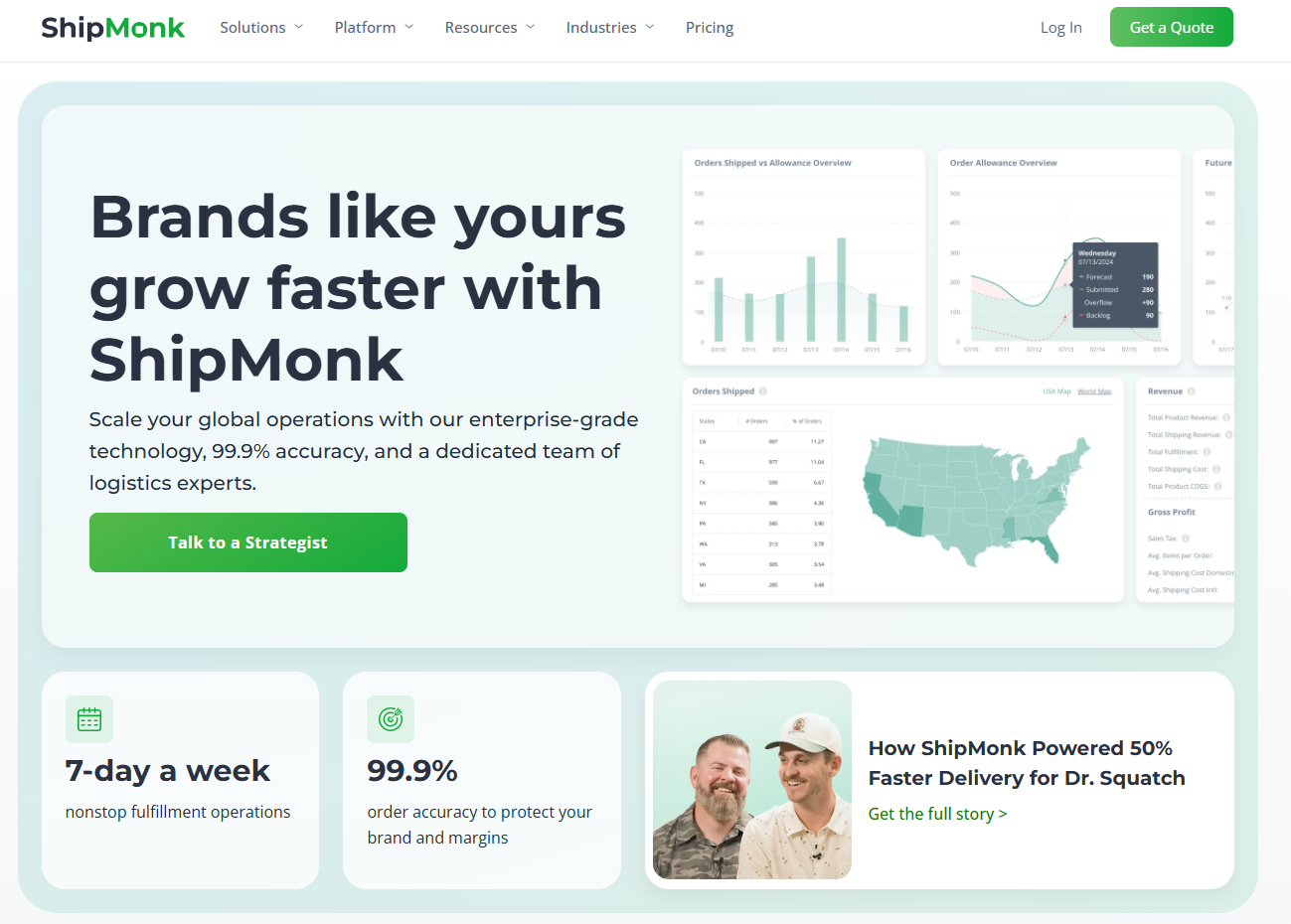
ShipMonk se posiciona en torno al fulfillment para e-commerce con presupuestos personalizados y detallados. Su página oficial de tarifas desglosa costes de almacenamiento, fulfillment, envíos y proyectos especiales, haciendo especial hincapié en la sincronización en tiempo real con Shopify. Para marcas que venden a través de múltiples canales o realizan lanzamientos frecuentes de productos, la transparencia en el desglose de costes es tan crucial como la tarifa base de expedición.
Merece la pena evaluar ShipMonk si buscas un operador logístico 3PL capaz de desglosar con detalle los perfiles de almacenamiento, tareas de embalaje, configuración de rutas y gestión de incidencias operativas. Solicita siempre un presupuesto que distinga entre costes fijos y variables, y pide simulaciones para tus combinaciones de pedidos más frecuentes con el fin de conocer el verdadero coste de operador logístico 3PL por tipología de pedido.
3. Red Stag Fulfillment
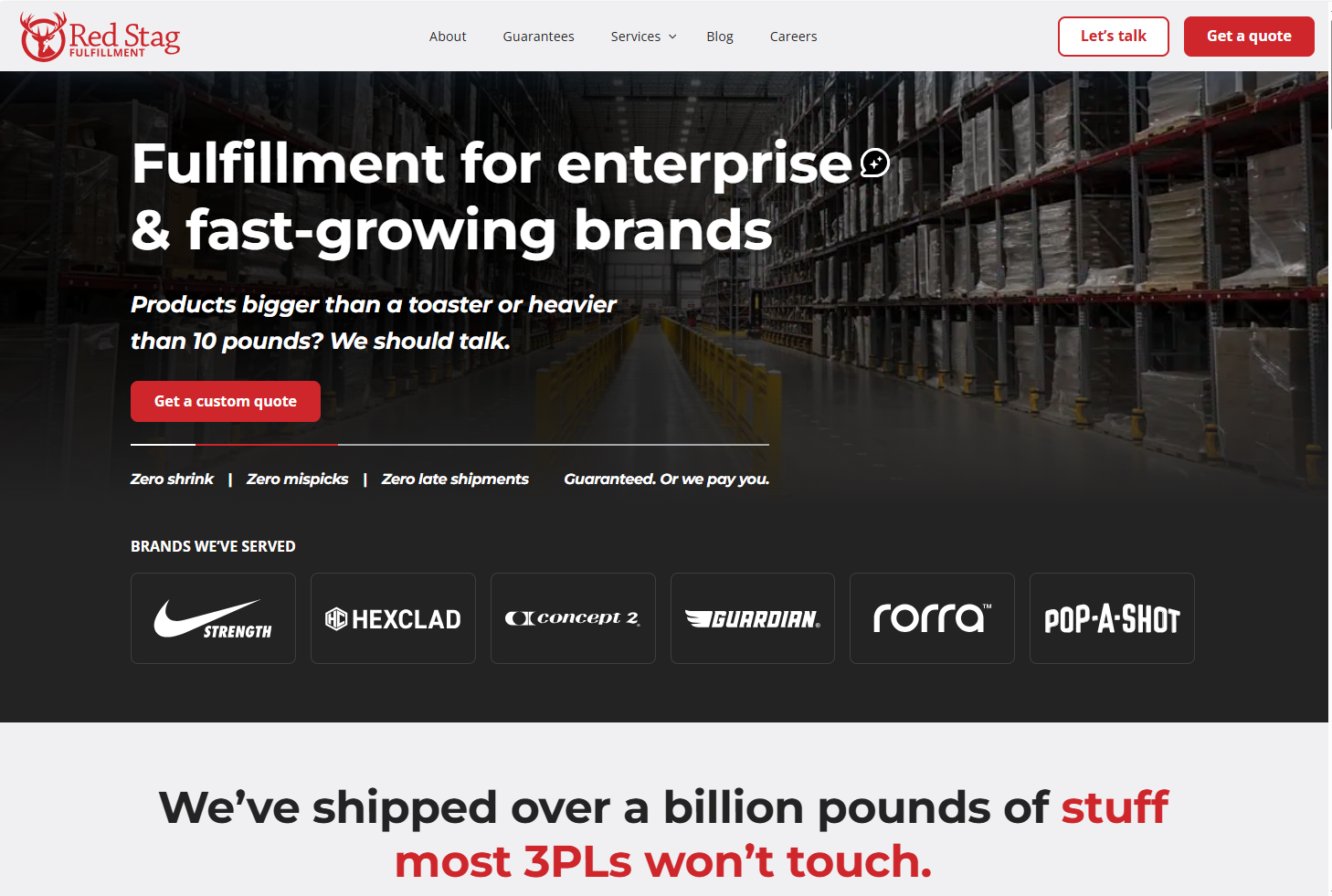
Red Stag Fulfillment destaca por su enfoque en la responsabilidad operativa. Su página oficial de garantías recoge cláusulas de protección contra pérdidas de inventario (zero shrinkage) e indemnizaciones económicas bajo condiciones específicas. Aunque cada operativa presenta particularidades, esto ofrece a los comerciantes un marco de políticas tangible cuando la precisión del stock y el rigor en el servicio son prioridades indispensables.
Este proveedor resulta especialmente indicado para marcas con productos de alto valor, pesados, frágiles o con complejidades logísticas especiales, en función de sus criterios de admisión y tarifas actuales. Examina al detalle las condiciones de su garantía contra pérdidas de inventario (zero shrinkage), exclusiones, procedimientos de reclamación, requisitos de entrada y compatibilidad de catálogo antes de formalizar el contrato. En cualquier empresa de logística 3PL, una garantía solo es efectiva si tus procesos internos permiten documentar la entrega del stock y las incidencias con total trazabilidad.
4. eFulfillment Service
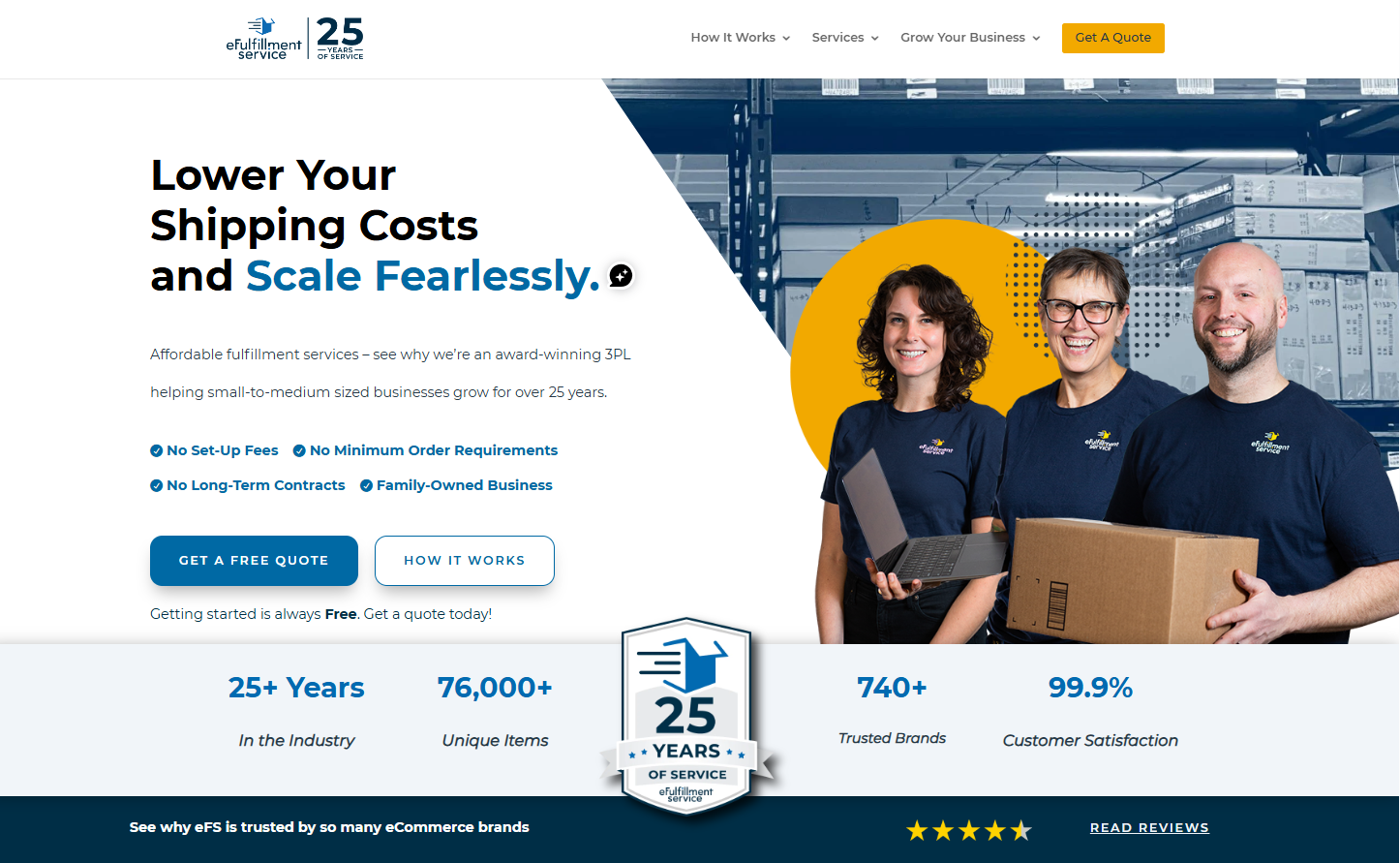
eFulfillment Service es un referente para marcas emergentes, ya que sus condiciones oficiales no exigen volumen mínimo de pedidos, no aplican cuotas de alta inicial, no requieren contratos de permanencia e incorporan integración directa con Shopify. Esta combinación permite a las tiendas más nuevas probar la externalización del fulfillment sin atarse de entrada a mínimos mensuales elevados o compromisos corporativos complejos.
Si estás buscando el mejor 3PL para pymes y tiendas online en crecimiento, es conveniente valorar más aspectos aparte de la flexibilidad de entrada. Pregunta por los costes de almacenamiento, plazos de recepción, normativas de picking y packing, gestión de devoluciones, suministros de embalaje, envíos internacionales y cómo se sincronizan los niveles de stock con Shopify. La facilidad de incorporación es una gran ventaja, pero la idoneidad dependerá siempre de tu tipo de producto, número de SKUs y expectativas de entrega de tus compradores.
5. Fulfillment.com
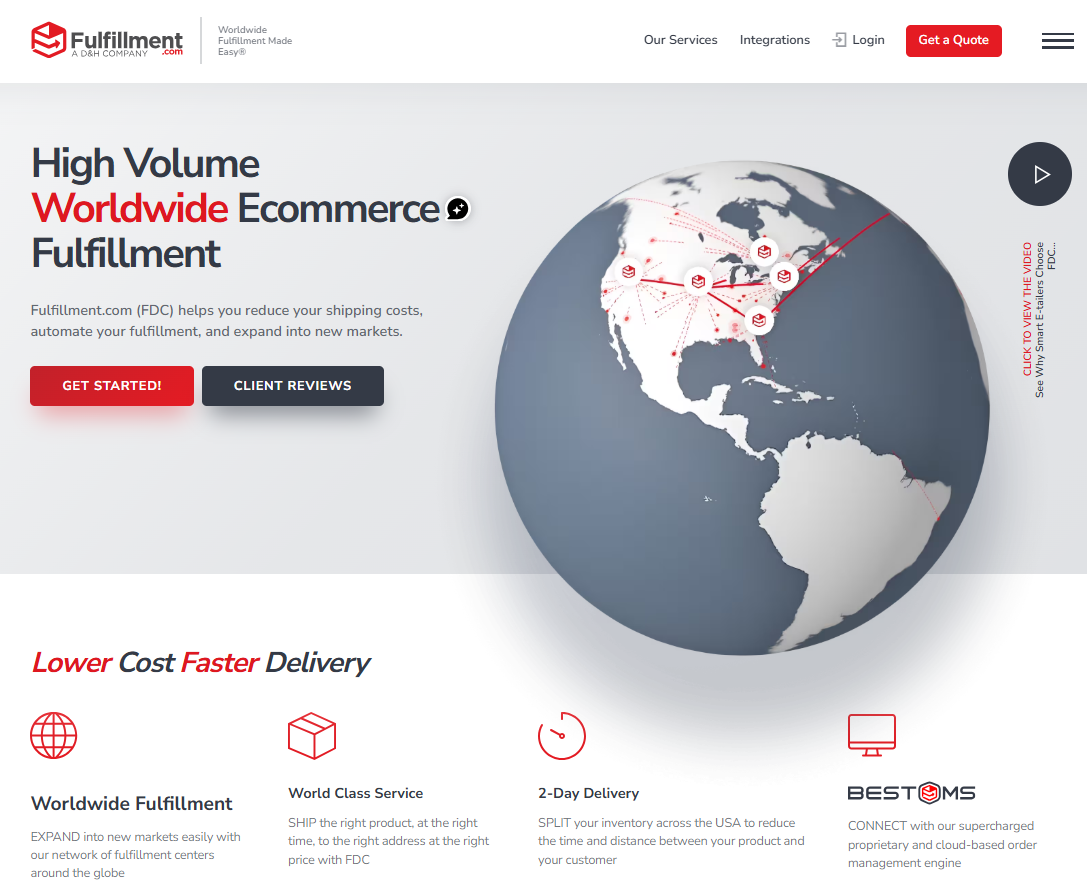
Fulfillment.com ofrece un modelo basado en presupuestos a medida con más de 70 integraciones y un gestor de cuenta asignado (Success Manager). Esto resulta muy ventajoso para marcas en plena expansión que requieren asesoramiento para estructurar sus canales de venta, reglas de enrutamiento, flujos de inventario y opciones de transporte, en lugar de contratar únicamente espacio en estanterías. Un proceso de integración acompañado reduce errores e incertidumbres operativas en tiendas con múltiples canales o presencia internacional.
Dado que sus precios son personalizados, aporta datos reales de tu negocio durante la toma de contacto: medias mensuales de pedidos, dimensiones de los SKUs, líneas medias por pedido, requisitos de embalaje, índice de devoluciones y países de destino. Cuanto más precisos sean los datos, más fiable será la cotización. Evita comparar operadores basándote solo en una tarifa estimada de picking si tus costes principales vendrán dados por el almacenaje, las zonas de transporte, el kitting o las devoluciones.
6. Amazon Multi-Channel Fulfillment
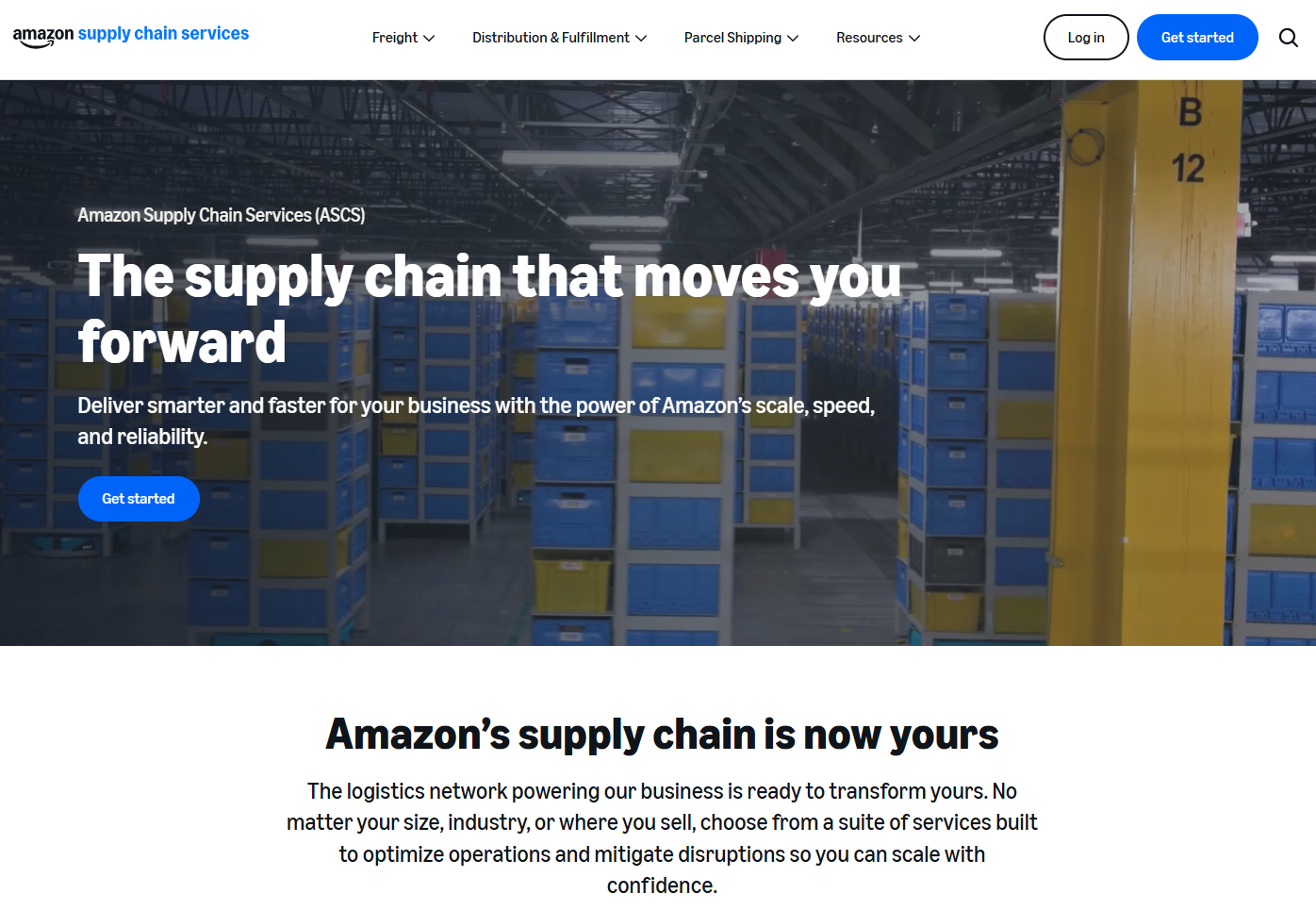
Amazon Multi-Channel Fulfillment, habitualmente conocido como Amazon MCF, permite expedir pedidos procedentes de canales externos a Amazon aprovechando el stock almacenado en sus centros logísticos. Amazon cuenta con una app oficial gratuita para Shopify, y su política pública de tarifas detalla que el coste por unidad varía según las dimensiones, peso, plazo de entrega y volumen de unidades. Los vendedores deben considerar también los posibles recargos y actualizaciones periódicas de tarifas.
MCF es una alternativa muy práctica si ya dispones de inventario en la red logística de Amazon y deseas tramitar los pedidos de tu tienda Shopify u otras plataformas desde ese mismo stock. No obstante, valora el impacto en la identidad de marca, el packaging con logo de Amazon, la distribución del stock, la gestión de devoluciones y tu estrategia comercial global. Una solución cómoda no siempre equivale a la mejor experiencia para el cliente en todas las marcas.
7. Flexport
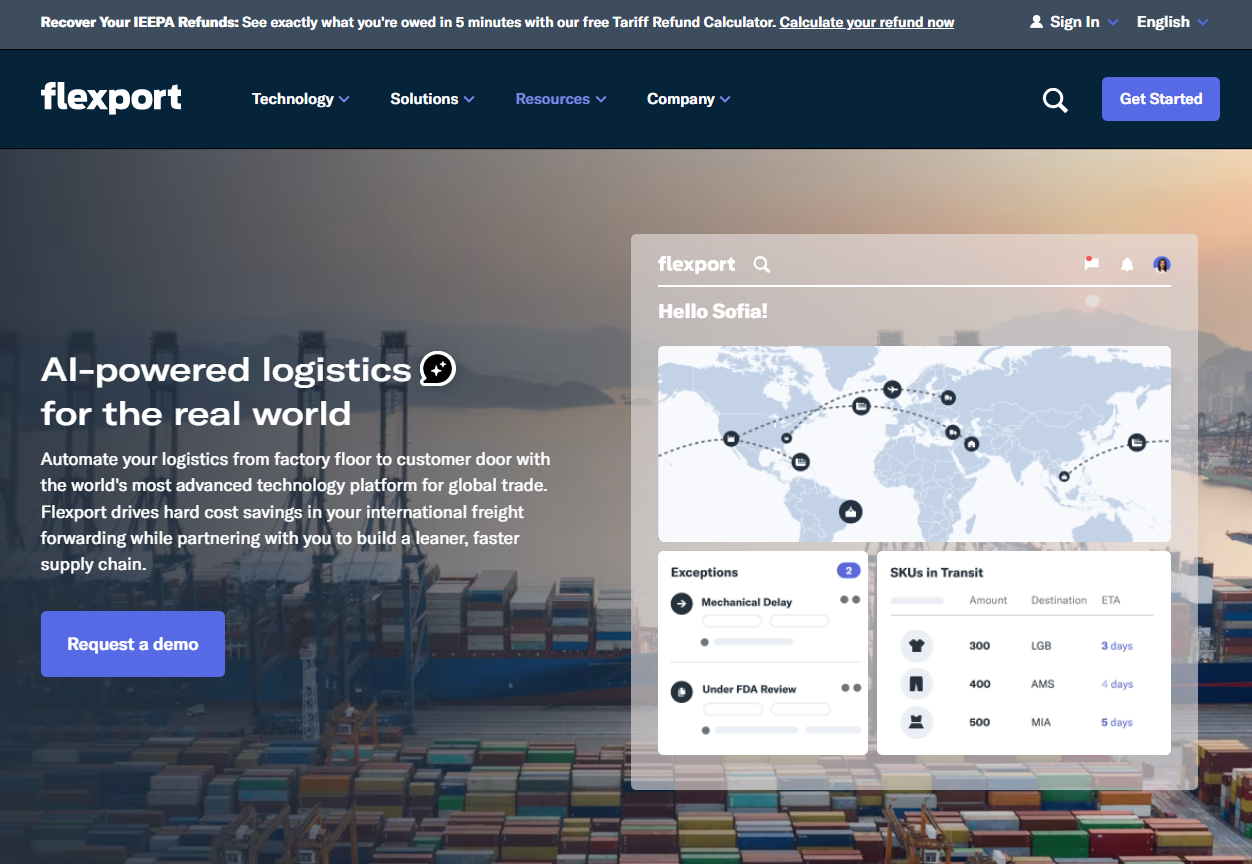
Flexport integra transporte de carga internacional (freight), centros de distribución y servicios de logística para e-commerce. Su página oficial de fulfillment destaca la app Shopify SFN, más de 50 canales sincronizados y cobertura logística internacional. Resulta especialmente interesante para marcas cuyos retos operativos empiezan antes de la llegada al almacén, sobre todo cuando el flete marítimo o aéreo, la planificación de stock y la distribución regional condicionan los plazos de entrega finales.
Flexport encaja con empresas que buscan una visión integral de la cadena de suministro y no únicamente un proveedor de almacenamiento básico. Pregunta cómo se coordinarán los plazos de transporte internacional, despachos de aduanas, nodos logísticos de expedición, conexiones de software y retorno de mercancía. No des por hecho que la capacidad global cubre de forma automática tu ruta exacta, categoría de producto o plazos de entrega previstos; verifica siempre los detalles para tus mercados clave.
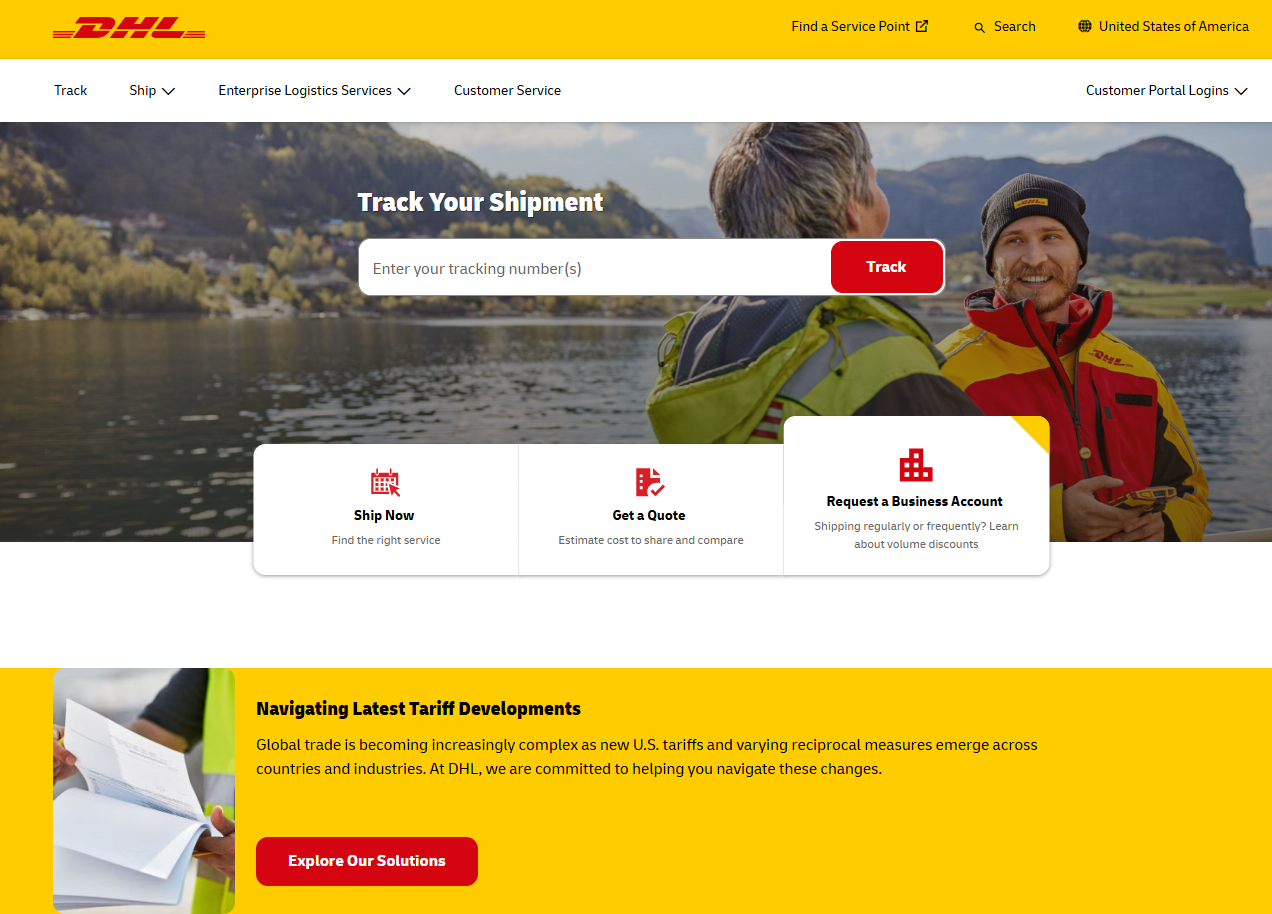
La página oficial de tarifas de DHL Fulfillment Network establece un modelo pay-per-use (pago por uso) y especifica que no existen cuotas de alta inicial, costes de integración ni cuotas anuales de suscripción en su red. Ofrece además una calculadora con estimaciones no vinculantes para volúmenes anuales comprendidos entre 18.000 y 500.000 pedidos. Esta escala la hace mucho más idónea para negocios consolidados con volúmenes sólidos que para pequeñas tiendas en fase de validación.
DHL es una sólida candidata a investigar para marcas que comparan redes globales de fulfillment y almacenamiento, sobre todo cuando la rapidez en las entregas transfronterizas es crítica. Como con cualquier operador, comprueba la tipología de productos admitidos, la ubicación de sus almacenes, las integraciones disponibles, el circuito de devoluciones, los materiales de embalaje y cómo se trasladan las estimaciones de la calculadora al contrato definitivo.
9. FedEx Supply Chain
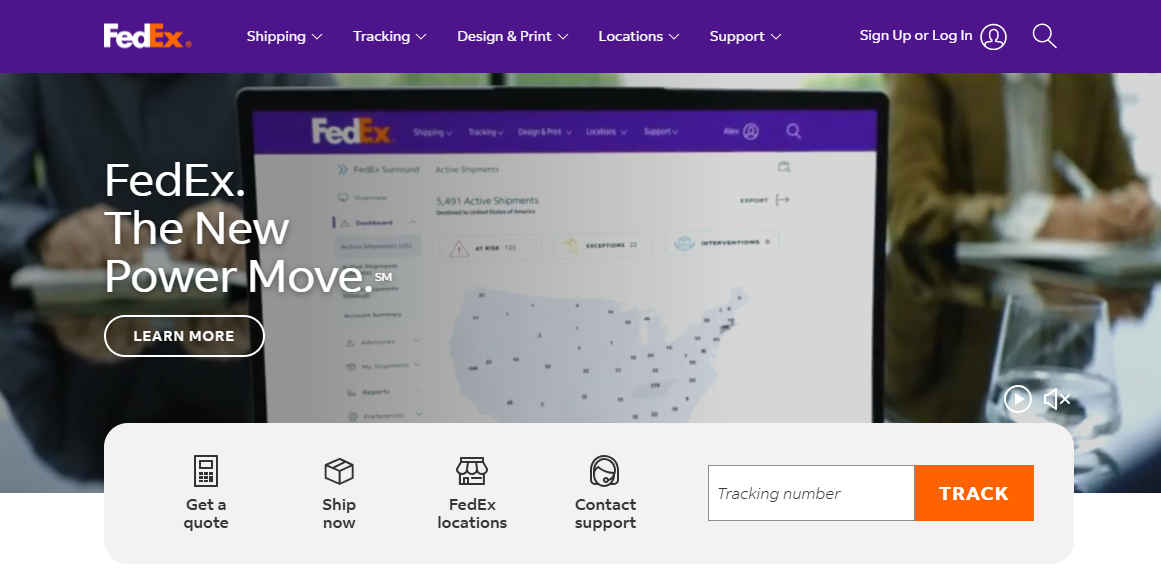
FedEx Supply Chain dispone de documentación oficial donde describe su oferta integral en almacenamiento, fulfillment, packaging, transporte y logística inversa. Puesto que algunas referencias del lanzamiento original de su servicio de fulfillment tienen cierta antigüedad, los comerciantes deben tomarlas como marco de referencia funcional y confirmar directamente con FedEx la disponibilidad del programa, la compatibilidad de productos, los costes y las condiciones vigentes antes de planificar la operativa.
Esta opción aparece con más frecuencia en los procesos de selección de marcas consolidadas, grandes empresas corporativas o negocios que necesitan soporte integral de transporte y cadena de suministro junto con el fulfillment. Pide siempre documentación actualizada y un pliego de condiciones específico. Los grandes proveedores de logística 3PL cuentan con una enorme capacidad, pero su éxito depende de tu volumen de pedidos, tus recursos técnicos de implementación y tus expectativas contractuales.
10. UPS Supply Chain Solutions
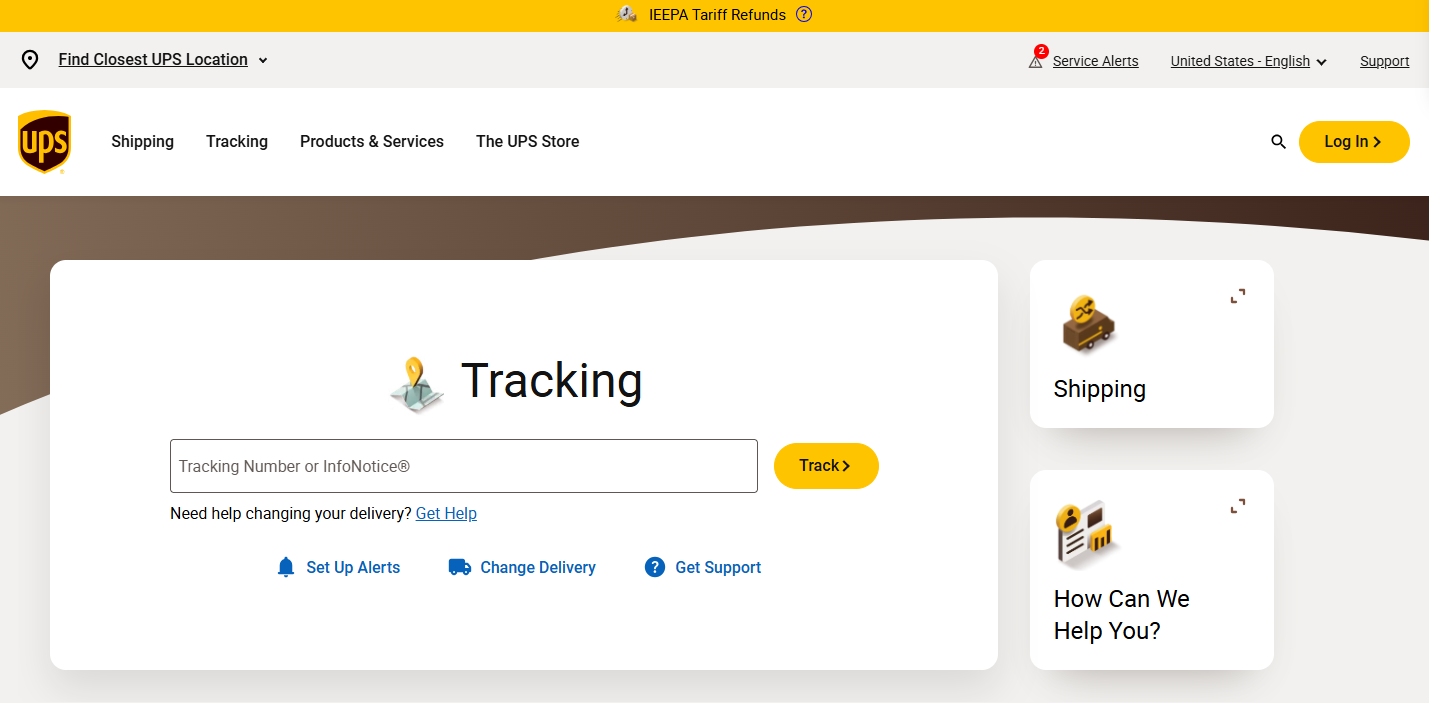
La página oficial de distribución de UPS Supply Chain Solutions confirma servicios de fulfillment multicanal, almacenamiento, embalaje, logística inversa y transporte integrado respaldado por tecnología. Para empresas con requerimientos logísticos complejos a escala nacional o internacional, contar con soluciones integradas de transporte y almacén simplifica la gestión de proveedores en comparación con la combinación de sistemas independientes.
Al igual que ocurre con FedEx, UPS es idónea cuando la empresa precisa una consultoría profunda de su cadena de suministro más allá del servicio habitual de almacenaje y pick-and-pack. Valora los requisitos de entrada, posibilidades de integración tecnológica, directrices de stock, servicios de packaging, gestión de devoluciones y cómo escalan los costes conforme crecen el volumen de envíos, las medidas del producto o los destinos de reparto.
Por qué un socio de fulfillment fiable elimina el estrés del sourcing y los envíos
Los problemas de fulfillment rara vez empiezan el día en que un cliente presenta una reclamación. Comienzan mucho antes, cuando los plazos de aprovisionamiento, la comunicación con proveedores, los registros de stock, las decisiones de embalaje, el traspaso al almacén, la selección de transportistas y el seguimiento de pedidos no están debidamente coordinados. Un socio de fulfillment fiable ayuda a cerrar esas brechas, transformando operaciones dispersas en un proceso estandarizado y escalable.
En el modelo tradicional de un operador logístico 3PL con almacén, compras o fabricas el stock por adelantado, lo envías a sus instalaciones, abonas los costes de recepción y almacenamiento, y el operador expide los pedidos una vez que los clientes compran. Este formato permite utilizar embalajes personalizados con tu marca, otorga mayor control sobre el inventario y agiliza las entregas domésticas al ubicar el stock cerca de los compradores. No obstante, exige inmovilizar capital en mercancía y llevar a cabo una rigurosa previsión de demanda.
El dropshipping funciona de forma distinta. En una operativa de dropshipping sin inventario, el vendedor no adquiere stock masivo por adelantado para almacenarlo. Cuando el cliente hace una compra, el proveedor o partner logístico localiza y envía el artículo de inmediato. Esto minimiza el riesgo financiero inicial, pero puede restar control sobre la disponibilidad inmediata, el embalaje personalizado y la velocidad de entrega si el proveedor no cuenta con sistemas de aprovisionamiento y logística altamente optimizados.
EPROLO combina ambas opciones sin forzar una vía única. Su plataforma oficial destaca envíos rápidos para dropshipping, aprovisionamiento sin MOQ (cantidad mínima de pedido), almacenamiento de stock propio (BYO inventory), almacenes internacionales y sincronización con Shopify para productos, pedidos y números de seguimiento. Esto permite al comerciante comenzar con sourcing y dropshipping y, más adelante, añadir stock físico en almacén cuando un producto demuestre una demanda sólida. Para conocer las opciones flexibles de 3PL de EPROLO, consulta su página oficial de almacenamiento y fulfillment.
Esta diferenciación es clave: algunos vendedores emplean el término “3PL” para aludir a cualquier logística subcontratada, mientras que otros lo reservan para el almacenamiento y expedición de inventario en propiedad del vendedor. EPROLO ofrece soporte tanto para dropshipping como para soluciones flexibles de 3PL y almacenamiento de stock propio, pero el dropshipping sin inventario no debe confundirse con la operativa tradicional de un almacén 3PL. El modelo idóneo dependerá de la madurez del catálogo, la liquidez, las necesidades de personalización y los tiempos de entrega prometidos.
Cómo elegir el operador logístico 3PL adecuado para el volumen de pedidos de tu tienda
Elegir el partner logístico adecuado comienza analizando tus propios datos operativos y no una lista de marcas conocidas. Antes de contactar con cualquier empresa de logística 3PL, asegúrate de recopilar las siguientes métricas para obtener presupuestos realistas:
- Perfiles de pedidos: Volumen medio mensual de pedidos y promedio de líneas de producto por paquete.
- Detalles del inventario: Número total de SKUs activos, medidas exactas de los productos y pesos del embalaje.
- Destinos de envío: Distribución porcentual entre envíos nacionales e internacionales y principales países de entrega.
- Necesidades operativas: Tasa histórica de devoluciones, picos de venta por estacionalidad, opciones de packaging personalizado e integraciones tecnológicas indispensables.
Las tiendas pequeñas deben prestar especial atención a los requisitos de volumen mínimo. Mientras algunos operadores reciben con agrado a marcas emergentes, otros enfocan su operativa hacia volúmenes elevados. Si tus ventas son bajas o fluctuantes, pregunta si aplican consumos mínimos mensuales, mínimos de almacenaje, cuotas de gestión de cuenta o recargos por stock de baja rotación. Un proveedor puede ser de gran calidad pero resultar inviable para tu momento actual.
Las marcas en expansión deben fijarse en la escalabilidad y la gestión de imprevistos. Pregunta cómo asume el almacén los picos de lanzamientos, pedidos pendientes (backorders), entregas parciales, lotes (bundles), kitting, suscripciones periódicas, inclusión de folletos promocionales, triaje de devoluciones y correcciones de direcciones. Estos factores marcan a menudo la diferencia entre un servicio logístico eficiente y un foco constante de problemas en atención al cliente cuando suben las ventas.
Para tiendas en Shopify, la calidad de la integración técnica es vital. La sincronización óptima actualiza productos, pedidos, niveles de stock y códigos de seguimiento sin exportaciones manuales diarias. Varios operadores mencionados disponen de conexión con Shopify, como ShipBob, ShipMonk, eFulfillment Service, Amazon MCF, Flexport a través de la app Shopify SFN y EPROLO mediante sincronización total de catálogo, pedidos y seguimiento. Aun así, conviene verificar previamente cómo se mapean los SKUs, cómo retorna la información de tracking y cómo se reflejan los cambios de inventario en tu escaparate online.
Para evitar gastos imprevistos, el análisis de precios debe desglosarse por partidas. Los verdaderos costes de empresas de logística 3PL suelen agrupar diferentes conceptos:
- Costes de Inbound (Recepción): Descarga, inspección, clasificación y registro inicial de los artículos en recepción de mercancía (inbound).
- Costes de Almacenamiento: Cuotas mensuales según palés ocupados, metros lineales de estantería o volumen en metros cúbicos.
- Costes de Outbound (Expedición): Tarifas de picking y packing, consumibles de embalaje y costes de transporte (incluidos los recargos de transporte aplicables).
- Servicios de Valor Añadido: Kitting, inserción de folletos promocionales, preparación de cajas de suscripción, inspección de devoluciones y recargos por almacenaje de larga estancia.
Puesto que estas tarifas varían en cada operador y según cada tienda, en esta guía evitamos publicar costes medios estandarizados por pedido. En su lugar, solicita presupuestos basados en la distribución real de tus pedidos. Pide a cada operador que simule tres escenarios: tu volumen habitual, un mes de crecimiento proyectado y un mes de temporada alta (peak season). Así obtendrás una visión mucho más clara del impacto en tus márgenes que revisando un simple precio promocional.
Si tu negocio todavía está validando productos, adoptar una solución híbrida puede ser lo más eficiente. Puedes testar la demanda mediante el servicio de sourcing o dropshipping de EPROLO y, una vez consolidadas las ventas de ciertos SKUs, trasladarlos a almacenamiento de stock propio para optimizar tiempos de entrega y reforzar la imagen de marca. Descubre cómo funciona este proceso en la página de servicios de almacenamiento y fulfillment 3PL de EPROLO antes de adquirir compromisos de volumen con almacenes tradicionales.
Errores habituales de fulfillment que provocan retrasos en los envíos y malas valoraciones
El primer error es la falta de control sobre los datos de inventario. Si Shopify, tu proveedor, el almacén y tus hojas de cálculo internas reflejan cifras distintas, el riesgo de incurrir en roturas de stock o vender sin existencias (overselling) se dispara. Al comprador no le preocupa qué plataforma falló; solo sabe que su pedido pagado no se envía. Establece una única fuente de datos fidedigna y audita el mapeo de SKUs antes de escalar tus campañas publicitarias.
El segundo error consiste en seleccionar un operador fijándose únicamente en una tarifa de picking baja. Una propuesta puede parecer atractiva hasta que se calculan los costes de almacenaje, devoluciones, embalaje, proyectos a medida, recargos de transporte o consumos mínimos mensuales. Calcula siempre el coste total de fulfillment por tipología de producto y pedido. Un accesorio ligero, un artículo voluminoso para el hogar y un pedido con varios productos presentan rentabilidades logísticas muy diferentes.
El tercer fallo es descuidar los requisitos de recepción de mercancía (inbound). Los almacenes exigen etiquetado estricto de bultos, conteo exacto de SKUs, normas claras de embalaje y notificaciones anticipadas de envío (ASN). Si la mercancía llega sin la documentación preceptiva, sufrirá retrasos antes de poder registrarse para la venta. Esto es fundamental al migrar del envío directo desde fábrica al almacenamiento de stock propio, ya que tus responsabilidades operativas crecen.
El cuarto error es tratar las devoluciones como una tarea secundaria. La logística inversa incide de lleno en la confianza del cliente, el valor de reventa del producto, la exactitud del stock y la carga de soporte. Averigua si el operador puede inspeccionar devoluciones, reubicar artículos aptos para la venta, apartar productos dañados, tramitar cambios y categorizar los motivos de devolución. La logística inversa puede disparar los costes si no cuenta con un procedimiento definido.
El quinto error radica en prometer plazos de entrega poco realistas. Aunque una red de almacenes optimiza los procesos, el tiempo final de entrega sigue dependiendo de la ubicación del inventario, la agilidad de la agencia de reparto, las horas de corte (cut-off times), la precisión en el embalaje, el tipo de artículo, la climatología, los festivos y la dirección de entrega. Fija compromisos prudentes hasta que tus métricas avalen una mayor rapidez. Las malas valoraciones suelen originarse en expectativas no cumplidas más que en el tiempo de tránsito en sí.
El sexto fallo consiste en cambiar de proveedor sin un plan de transición definido. Antes de mover el stock, planifica la depuración de SKUs, dimensiones de catálogo, calendarios de entrada, instrucciones de embalaje, pruebas de integración técnica, actualización de direcciones de retorno, protocolos de atención al cliente y un margen preventivo ante posibles demoras. Una migración ordenada puede parecer más lenta, pero previene pérdidas de stock y compradores insatisfechos.
Por último, no confundas externalizar con delegar todo el control de tu negocio. Aunque cuentes con un operador excelente, la empresa sigue siendo responsable de los datos de producto, los compromisos con clientes, la previsión de ventas, la compra de inventario, el ritmo publicitario y la comunicación postventa. Las relaciones logísticas más exitosas se fundamentan en una documentación clara, informes periódicos y protocolos ágiles para resolver incidencias.
Toma el control del fulfillment de tu tienda hoy mismo
La mejor decisión en fulfillment no siempre pasa por contratar la red logística más grande ni la tarifa anunciada más baja. Es el modelo que mejor se adapta a la fase de tu catálogo, liquidez financiera, estructura de pedidos, propuesta de marca y rigor organizativo. Una tienda que da sus primeros pasos buscará agilidad de aprovisionamiento y mínimo riesgo de stock. Una marca consolidada requerirá almacenamiento físico propio, envíos rápidos, packaging corporativo y mayor control sobre las devoluciones.
Utiliza la lista de proveedores anterior para crear tu tabla comparativa y solicita presupuestos respaldados por datos operativos reales. Incluye tus SKUs más vendidos, medidas, desglose de pedidos, volumen mensual, mercados de entrega, plataforma de e-commerce, requisitos de embalaje y criterios de devolución. Pide a cada operador que te aclare no solo el coste de cada concepto, sino las condiciones exactas en que se factura cada servicio.
Si quieres un modelo versátil que una el dropshipping con el almacenamiento en centros logísticos, te recomendamos analizar EPROLO. Sus soluciones oficiales ofrecen dropshipping con entrega rápida, sourcing sin MOQ (cantidad mínima de pedido), almacenamiento de stock propio, centros internacionales y sincronización fluida con Shopify para productos, pedidos y números de seguimiento. Esta combinación ayuda a validar artículos, simplificar el aprovisionamiento y destinar productos ganadores a almacén cuando la rentabilidad lo justifique. Infórmate a través de la solución oficial de fulfillment 3PL de EPROLO.
Sea cual sea el partner logístico que elijas, mide el rendimiento de forma constante. Supervisa la precisión de los pedidos, el tiempo de expedición (time to ship), incidencias con las agencias de transporte, motivos de devolución, discrepancias de inventario, tickets de atención al cliente y el coste total de fulfillment como porcentaje del margen del producto.
Preguntas frecuentes: empresas de logística 3PL y fulfillment para e-commerce
¿Cuál es la mejor empresa de 3PL para pequeñas marcas de e-commerce?
No existe un único operador ideal para todos los pequeños comercios. El mejor 3PL para pymes y tiendas online en crecimiento depende del volumen de envíos, tamaño del catálogo, número de SKUs, plataforma web, liquidez y nivel de servicio requerido. eFulfillment Service destaca porque sus condiciones oficiales no fijan pedidos mínimos, no aplican costes de alta inicial ni contratos de permanencia, y ofrecen conexión con Shopify. EPROLO es igualmente idónea para pequeños negocios que buscan sourcing, dropshipping y la opción de almacenar stock propio antes de dar el salto a un contrato de almacenamiento tradicional de gran envergadura.
¿Cuánto cobran las mejores empresas de logística 3PL por pedido?
Las principales empresas de logística 3PL no aplican un precio único estandarizado por pedido. Los costes suelen englobar recepción de mercancía, almacenaje, picking y packing, consumibles de embalaje, tarifas de transporte, recargos de transporte aplicables, devoluciones, kitting, tareas especiales, asistencia de cuenta y tecnología. Los precios varían según el peso, dimensiones del paquete, rapidez de entrega, destino, número de unidades y volumen mensual. Solicita siempre cotizaciones con los datos reales de tu catálogo en lugar de basarte en medias genéricas.
¿Cuál es la diferencia entre hacer dropshipping y contratar un 3PL?
En el dropshipping, el comerciante no suele adquirir stock por adelantado para almacenarlo en volumen. Cuando el cliente hace una compra, el proveedor o partner logístico suministra y envía el producto directamente. En un modelo 3PL tradicional con almacén, la tienda es propietaria del stock, lo envía a las instalaciones del operador y abona los servicios de recepción, almacenaje, picking, packing y transporte. EPROLO admite tanto dropshipping como opciones flexibles de 3PL y almacenamiento de stock propio, pero el dropshipping sin inventario no debe equipararse a todos los flujos de trabajo de un almacén 3PL.
¿Cómo sincronizo mi tienda de Shopify con un almacén de fulfillment 3PL?
La mayoría de integraciones con Shopify se realizan instalando la app oficial del proveedor o mediante una plataforma conectora. Posteriormente se emparejan los SKUs, se validan los datos del producto, se definen las reglas de inventario, se comprueba la importación de pedidos, se verifica la sincronización de números de seguimiento y se actualizan los estados del pedido. Operadores como ShipBob, ShipMonk, eFulfillment Service, Amazon MCF, Flexport y EPROLO ofrecen flujos o aplicaciones para Shopify, pero siempre debes testar el comportamiento exacto de los SKUs y los datos de tracking antes de pasar a producción.
¿Qué ocurre si un 3PL extravía o daña mi inventario?
El procedimiento depende del contrato, los registros de entrada de mercancía, la documentación de stock, el estado del producto, la cobertura de seguro, los plazos de reclamación y las condiciones de garantía del operador. Ciertos proveedores recogen indemnizaciones concretas; por ejemplo, la página oficial de Red Stag Fulfillment estipula cláusulas de protección contra pérdidas de inventario (zero shrinkage) e indemnizaciones económicas bajo supuestos estipulados. Antes de enviar tu mercancía, consulta siempre con el operador cómo se documentan, tasan, aprueban y abonan estas reclamaciones.
Lecturas recomendadas de EPROLO
- Mejores soluciones de fulfillment para e-commerce en 2026
- Mejores servicios de almacenamiento y fulfillment en 2026
- Guía completa de fulfillment para dropshipping en 2026
- La cruda realidad: 10 ventajas y desventajas del dropshipping (lo que nadie te cuenta)
- Cómo crear una tienda de dropshipping con marca propia sin tener stock en 2026
Escrito por
Inverse es especialista en operaciones de SEO para Google, con amplia experiencia en auditorías técnicas de sitios web, agrupaciones de contenido (topic clusters) y estrategia de palabras clave. Con una sólida trayectoria en visibilidad en motores de búsqueda y optimización de tráfico orgánico, Inverse ofrece claves prácticas y aplicables en los principales canales de búsqueda. Este enfoque estratégico ayuda a las marcas de e-commerce a generar un crecimiento orgánico sostenible y a expandir su presencia digital con eficacia.
Nota editorial: Este artículo es una comparativa editorial creada para los lectores de EPROLO. Se basa en fuentes oficiales de los proveedores siempre que ha sido posible, evita tarifas ficticias de 3PL y excluye scripts de analítica, fragmentos de Tag Manager y datos estructurados (schema markup), ya que este flujo de trabajo para fragmentos de CMS no emplea dichos recursos. Las condiciones de proveedores externos pueden variar, por lo que los comerciantes deben verificar precios, coberturas y términos contractuales vigentes antes de elegir a su partner de fulfillment.