You've seen the claims: "Turn clutter into fast cash straight from your phone!" Reselling apps promise easy sales and instant buyers. But can you trust them with your actual inventory and profits? With seller horror stories about delayed payouts and unfair buyer disputes, it pays to stay skeptical.
This breakdown cuts through the hype to answer one direct question: is Mercari legit? The short answer is yes, but platform legitimacy comes with strict strings attached. We break down how seller protection really operates, how tight return windows affect your cash flow, and why traditional supplier dropshipping triggers immediate account bans under US rules. By the end, you will know if Mercari fits your fulfillment setup—or if building an independent store makes far better business sense.
Key Takeaways
- Mercari is legitimate; individual transactions still carry risk.
- Seller protection depends on the item, shipment, evidence, and policy compliance.
- Traditional supplier-to-buyer dropshipping conflicts with Mercari US rules.
Table of Contents
Is Mercari Legit?
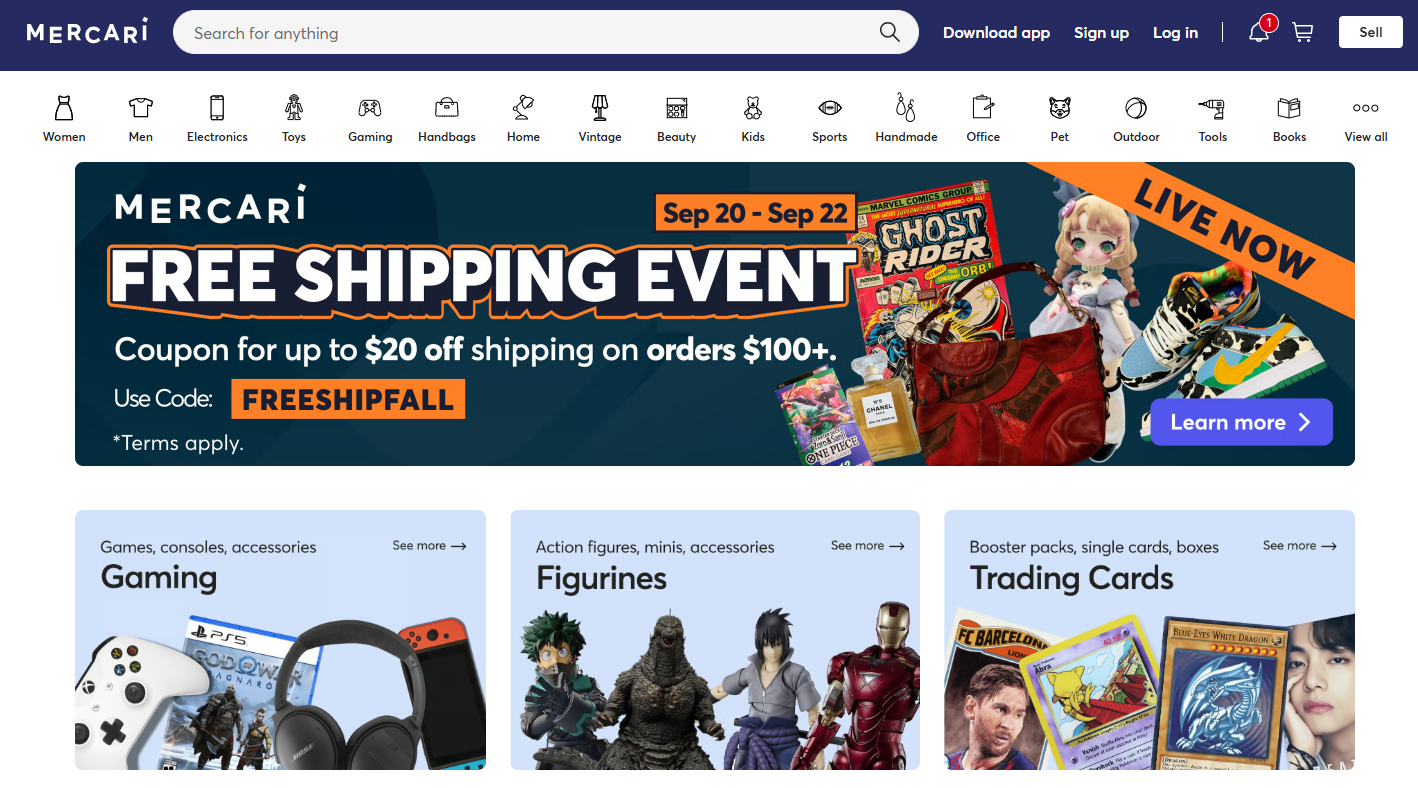
Mercari connects people buying and selling new and pre-owned goods through its website and app. If you are asking “is Mercari a legit site?” the answer is yes: it operates a marketplace with payment processing, published transaction policies, customer support, and procedures for disputes. Those safeguards are different from a promise that a particular seller, buyer, or product is genuine.
Mercari’s Buyer Protection page explains that it holds payment until delivery and the buyer’s rating. If the buyer does not rate within 72 hours of carrier-confirmed delivery, the transaction normally completes automatically and funds are released to the seller. A timely return request can pause that process. Payment release means funds become available through Mercari; it should not be confused with an immediate deposit into a bank account.
Credit card safety: use the real checkout
For the search “is Mercari safe for credit card?” the useful distinction is official checkout versus a payment request sent by another user. Mercari accepts major credit cards and describes CVV verification and temporary card authorizations in its payment guidance. These are payment controls, not a guarantee against phishing or account theft.
Enter payment information only in the genuine Mercari app or website. Do not send card details, security codes, or login codes in a message, and do not follow a buyer’s link to “verify” that you can receive payment. Keep payment and order communication on Mercari. A request to move the transaction elsewhere is a reason to stop and contact support.
If your business needs supplier fulfillment rather than resale of items you hold, assess a separate store and its rules before choosing a sourcing service. The EPROLO registration link below is for that separate evaluation, not a Mercari integration or permission to dropship there.
Is Mercari Safe for Sellers?
Is Mercari legit for selling? Yes, but the seller carries responsibilities that a legitimate platform cannot remove. A disputed description can delay payment. A poorly documented shipment can undermine a claim. A prohibited listing can trigger enforcement even if other users appear to sell something similar. The following risks matter more than a blanket “safe” rating. If you want to learn how to sell successfully on Mercari in 2026, check out our guide here.
Buyer disputes: the listing becomes evidence
When a buyer says an item differs significantly from its description, Mercari reviews the claim rather than simply accepting the seller’s “no returns” statement. Its Refunds and Returns policy requires clear evidence of discrepancies and lets Mercari request additional photos. The platform may deny claims involving fraud or insufficient information; neither side is guaranteed to win.
Keep your original listing photos, condition description, relevant order messages, and shipment records. These are practical evidence recommendations, not a guaranteed reimbursement checklist. If support contacts you, answer the specific issue raised instead of treating a positive sales history as proof that the claim must be false.
Returns and refunds: watch the transaction clock
Buyers must request a return within 72 hours of carrier-confirmed delivery and before the order is rated or completed. The current policy says requests must go through the Order Status or Rating page to pause completion; a message elsewhere does not do that. Sellers must accept returns approved by Mercari, as its returns guide makes clear.
A buyer who dislikes a purchase does not automatically qualify for a return. Mercari assesses eligibility under its policy, including whether the item is significantly different from the listing. Where a concern is outside that policy, a seller may voluntarily accept a return but is not required to. Avoid promising that every sale is final regardless of the item’s actual condition.
Inspect a return promptly. If the returned item arrives damaged in transit, Mercari requires the seller to contact it within 24 hours of receipt, based on the carrier timestamp, and before the transaction is canceled. Requested damage information and photos must also be submitted within 24 hours of Mercari’s request. That short window can matter more than how quickly the original item sold.
Shipping problems: protection has a ceiling
A delivery scan, the correct label, and adequate packaging matter when payment depends on a shipment. Mercari’s Shipping Protection covers eligible loss or carrier damage up to $200 for prepaid standard, economy, and Media Mail shipments, and up to $20 for First-Class Envelopes. These are maximum limits, subject to its criteria, not automatic payouts for every lost parcel.
If you ship using your own label, Mercari Shipping Protection does not apply. Carrier insurance is a separate decision. Check the current label requirements before shipping, use valid tracking, and retain acceptance and packing evidence. Do not assume a higher-priced item is fully protected because its label came from Mercari.
Counterfeit and prohibited items: a disclaimer is not permission
Mercari’s Authenticity guidelines say items known or suspected to be replicas, imitations, or otherwise inauthentic should not be listed. Mercari may ask for proof such as a receipt, date code, or serial number. If you sell an item as authentic but cannot provide proof, it may be treated as not as described, and listings or selling privileges can be affected.
The query “is Mercari legit kpop” raises this same distinction for photocards, albums, and merchandise: a real marketplace does not verify every collectible. Mercari describes Mercari Authenticate as covering certain luxury categories, not a general authentication service for K-pop goods. Do not present a photocard as platform-authenticated merely because it is listed there.
For collectible resale, retain purchase evidence and show the actual item, including visible wear and included contents. Do not label an uncertain item “official” or use “decide for yourself” to avoid the authenticity rules. Mercari’s copyright and trademark guidance also says that disclosing a counterfeit does not make it permissible.
Account and policy violations: access can be restricted
The Prohibited Items policy allows Mercari to remove listings, cancel related transactions, and suspend or terminate accounts. It states that an item can violate the rules regardless of whether the seller intended the violation. Separately, the Prohibited Conduct policy covers off-platform payments, invalid tracking, duplicate listings, and other conduct.
A practical risk check is to ask whether you can defend the item, the listing, and the shipment under the current rules. Another seller’s active listing is not an approval notice for yours. If Mercari requests verification, respond through its official channels rather than opening another account to bypass a restriction.
Can You Dropship on Mercari?
No, not through the usual supplier-to-customer model on Mercari US. The current official policy prohibits “Listing items not in your possession, shipping from a third party or stating the item will be shipped at a future date.” It also lists shipping directly from a manufacturer as prohibited conduct.
That rules out the common arrangement in which you advertise supplier stock, wait for a Mercari order, and then have the supplier ship it to the buyer. A domestic warehouse, plain packaging, or a fast shipping estimate does not remove the possession and third-party-shipping restrictions. A supplier’s service description cannot override Mercari’s terms.
What the rules mean for your fulfillment model
| Proposed setup | Policy implication |
|---|---|
| You hold the actual item and ship it yourself | Consistent with the possession and fulfillment rules, provided the item, listing, account, and shipment meet all other requirements. |
| You list a supplier’s stock and order it after a sale | Conflicts with the rule against listing items not in your possession. |
| A supplier, manufacturer, or outside fulfillment provider ships to your buyer | Conflicts with the third-party or direct-manufacturer shipping restrictions; do not assume warehouse stock creates an exemption. |
| You advertise an item that will become available later | The policy expressly prohibits stating that the item will ship at a future date. |
Buying inventory, receiving it, and then reselling it yourself is a different model from dropshipping. It addresses the possession issue; it does not waive prohibited-item, authenticity, photo, or shipping rules. Mercari also prohibits stock or advertising photos and photos you do not own or did not take yourself. Photograph the actual goods rather than copying a supplier feed.
What dropshippers should check before using Mercari
- Read the US Prohibited Conduct and Prohibited Items pages, not a generic marketplace comparison or a Japan-market guide.
- Confirm that the actual items are already in your possession. A supplier’s availability message is not possession.
- Identify who will physically ship each order. If that is a supplier or outside fulfillment provider, do not treat the setup as compliant.
- Check authenticity evidence, your own listing photos, valid tracking, and the current return obligations before listing.
If supplier-to-buyer fulfillment is essential to your business, choose a sales channel whose rules permit that exact arrangement. Evaluate EPROLO for that separate channel only after checking its platform and supplier requirements. This article does not recommend connecting EPROLO to Mercari or using supplier fulfillment for Mercari orders.
Conclusion
Mercari is a legitimate marketplace with defined payment, dispute, and shipping-protection processes. For sellers, it is a conditional proposition: accurate listings, supportable authenticity claims, compliant fulfillment, and prompt responses to returns all matter. For traditional dropshippers, the possession and third-party-shipping prohibitions are decisive. Choose the channel around the fulfillment model you can actually comply with, rather than treating platform legitimacy as permission to sell any way you want.
FAQ
Does Mercari protect sellers?
Yes. Mercari processes payments, uses a post-delivery review window, and offers conditional Shipping Protection for eligible prepaid-label shipments. Protection is not unconditional: return eligibility, listing accuracy, tracking, packaging, and other policy requirements still apply. Using your own shipping label does not include Mercari Shipping Protection.
What are the downsides of Mercari?
Sellers face possible disputes, approved returns, delayed payment while a claim is reviewed, capped shipping coverage, and account restrictions for policy violations. There is also a current selling fee to check before pricing. The main downside for dropshippers is more basic: ordinary third-party fulfillment conflicts with Mercari US policy.
What cannot be sold on Mercari?
Counterfeit goods and items that infringe intellectual property rights are prohibited. Items known or suspected to be inauthentic should not be listed either. Check the full official Prohibited Items list for category-specific restrictions; this answer is not an exhaustive list. Even an otherwise permitted product cannot be listed through prohibited conduct, such as selling an item you do not possess.
What is the trick to selling on Mercari?
There is no policy shortcut that guarantees sales or protects every payout. For this risk-focused guide, the useful habit is to keep an evidence trail: your own photos of the item, an accurate condition description, shipment records, and order communication on Mercari. Check that you possess the goods and can ship them compliantly before worrying about sales tactics.
Related Reading
Written by
Inverse is a Google SEO operations specialist with experience in technical audits, keyword strategy, evidence-led content renewal, and ecommerce organic growth. The focus is on clear claims, current sources, and practical guidance that merchants can validate before acting.
Editorial Note:
This guide covers Mercari’s US marketplace only and does not apply to Mercari Japan. Mercari may update its policies and eligibility requirements, so check the linked policies for the latest information before listing.